



Parametry
- 592 strony
- 21 godzin czytania
Więcej o książce
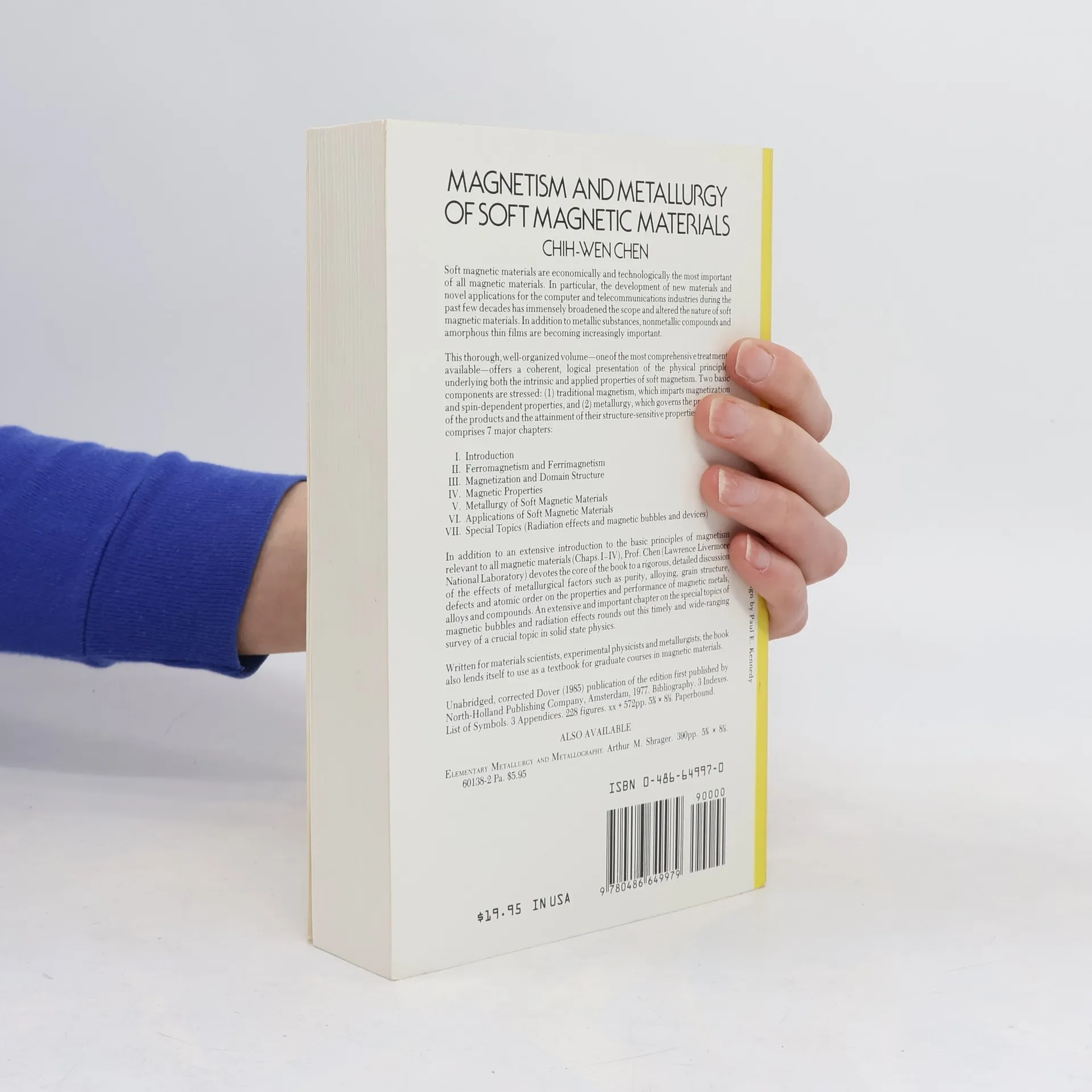
Soft magnetic materials are crucial for both economic and technological advancements, particularly in the computer and telecommunications sectors. Recent developments have expanded the range and nature of these materials, incorporating not only metallic substances but also nonmetallic compounds and amorphous thin films. This comprehensive volume presents a coherent overview of the physical principles that underlie the intrinsic and applied properties of soft magnetism. It emphasizes two key components: traditional magnetism, which influences magnetization and spin-dependent properties, and metallurgy, which affects product preparation and structure-sensitive characteristics. The book is structured into seven major chapters, covering topics such as ferromagnetism, magnetization, magnetic properties, metallurgy, applications, and special topics like radiation effects and magnetic bubbles. Professor Chen provides a detailed examination of how metallurgical factors—including purity, alloying, grain structure, defects, and atomic order—impact the performance of magnetic materials. This thorough exploration makes the text valuable for materials scientists, experimental physicists, and metallurgists, and it is also suitable as a graduate-level textbook on magnetic materials.
Zakup książki
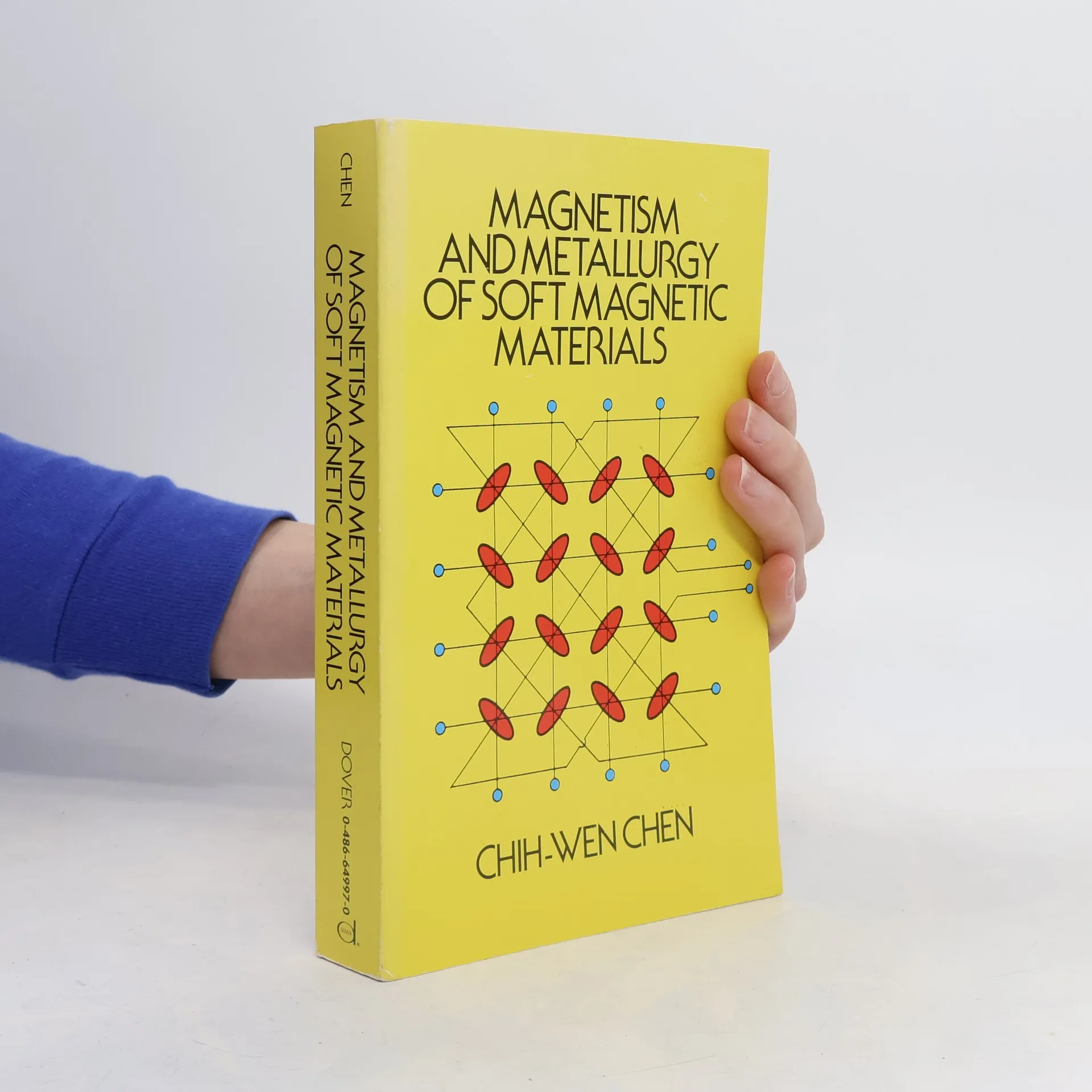
Dover Books on Physics: Magnetism and Metallurgy of Soft Magnetic Materials, Chih-Wen Chen
- Język

- Rok wydania
- 1986
- Oprawa
- (miękka)
Metody płatności
Nikt jeszcze nie ocenił.
- Tytuł
- Dover Books on Physics: Magnetism and Metallurgy of Soft Magnetic Materials
- Język
- angielski
- Autorzy
- Chih-Wen Chen
- Wydawca
- Dover Publications
- Rok wydania
- 1986
- Oprawa
- miękka
- Liczba stron
- 592
- ISBN10
- 0486649970
- ISBN13
- 9780486649979
- Seria
- Tagi
- Podręczniki, Nauki przyrodnicze, Podręczniki akademickie, Technologia, Podręczniki fizyki, Hutnictwo, Magnetyzm
- Opis
- Soft magnetic materials are crucial for both economic and technological advancements, particularly in the computer and telecommunications sectors. Recent developments have expanded the range and nature of these materials, incorporating not only metallic substances but also nonmetallic compounds and amorphous thin films. This comprehensive volume presents a coherent overview of the physical principles that underlie the intrinsic and applied properties of soft magnetism. It emphasizes two key components: traditional magnetism, which influences magnetization and spin-dependent properties, and metallurgy, which affects product preparation and structure-sensitive characteristics. The book is structured into seven major chapters, covering topics such as ferromagnetism, magnetization, magnetic properties, metallurgy, applications, and special topics like radiation effects and magnetic bubbles. Professor Chen provides a detailed examination of how metallurgical factors—including purity, alloying, grain structure, defects, and atomic order—impact the performance of magnetic materials. This thorough exploration makes the text valuable for materials scientists, experimental physicists, and metallurgists, and it is also suitable as a graduate-level textbook on magnetic materials.