


Parametry
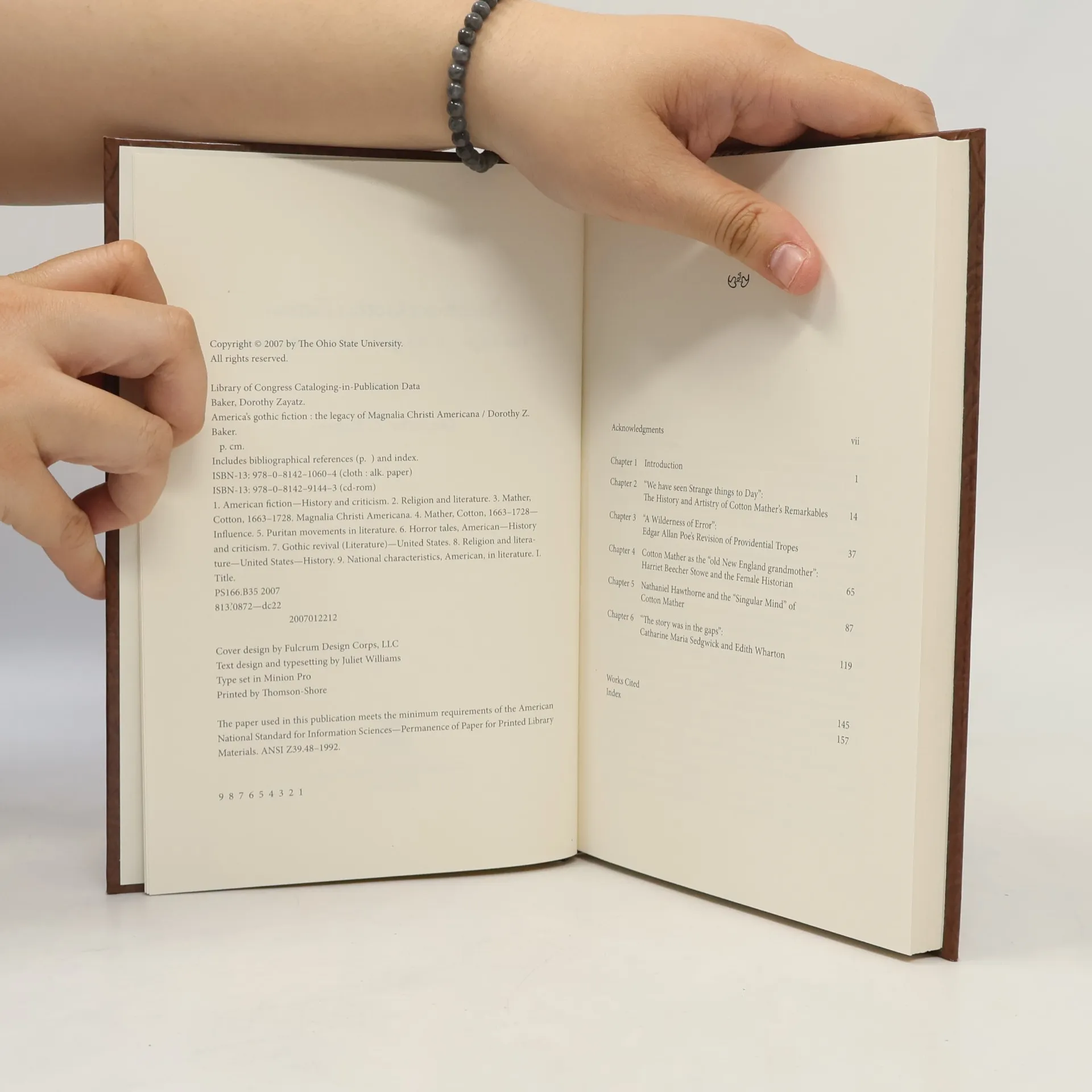
- 161 stron
- 6 godzin czytania
Więcej o książce
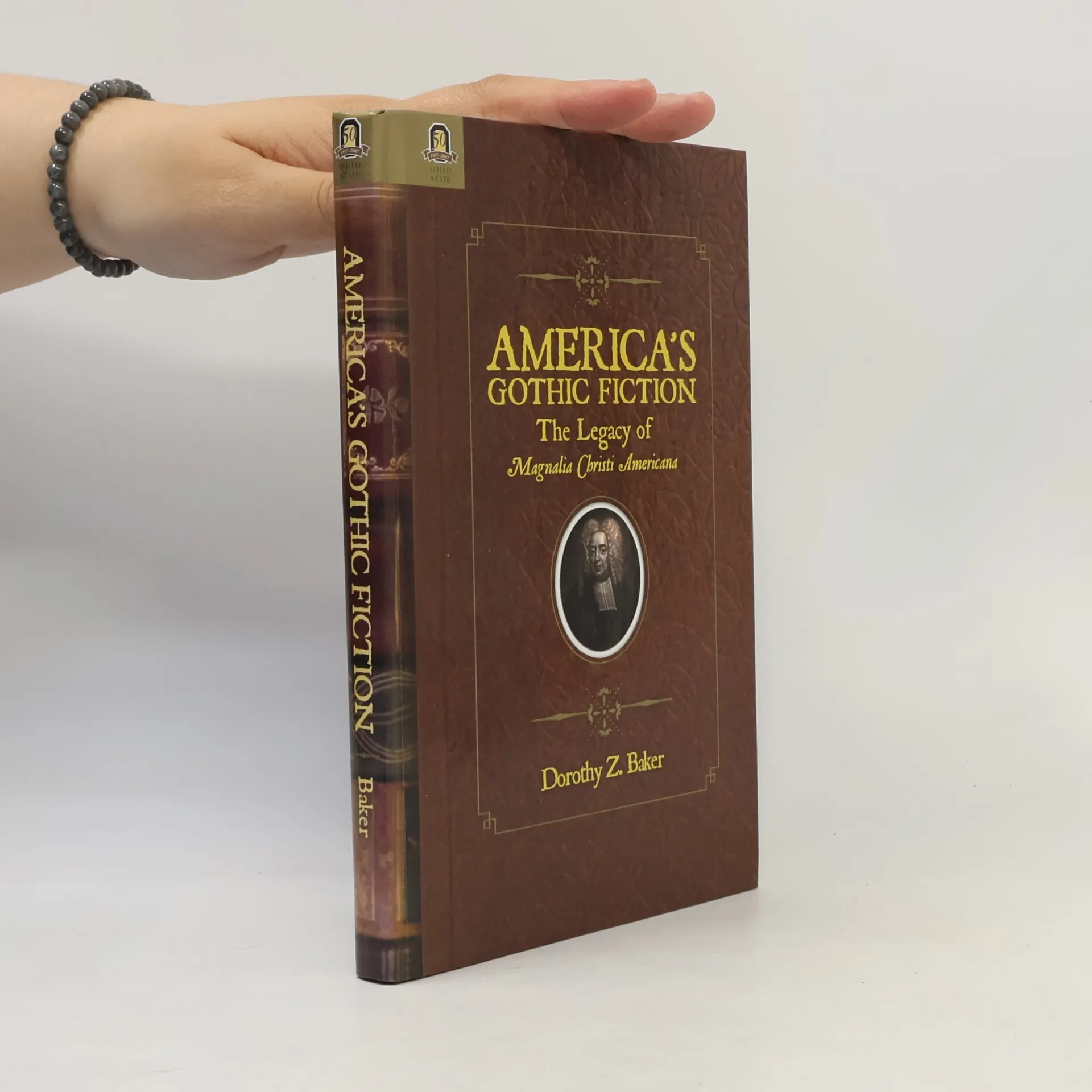
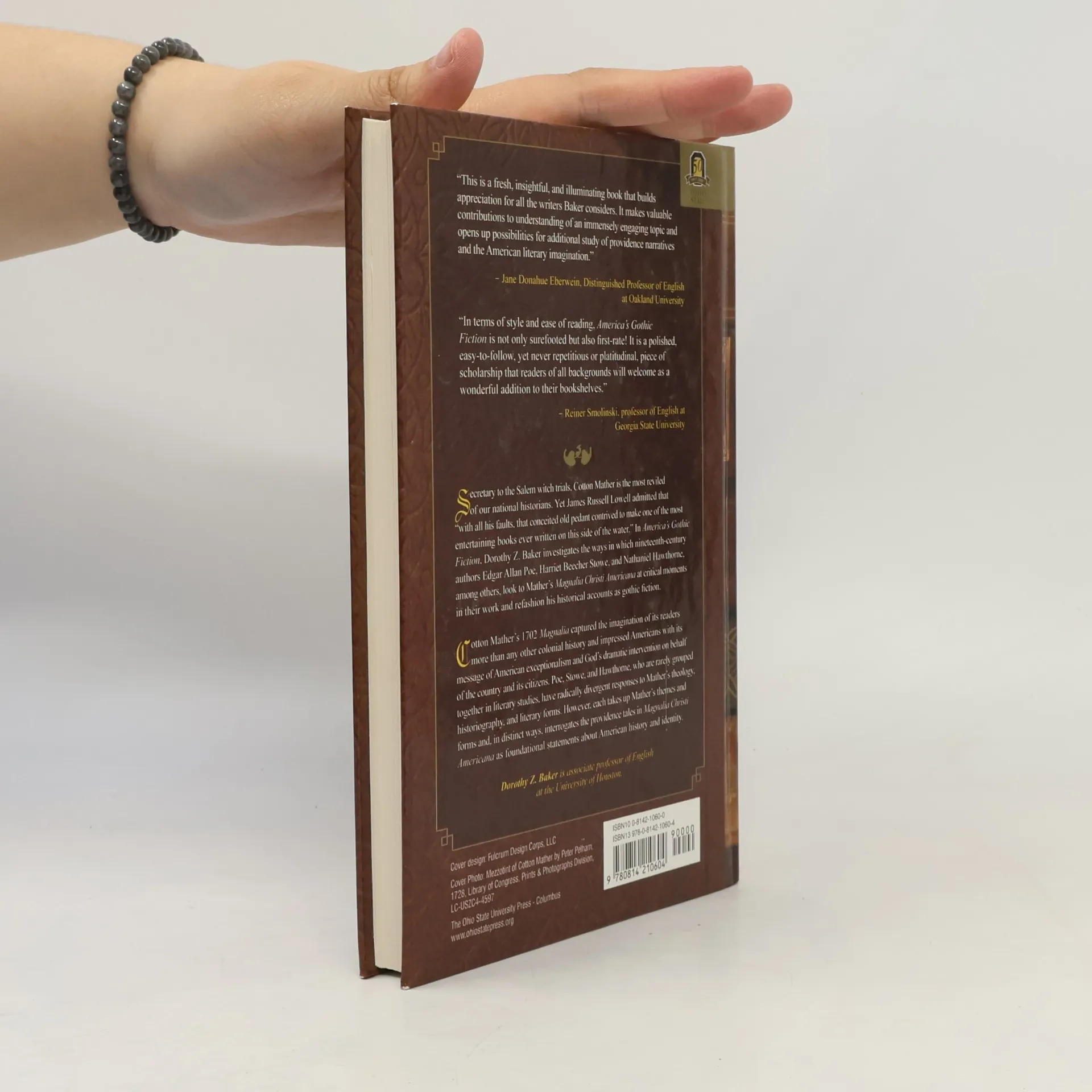
Secretary to the Salem witch trials, Cotton Mather is the most reviled of our national historians. Yet James Russell Lowell admitted that “with all his faults, that conceited old pedant contrived to make one of the most entertaining books ever written on this side of the water.” In America’s Gothic Fiction , Dorothy Z. Baker investigates the ways in which nineteenth-century authors Edgar Allan Poe, Harriet Beecher Stowe, and Nathaniel Hawthorne, among others, look to Mather’s Magnalia Christi Americana at critical moments in their work and refashion his historical accounts as gothic fiction. Cotton Mather’s 1702 Magnalia captured the imagination of its readers more than any other colonial history and impressed Americans with its message of American exceptionalism and God’s dramatic intervention on behalf of the country and its citizens. Poe, Stowe, and Hawthorne, who are rarely grouped together in literary studies, have radically divergent responses to Mather’s theology, historiography, and literary forms. However, each takes up Mather’s themes and forms and, in distinct ways, interrogates the providence tales in Magnalia Christi Americana as foundational statements about American history and identity.
Zakup książki
America’s Gothic Fiction, Dorothy Zayatz Baker
- Język

- Rok wydania
- 2007
- Oprawa
- (twarda),
- Stan książki
- Dobry
- Cena
- 32,09 zł
Metody płatności
Nikt jeszcze nie ocenił.
- Tytuł
- America’s Gothic Fiction
- Podtytuł
- The Legacy of Magnalia Christi Americana
- Język
- angielski
- Autorzy
- Dorothy Zayatz Baker
- Wydawca
- Ohio State University Press
- Rok wydania
- 2007
- Oprawa
- twarda
- Liczba stron
- 161
- ISBN10
- 0814210600
- ISBN13
- 9780814210604
- Seria
- Opis
- Secretary to the Salem witch trials, Cotton Mather is the most reviled of our national historians. Yet James Russell Lowell admitted that “with all his faults, that conceited old pedant contrived to make one of the most entertaining books ever written on this side of the water.” In America’s Gothic Fiction , Dorothy Z. Baker investigates the ways in which nineteenth-century authors Edgar Allan Poe, Harriet Beecher Stowe, and Nathaniel Hawthorne, among others, look to Mather’s Magnalia Christi Americana at critical moments in their work and refashion his historical accounts as gothic fiction. Cotton Mather’s 1702 Magnalia captured the imagination of its readers more than any other colonial history and impressed Americans with its message of American exceptionalism and God’s dramatic intervention on behalf of the country and its citizens. Poe, Stowe, and Hawthorne, who are rarely grouped together in literary studies, have radically divergent responses to Mather’s theology, historiography, and literary forms. However, each takes up Mather’s themes and forms and, in distinct ways, interrogates the providence tales in Magnalia Christi Americana as foundational statements about American history and identity.