

Więcej o książce
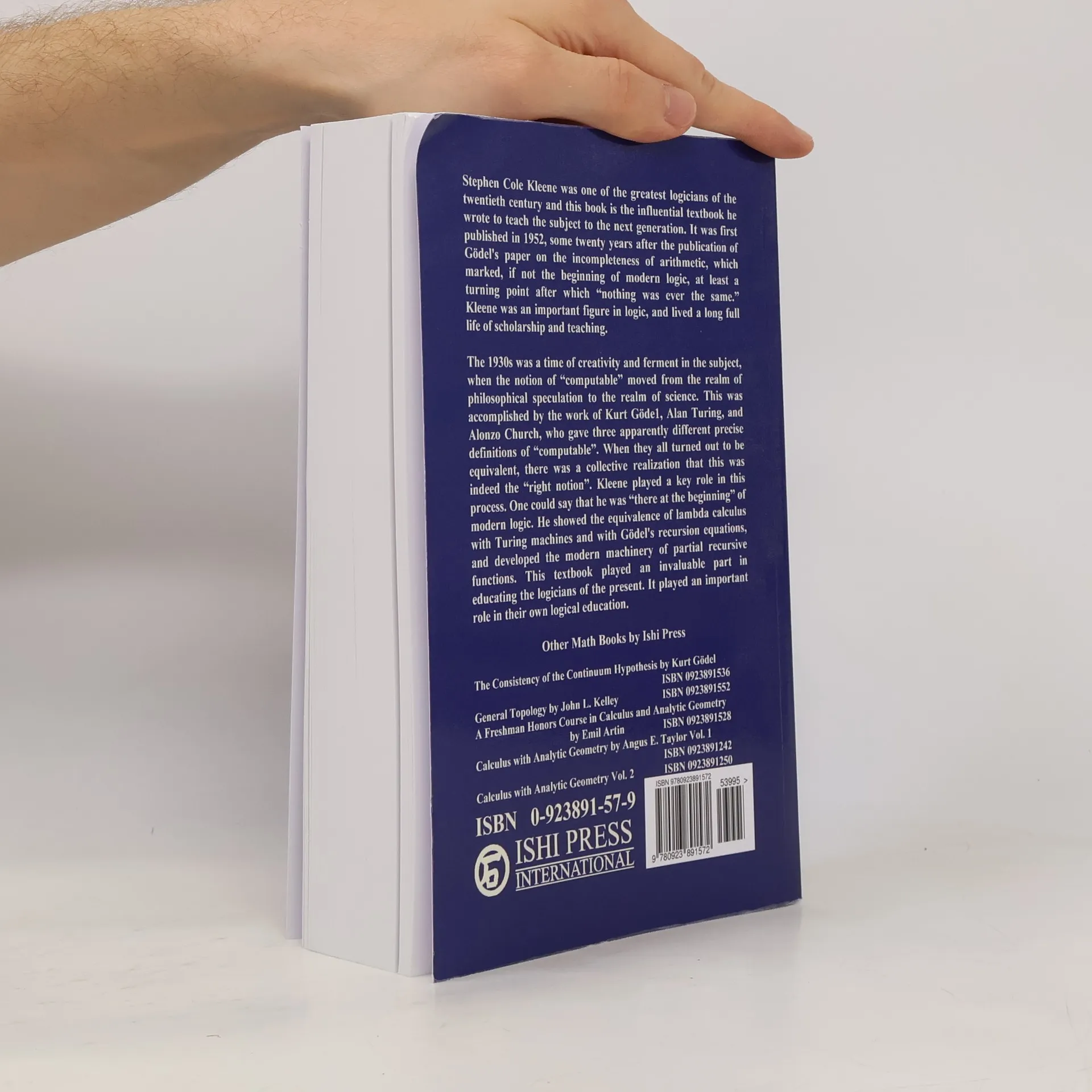
Stephen Cole Kleene was one of the greatest logicians of the twentieth century and this book is the influential textbook he wrote to teach the subject to the next generation. It was first published in 1952, some twenty years after the publication of Godel's paper on the incompleteness of arithmetic, which marked, if not the beginning of modern logic. The 1930s was a time of creativity and ferment in the subject, when the notion of computable moved from the realm of philosophical speculation to the realm of science. This was accomplished by the work of Kurt Gode1, Alan Turing, and Alonzo Church, who gave three apparently different precise definitions of computable. When they all turned out to be equivalent, there was a collective realization that this was indeed the right notion. Kleene played a key role in this process. One could say that he was there at the beginning of modern logic. He showed the equivalence of lambda calculus with Turing machines and with Godel's recursion equations, and developed the modern machinery of partial recursive functions. This textbook played an invaluable part in educating the logicians of the present. It played an important role in their own logical education."
Zakup książki
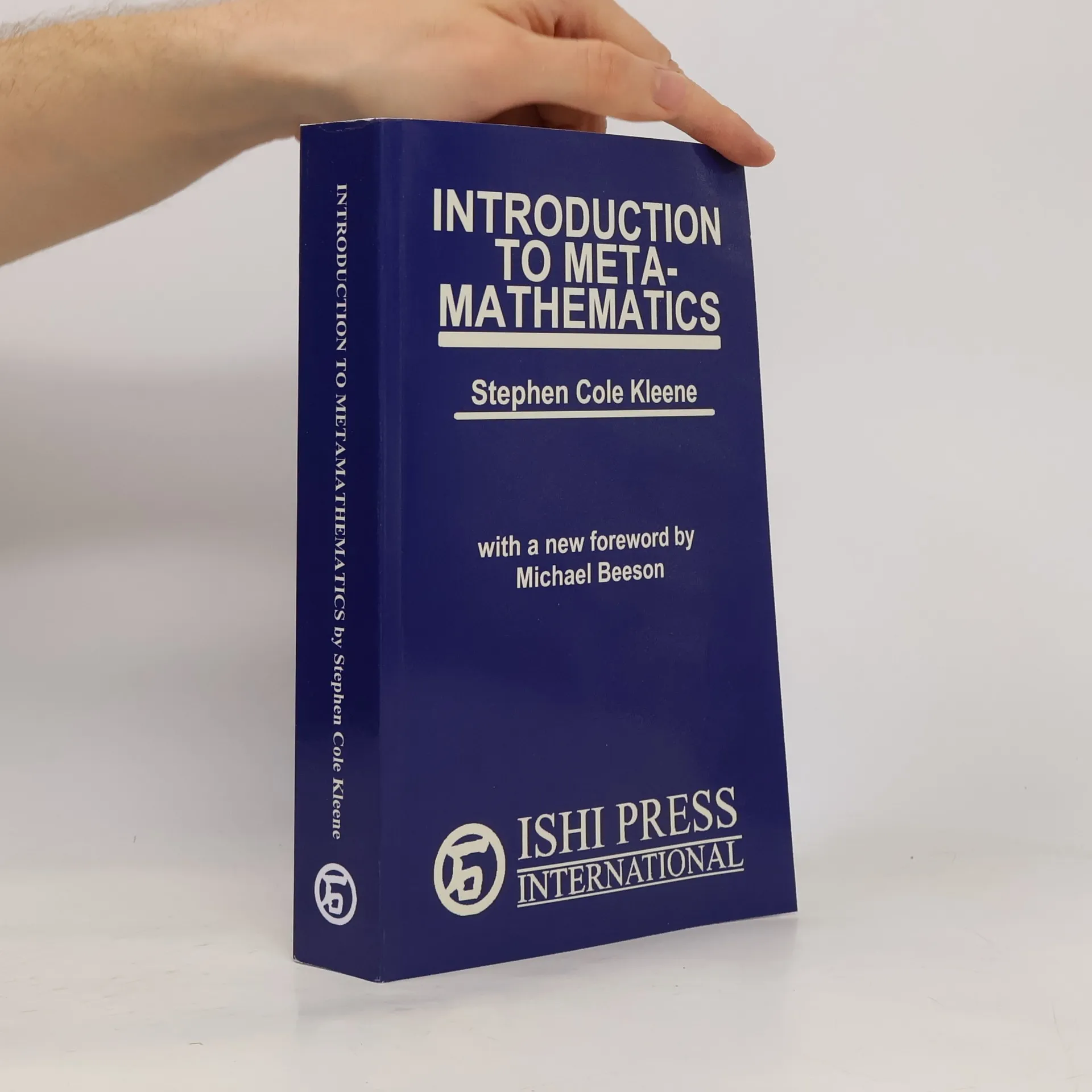
Introduction to Metamathematics, Stephen Cole Kleene, Michael Beeson
- Język

- Rok wydania
- 2009
- Oprawa
- (miękka)
Metody płatności
Nikt jeszcze nie ocenił.
- Tytuł
- Introduction to Metamathematics
- Podtytuł
- With a New Foreword by Michael Beeson
- Język
- angielski
- Autorzy
- Stephen Cole Kleene, Michael Beeson
- Wydawca
- Ishi Press
- Rok wydania
- 2009
- Oprawa
- miękka
- Liczba stron
- 572
- ISBN10
- 0923891579
- ISBN13
- 9780923891572
- Seria
- Kategorie
- Tagi
- Podręczniki, Poradniki, Logika
- Opis
- Stephen Cole Kleene was one of the greatest logicians of the twentieth century and this book is the influential textbook he wrote to teach the subject to the next generation. It was first published in 1952, some twenty years after the publication of Godel's paper on the incompleteness of arithmetic, which marked, if not the beginning of modern logic. The 1930s was a time of creativity and ferment in the subject, when the notion of computable moved from the realm of philosophical speculation to the realm of science. This was accomplished by the work of Kurt Gode1, Alan Turing, and Alonzo Church, who gave three apparently different precise definitions of computable. When they all turned out to be equivalent, there was a collective realization that this was indeed the right notion. Kleene played a key role in this process. One could say that he was there at the beginning of modern logic. He showed the equivalence of lambda calculus with Turing machines and with Godel's recursion equations, and developed the modern machinery of partial recursive functions. This textbook played an invaluable part in educating the logicians of the present. It played an important role in their own logical education."