

Więcej o książce
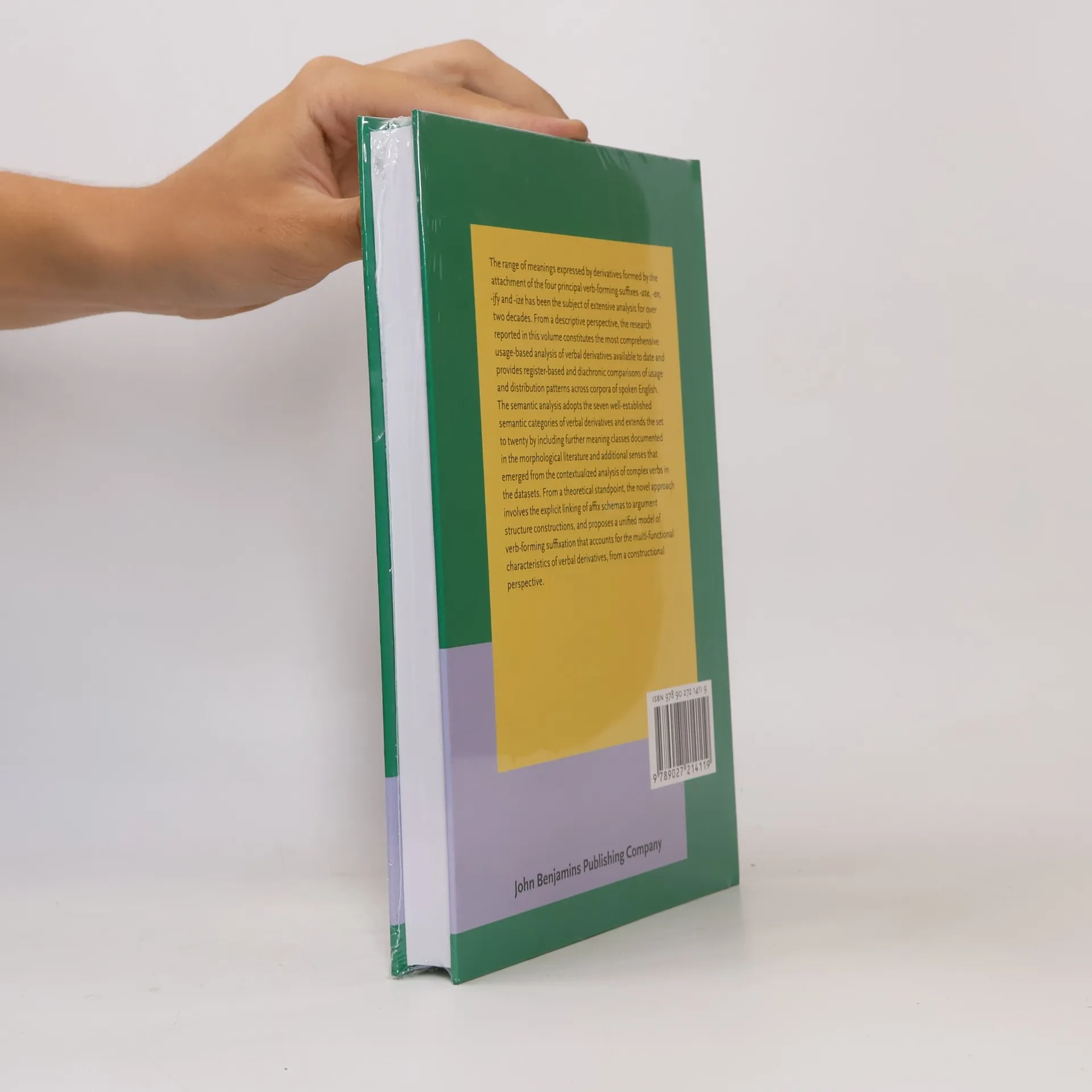
The range of meanings expressed by derivatives formed by the attachment of the four principal verb-forming suffixes - ate , - en , - ify and - ize has been the subject of extensive analysis for over two decades. From a descriptive perspective, the research reported in this volume constitutes the most comprehensive usage-based analysis of verbal derivatives available to date and provides register-based and diachronic comparisons of usage and distribution patterns across corpora of spoken English. The semantic analysis adopts the seven well-established semantic categories of verbal derivatives and extends the set to twenty by including further meaning classes documented in the morphological literature and additional senses that emerged from the contextualized analysis of complex verbs in the datasets. From a theoretical standpoint, the novel approach involves the explicit linking of affix schemas to argument structure constructions, and proposes a unified model of verb-forming suffixation that accounts for the multi-functional characteristics of verbal derivatives, from a constructional perspective.
Zakup książki
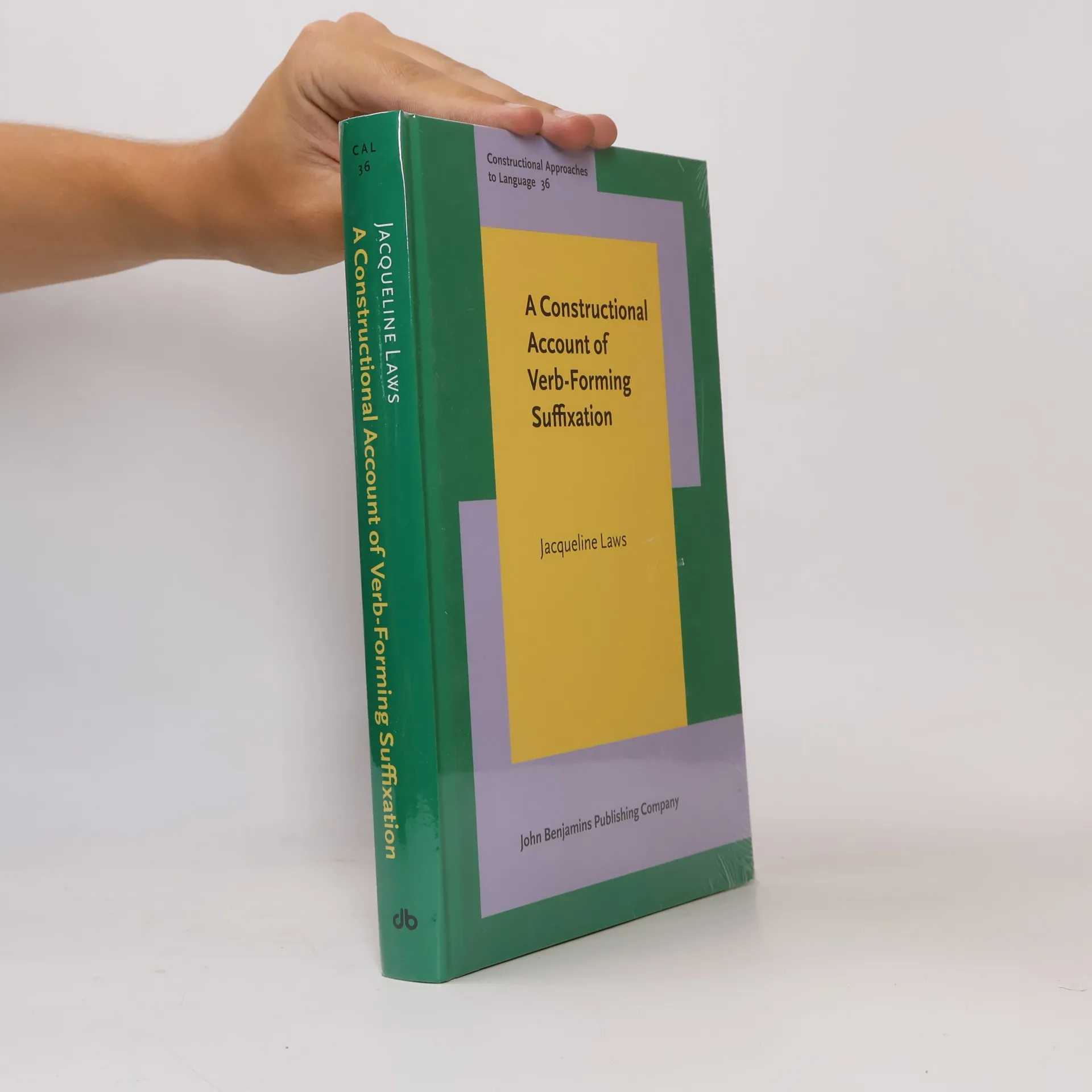
Constructional Approaches to Language - 36: A Constructional Account of Verb-Forming Suffixation, Jacqueline Laws
- Język

- Rok wydania
- 2023
- Oprawa
- (twarda),
- Stan książki
- Bardzo dobry
- Cena
- 173,13 zł
Metody płatności
Nikt jeszcze nie ocenił.
- Tytuł
- Constructional Approaches to Language - 36: A Constructional Account of Verb-Forming Suffixation
- Język
- angielski
- Autorzy
- Jacqueline Laws
- Rok wydania
- 2023
- Oprawa
- twarda
- Liczba stron
- 393
- ISBN10
- 9027214115
- ISBN13
- 9789027214119
- Seria
- Opis
- The range of meanings expressed by derivatives formed by the attachment of the four principal verb-forming suffixes - ate , - en , - ify and - ize has been the subject of extensive analysis for over two decades. From a descriptive perspective, the research reported in this volume constitutes the most comprehensive usage-based analysis of verbal derivatives available to date and provides register-based and diachronic comparisons of usage and distribution patterns across corpora of spoken English. The semantic analysis adopts the seven well-established semantic categories of verbal derivatives and extends the set to twenty by including further meaning classes documented in the morphological literature and additional senses that emerged from the contextualized analysis of complex verbs in the datasets. From a theoretical standpoint, the novel approach involves the explicit linking of affix schemas to argument structure constructions, and proposes a unified model of verb-forming suffixation that accounts for the multi-functional characteristics of verbal derivatives, from a constructional perspective.