



Więcej o książce
Traditional economic and financial theory faces challenges as normative models fail to predict the behaviors of successful producers, investors, and consumers effectively. Economists and psychologists are uncovering anomalies at individual, market, and natural economic levels, prompting a reevaluation of the role of psychological and sociological factors in economic behavior. This raises fundamental questions about the nature of economic rationality. The text surveys the growing evidence of these economic anomalies and advocates for a comprehensive behavioral framework for economics and finance. In the meantime, it emphasizes how incorporating rules of thumb can enhance predictions regarding decision-making. Targeted at business executives and students with intermediate knowledge in economics or finance, the first part is accessible to those with just an introductory background. The second part serves professionals seeking a solid introduction to the field. The discussion also explores the potential applications of behavioral analysis to historical and contemporary public policy issues. It concludes with decision-making guidelines that suggest ways to improve predictions by considering the heuristics and biases that influence decision-makers, even in the absence of a comprehensive behavioral theory.
Zakup książki
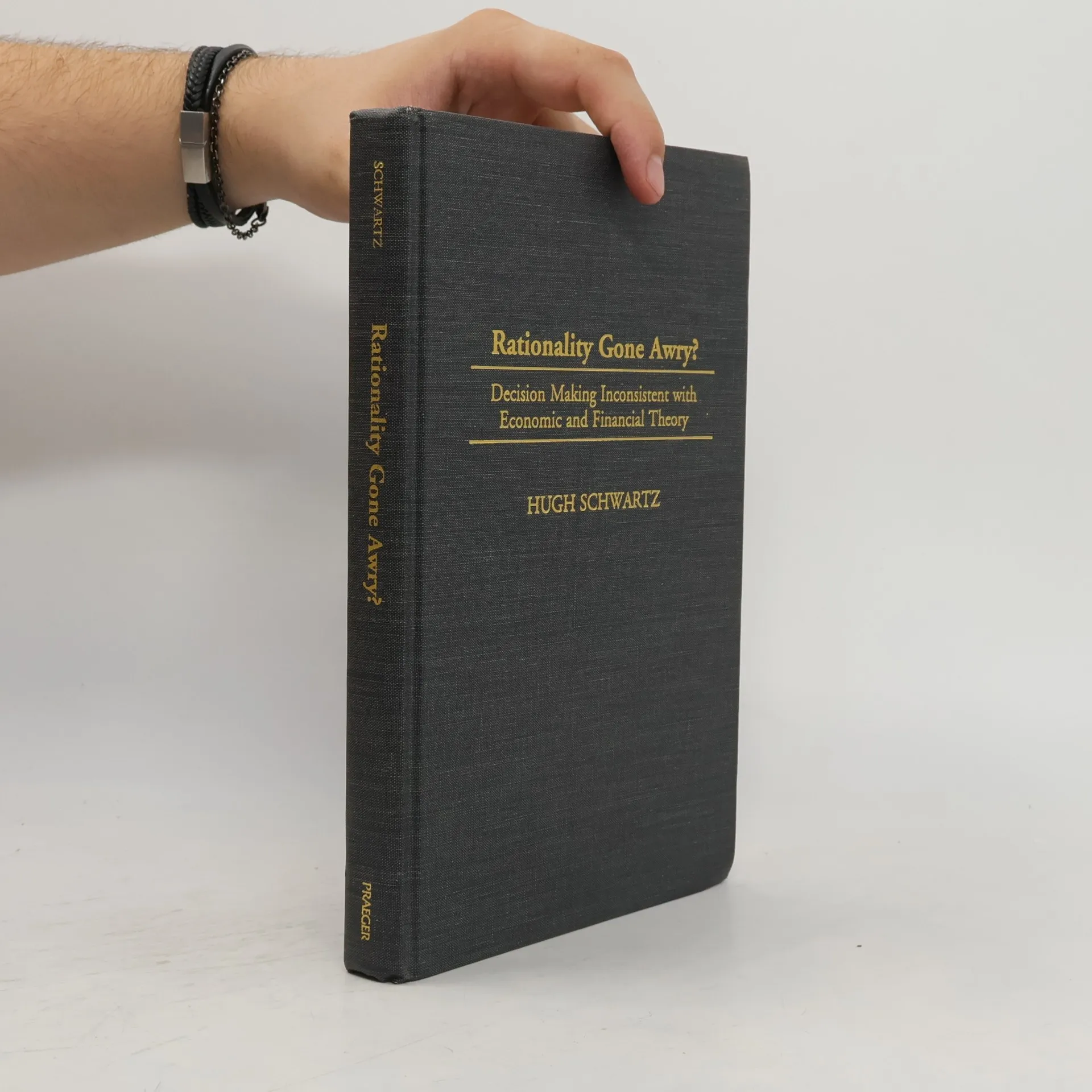
Rationality Gone Awry?, Hugh H. Schwartz
- Język

- Rok wydania
- 1998
- Oprawa
- (twarda)
Metody płatności
Nikt jeszcze nie ocenił.
- Tytuł
- Rationality Gone Awry?
- Podtytuł
- Decision Making Inconsistent with Economic and Financial Theory
- Język
- angielski
- Autorzy
- Hugh H. Schwartz
- Wydawca
- Praeger
- Rok wydania
- 1998
- Oprawa
- twarda
- Liczba stron
- 240
- ISBN10
- 0275960145
- ISBN13
- 9780275960148
- Seria
- Opis
- Traditional economic and financial theory faces challenges as normative models fail to predict the behaviors of successful producers, investors, and consumers effectively. Economists and psychologists are uncovering anomalies at individual, market, and natural economic levels, prompting a reevaluation of the role of psychological and sociological factors in economic behavior. This raises fundamental questions about the nature of economic rationality. The text surveys the growing evidence of these economic anomalies and advocates for a comprehensive behavioral framework for economics and finance. In the meantime, it emphasizes how incorporating rules of thumb can enhance predictions regarding decision-making. Targeted at business executives and students with intermediate knowledge in economics or finance, the first part is accessible to those with just an introductory background. The second part serves professionals seeking a solid introduction to the field. The discussion also explores the potential applications of behavioral analysis to historical and contemporary public policy issues. It concludes with decision-making guidelines that suggest ways to improve predictions by considering the heuristics and biases that influence decision-makers, even in the absence of a comprehensive behavioral theory.