




Więcej o książce
The chapters in this volume reconsider fundamental premises about state and society in advanced capitalist countries. That social scientists in different disciplines of varying methodological and political persuasions should have found it useful to collaborate in such an undertaking is testimony to the profound social, economic and political shocks experienced by all advanced capitalist nations since to late 1960s. The energy crisis, the end of rapid economic growth, inflation, high unemployment and rising social conflict challenge conventional conceptions about the functioning of industrial societies and their future course. Social science theories have been unable to illuminate these realities.
Zakup książki
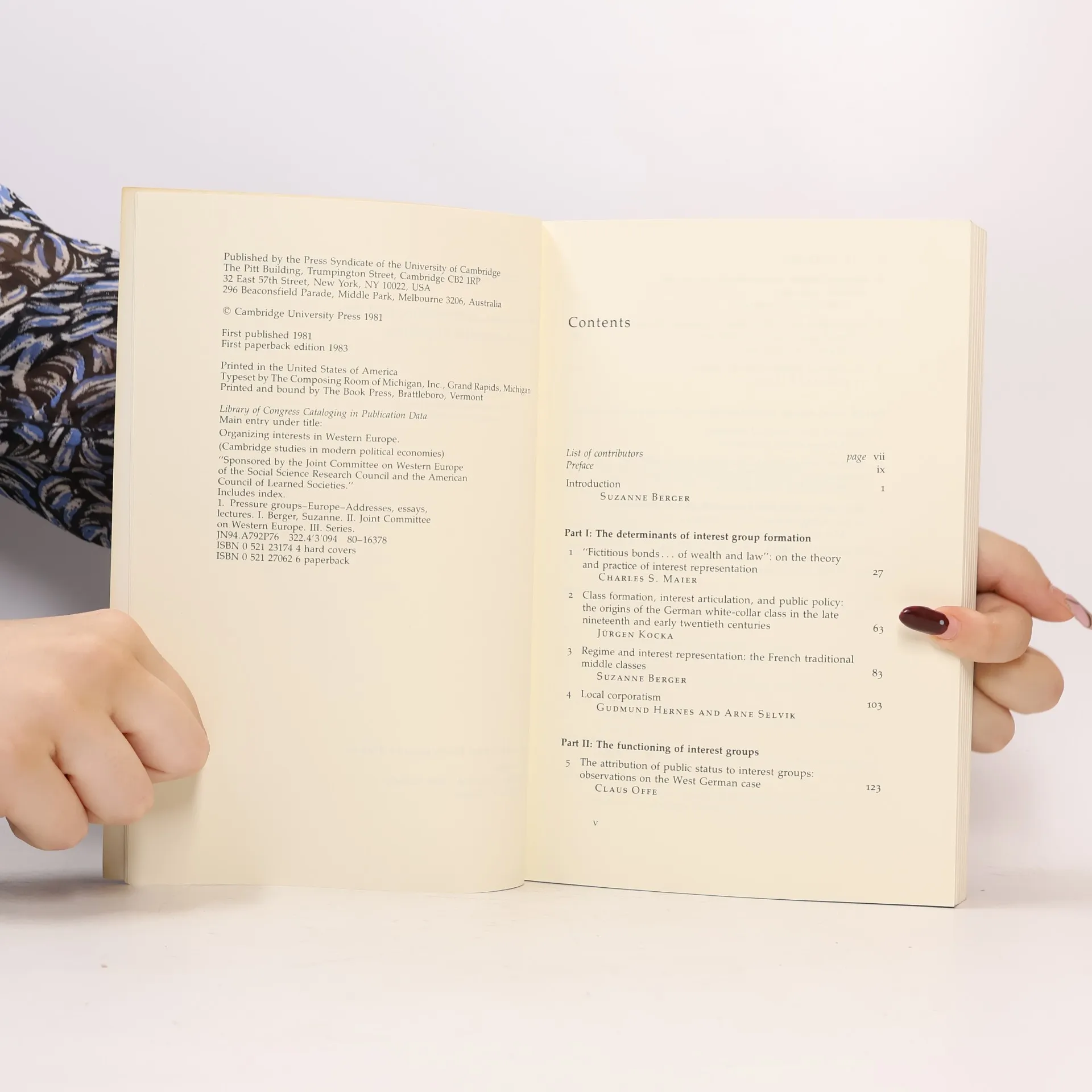
Cambridge Studies in Modern Political Economies: Organizing Interests in Western Europe, Suzanne D. Berger
- Język

- Rok wydania
- 1983
- Oprawa
- (miękka),
- Stan książki
- Dobry
- Cena
- 28,52 zł
Metody płatności
Nikt jeszcze nie ocenił.
- Tytuł
- Cambridge Studies in Modern Political Economies: Organizing Interests in Western Europe
- Podtytuł
- Pluralism, Corporatism, and the Transformation of Politics
- Język
- angielski
- Autorzy
- Suzanne D. Berger
- Wydawca
- Cambridge University Press
- Rok wydania
- 1983
- Oprawa
- miękka
- Liczba stron
- 440
- ISBN10
- 0521270626
- ISBN13
- 9780521270625
- Seria
- Opis
- The chapters in this volume reconsider fundamental premises about state and society in advanced capitalist countries. That social scientists in different disciplines of varying methodological and political persuasions should have found it useful to collaborate in such an undertaking is testimony to the profound social, economic and political shocks experienced by all advanced capitalist nations since to late 1960s. The energy crisis, the end of rapid economic growth, inflation, high unemployment and rising social conflict challenge conventional conceptions about the functioning of industrial societies and their future course. Social science theories have been unable to illuminate these realities.