

Więcej o książce
Biofeedback training is a research methodology and training procedure through which people can learn voluntary control over their internal physiological systems. It is a merger of mUltiple disciplines with interest deriving from many sources-from basic understanding of psychophysiology to a desire for enhanced self-awareness. The goals of biofeedback are to develop an increased awareness of relevant internal physiological functions, to establish control over these functions, to generalize control from an experimental or clinical setting to everyday life, and to focus attention on mind/body integration. Biofeedback is explored in many different settings. In the university, biofeed back equipment and applications can be found in the departments of experi mental and clinical psychology, counseling, physiology, biology, education, and the theater arts, as well as in the health service (student infirmary). Outside the university, biofeedback may be found in different departments of hospitals (such as physical medicine), private clinics, education and self-awareness groups, psychotherapy practices, and elsewhere. Its growth is still expanding, and excite ment is still rising as a result of biofeedback's demonstration that autonomic functions can be brought under voluntary control and that the long-standing arti ficial separation between mind, body, and consciousness can be disproven.
Zakup książki
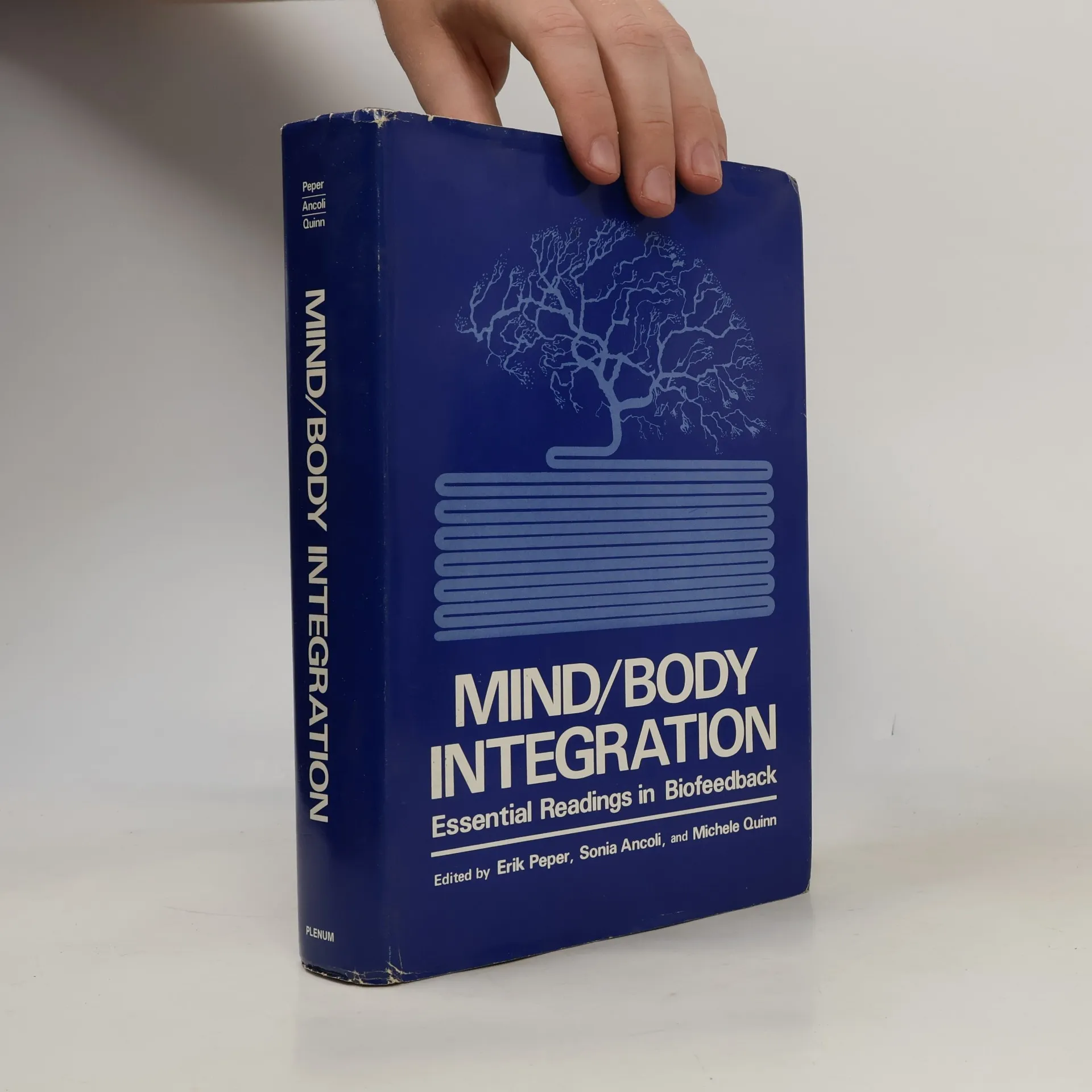
Mind/Body Integration, Erik Peper, Sonia Ancoli, Michele Quinn
- Język

- Rok wydania
- 1979
- Oprawa
- (twarda)
Metody płatności
Nikt jeszcze nie ocenił.
- Tytuł
- Mind/Body Integration
- Podtytuł
- Essential Readings in Biofeedback
- Język
- angielski
- Autorzy
- Erik Peper, Sonia Ancoli, Michele Quinn
- Wydawca
- Springer
- Rok wydania
- 1979
- Oprawa
- twarda
- Liczba stron
- 607
- ISBN10
- 0306401029
- ISBN13
- 9780306401022
- Seria
- Kategorie
- Tagi
- Biznes, Tematyka psychologiczna, Emocje, Psychoterapia, Psychiatria, Szkolenie, Psychologia kliniczna, Neuropsychologia
- Opis
- Biofeedback training is a research methodology and training procedure through which people can learn voluntary control over their internal physiological systems. It is a merger of mUltiple disciplines with interest deriving from many sources-from basic understanding of psychophysiology to a desire for enhanced self-awareness. The goals of biofeedback are to develop an increased awareness of relevant internal physiological functions, to establish control over these functions, to generalize control from an experimental or clinical setting to everyday life, and to focus attention on mind/body integration. Biofeedback is explored in many different settings. In the university, biofeed back equipment and applications can be found in the departments of experi mental and clinical psychology, counseling, physiology, biology, education, and the theater arts, as well as in the health service (student infirmary). Outside the university, biofeedback may be found in different departments of hospitals (such as physical medicine), private clinics, education and self-awareness groups, psychotherapy practices, and elsewhere. Its growth is still expanding, and excite ment is still rising as a result of biofeedback's demonstration that autonomic functions can be brought under voluntary control and that the long-standing arti ficial separation between mind, body, and consciousness can be disproven.