




Więcej o książce
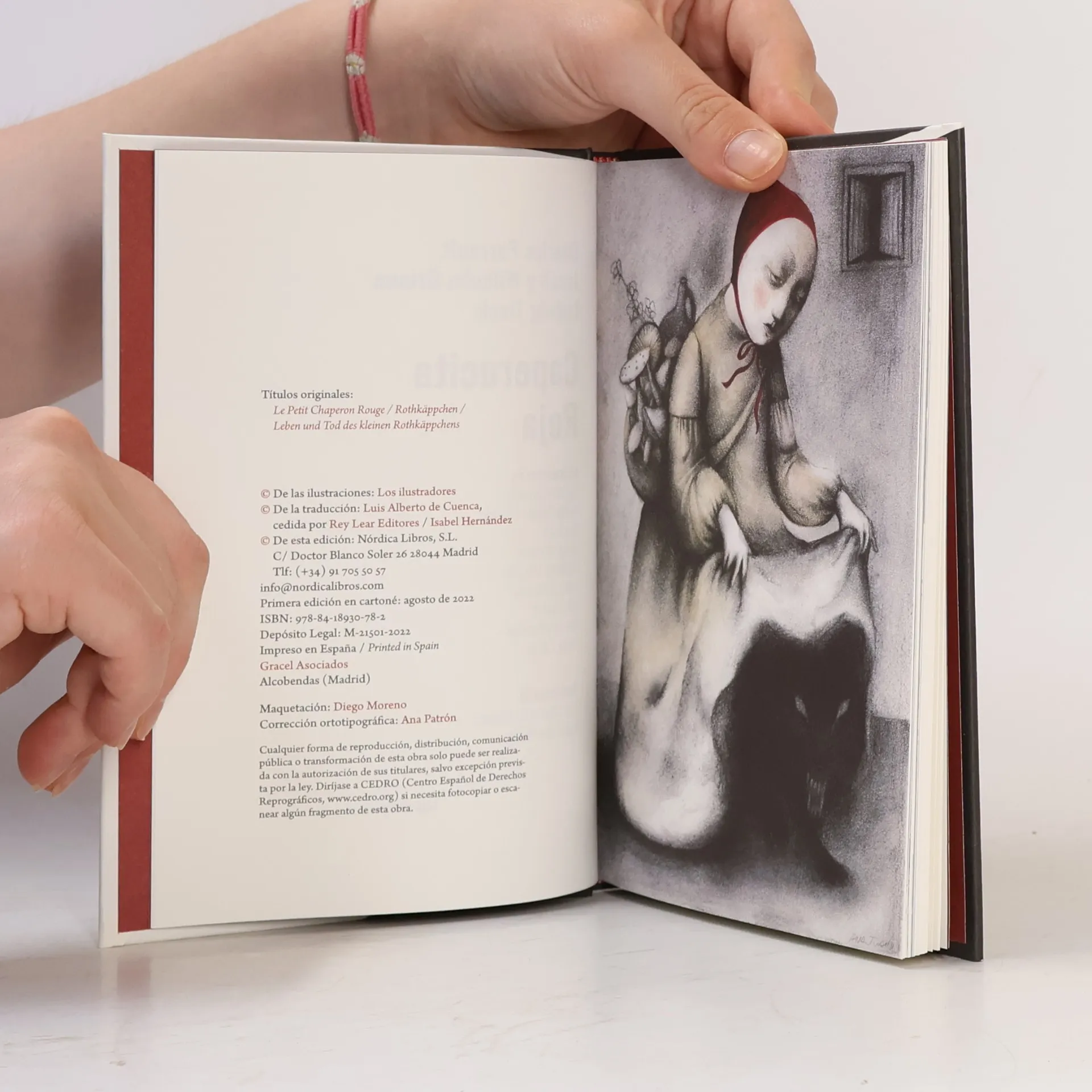
Little Red Riding Hood is the orally transmitted fairy tale that has best survived the passage of time, as evidenced by the multiple versions of this story that have been made through the centuries. It has many readings, but above all it is a story for young people that, in some way, symbolizes the transition from childhood to adolescence. This edition brings together the three main versions of the story: In 1697 Charles Perrault was the first to include the story of Little Red Riding Hood in a volume of stories. He wrote a moralizing fable intended to warn the "ladies" of the court about the dangers of "certain men", disguised as wolves. In 1812 Jacob and Wilhelm Grimm took up the tale and their version is the best known today. Finally we publish a rarity, the dramatic and verse version that the great German writer Ludwig Tieck wrote in 1800.
Zakup książki
Caperucita Roja (ilustrados), Ludwig Tieck, Luis Scafati, Javier Zabala, Ana Juan, Charles Perrault, Agustin Comotto, Luis Alberto de Cuenca, Elena Odriozola, Jacob e Wilhelm Grimm, Noemí Villamuza, Isabel Hernández González, Marta Gómez-Pintado, Alicia Martínez, Verónica Moretta
- Język

- Rok wydania
- 2022
- Oprawa
- (twarda)
Metody płatności
Nikt jeszcze nie ocenił.
- Tytuł
- Caperucita Roja (ilustrados)
- Język
- hiszpański
- Autorzy
- Ludwig Tieck, Luis Scafati, Javier Zabala, Ana Juan, Charles Perrault, Agustin Comotto, Luis Alberto de Cuenca, Elena Odriozola, Jacob e Wilhelm Grimm, Noemí Villamuza, Isabel Hernández González, Marta Gómez-Pintado, Alicia Martínez, Verónica Moretta
- Wydawca
- NórdicaLibros
- Rok wydania
- 2022
- Oprawa
- twarda
- Liczba stron
- 85
- ISBN10
- 8418930780
- ISBN13
- 9788418930782
- Seria
- Kategorie
- Opis
- Little Red Riding Hood is the orally transmitted fairy tale that has best survived the passage of time, as evidenced by the multiple versions of this story that have been made through the centuries. It has many readings, but above all it is a story for young people that, in some way, symbolizes the transition from childhood to adolescence. This edition brings together the three main versions of the story: In 1697 Charles Perrault was the first to include the story of Little Red Riding Hood in a volume of stories. He wrote a moralizing fable intended to warn the "ladies" of the court about the dangers of "certain men", disguised as wolves. In 1812 Jacob and Wilhelm Grimm took up the tale and their version is the best known today. Finally we publish a rarity, the dramatic and verse version that the great German writer Ludwig Tieck wrote in 1800.