

Więcej o książce
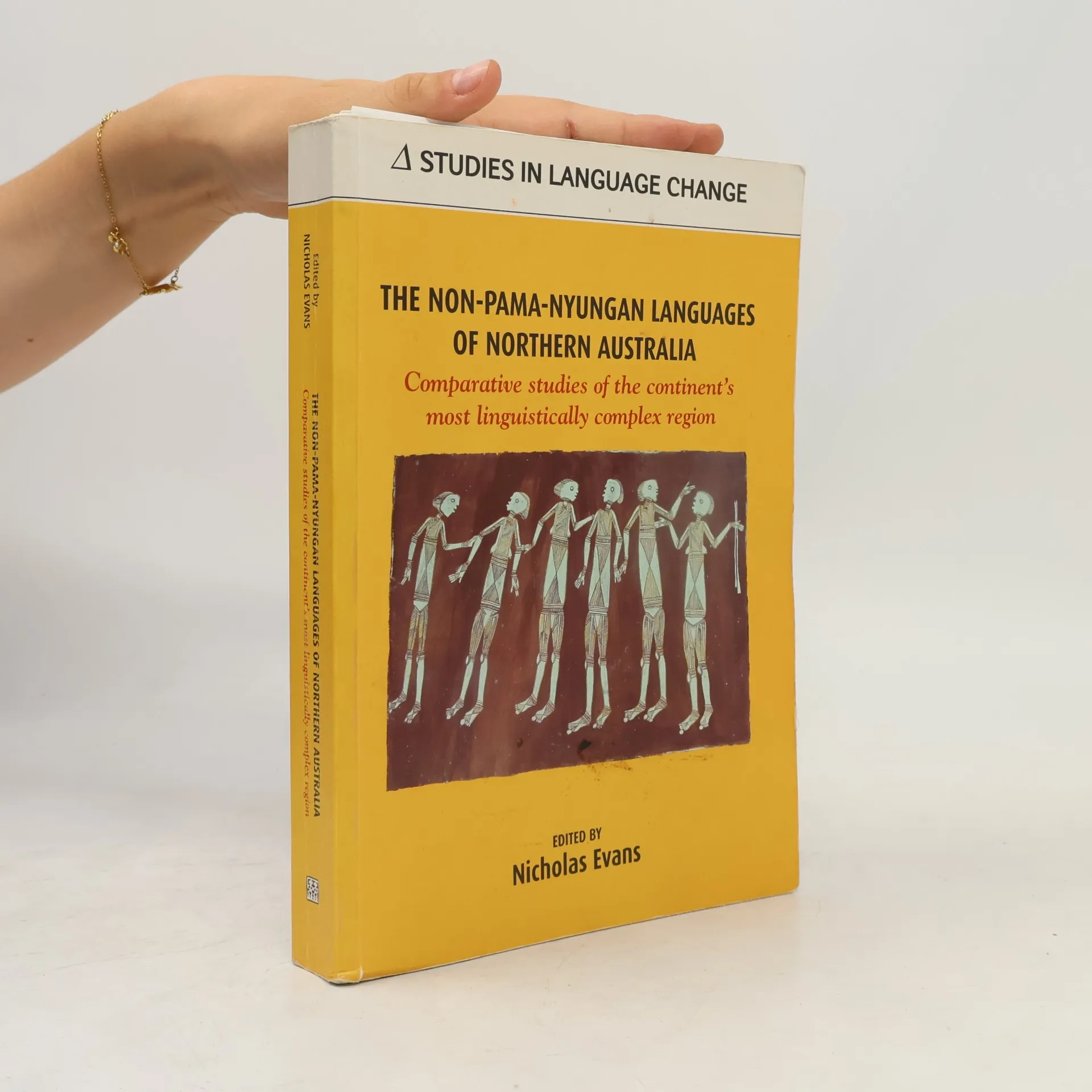
This volume presents detailed comparative studies on various non-Pama-Nyungan languages of Northern Australia, marking the first comprehensive examination of this linguistically diverse region, which encompasses around 90% of Australia's linguistic diversity within just an eighth of its land area. Originating from a workshop at the 1989 Australian Linguistics Society conference, many papers have been revised or newly written, reflecting significant developments in the field since the original discussions. The introduction provides an overview of key issues in comparative non-Pama-Nyungan studies, offering a current survey of language classification and subgrouping, as well as their relationship to Pama-Nyungan languages. Subsequent sections delve into subgrouping, reconstruction, and areal influences relevant to specific non-Pama-Nyungan families or regions. The final sections explore the possibility of reconstructing deeper ancestral levels for these languages, aiming to identify a common origin for most non-Pama-Nyungan families. Overall, the volume demonstrates that the comparative method remains applicable to Australian languages, featuring intricate studies of morphological reconstruction within complex paradigms.
Zakup książki
The Non-Pama-Nyungan Languages of Northern Australia, Nicholas Evans, Australian National University
- Język

- Rok wydania
- 2003
Metody płatności
Nikt jeszcze nie ocenił.
- Tytuł
- The Non-Pama-Nyungan Languages of Northern Australia
- Podtytuł
- Comparative Studies of the Continent's Most Linguistically Complex Region
- Język
- angielski
- Rok wydania
- 2003
- Liczba stron
- 513
- ISBN10
- 085883538X
- ISBN13
- 9780858835382
- Seria
- Tagi
- Lingwistyka, Australia, Aborygeni
- Opis
- This volume presents detailed comparative studies on various non-Pama-Nyungan languages of Northern Australia, marking the first comprehensive examination of this linguistically diverse region, which encompasses around 90% of Australia's linguistic diversity within just an eighth of its land area. Originating from a workshop at the 1989 Australian Linguistics Society conference, many papers have been revised or newly written, reflecting significant developments in the field since the original discussions. The introduction provides an overview of key issues in comparative non-Pama-Nyungan studies, offering a current survey of language classification and subgrouping, as well as their relationship to Pama-Nyungan languages. Subsequent sections delve into subgrouping, reconstruction, and areal influences relevant to specific non-Pama-Nyungan families or regions. The final sections explore the possibility of reconstructing deeper ancestral levels for these languages, aiming to identify a common origin for most non-Pama-Nyungan families. Overall, the volume demonstrates that the comparative method remains applicable to Australian languages, featuring intricate studies of morphological reconstruction within complex paradigms.