

Więcej o książce
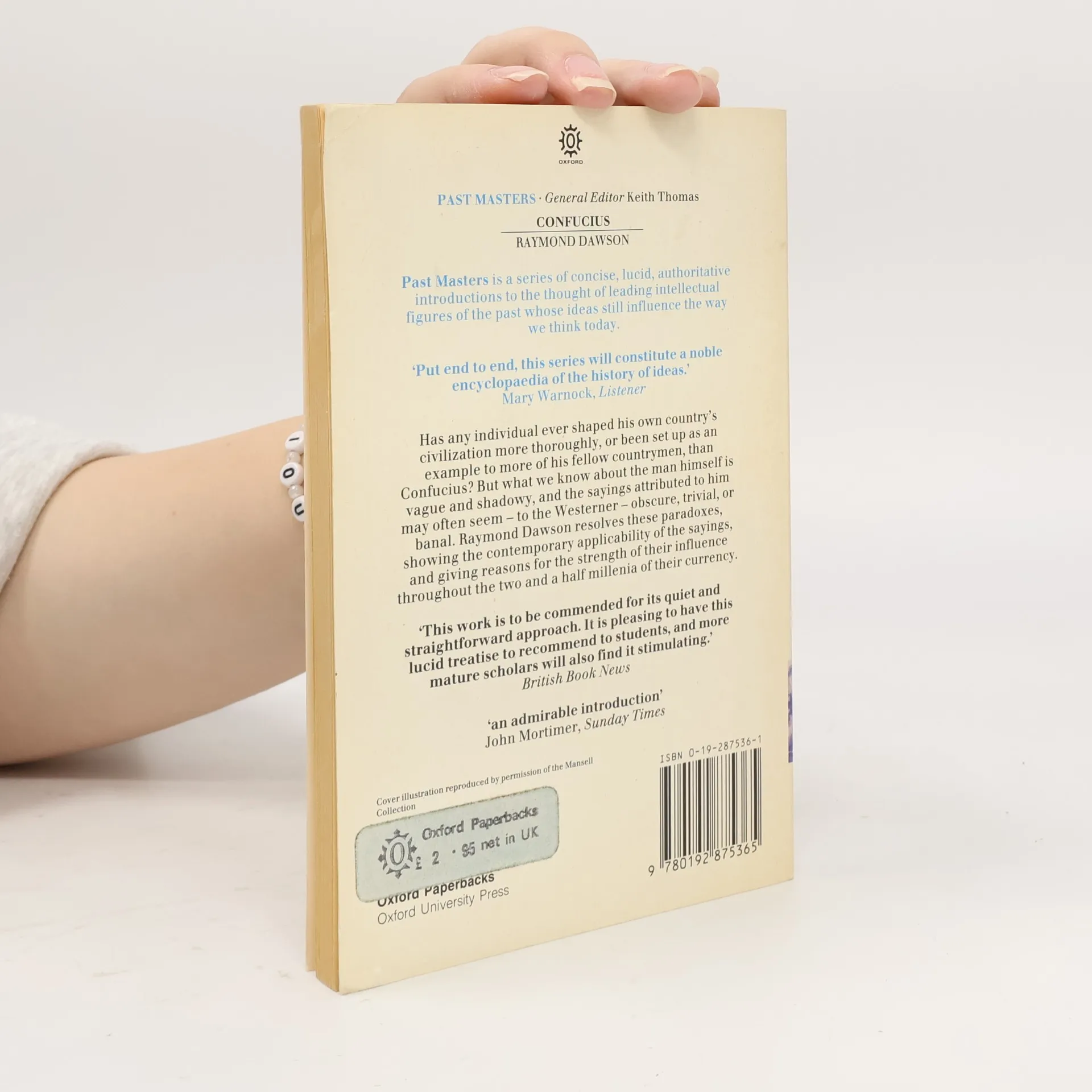
Has any individual ever shaped his own country's civilization more thoroughly than Confucius? Certainly no other world figure has ever been set up as an example to more of his fellow countrymen. But what we know about the man himself is vague and shadowy, often contaminated with fiction. And the sayings attributed to him may often seem – to the Westerner who knows little or nothing about Chinese culture – obscure, trivial or banal.Raymond Dawson resolves these paradoxes. He takes as a model the long-established Chinese tradition of commentary on classical texts – in this case the Analects, the oldest and most reliable Confucian text. Always with a cautious eye on textual doubts, he finds a body of thought whose expression does seem to reflect the views and aspirations of a recognizable person. Like scholars in the imperial Chinese examination halls we consider the implications of separate gobbets of the Master’s thought and see how they cohere into a distinct social, ethical and intellectual system. We find that – as Confucius would have wished – our studies are joyful and require no specialist training or jargon. Unlike those scholars we can see not only the contemporary applicability of the sayings but also the strength of their influence throughout the two and a half millennia of their currency – even in a China that has formally rejected them.
Zakup książki
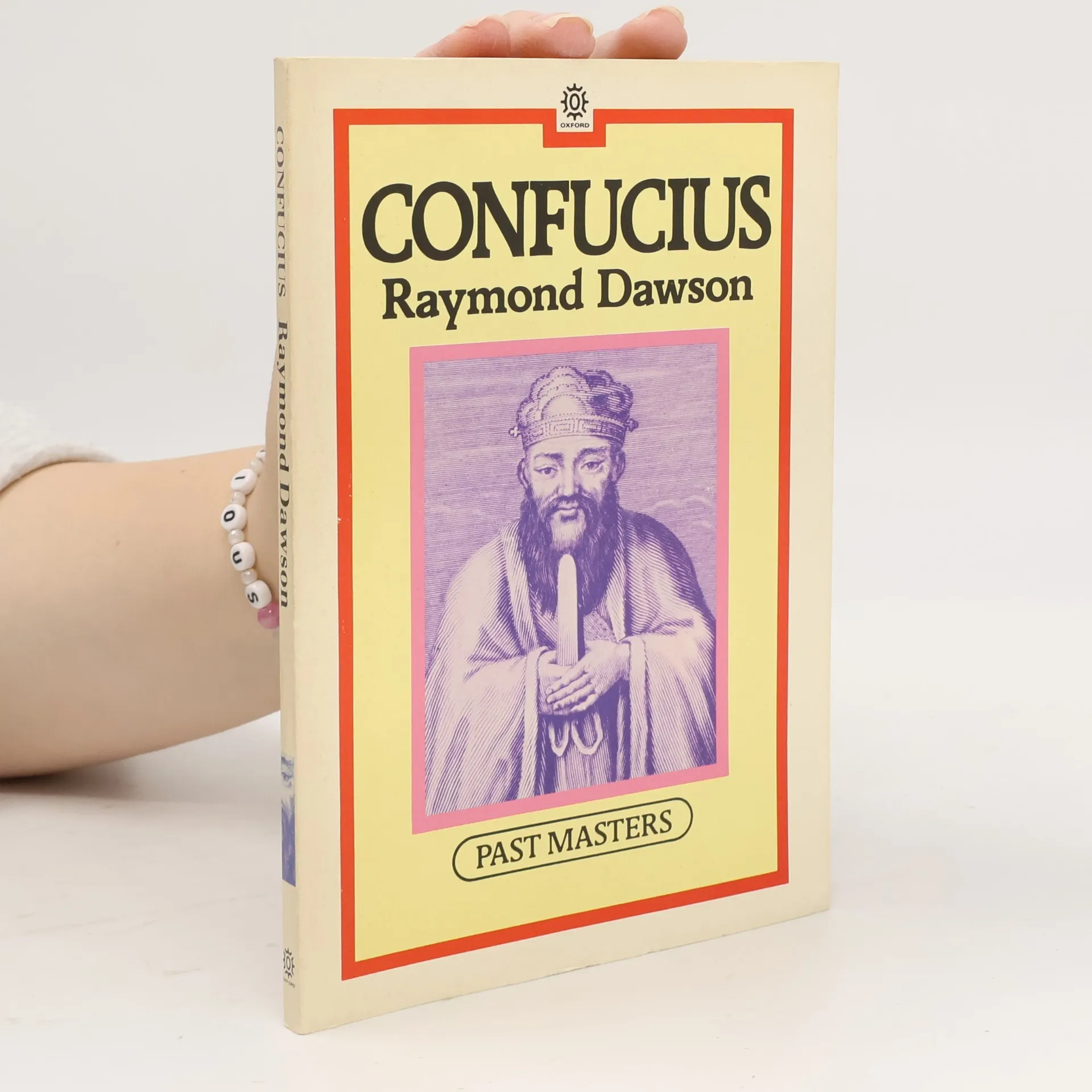
Past Masters: Confucius, Raymond Stanley Dawson
- Język

- Rok wydania
- 1986
- Oprawa
- (miękka),
- Stan książki
- Dobry
- Cena
- 24,83 zł
Metody płatności
Nikt jeszcze nie ocenił.
- Tytuł
- Past Masters: Confucius
- Język
- angielski
- Autorzy
- Raymond Stanley Dawson
- Wydawca
- Oxford University Press
- Rok wydania
- 1986
- Oprawa
- miękka
- Liczba stron
- 95
- ISBN10
- 0192875361
- ISBN13
- 9780192875365
- Seria
- Opis
- Has any individual ever shaped his own country's civilization more thoroughly than Confucius? Certainly no other world figure has ever been set up as an example to more of his fellow countrymen. But what we know about the man himself is vague and shadowy, often contaminated with fiction. And the sayings attributed to him may often seem – to the Westerner who knows little or nothing about Chinese culture – obscure, trivial or banal.Raymond Dawson resolves these paradoxes. He takes as a model the long-established Chinese tradition of commentary on classical texts – in this case the Analects, the oldest and most reliable Confucian text. Always with a cautious eye on textual doubts, he finds a body of thought whose expression does seem to reflect the views and aspirations of a recognizable person. Like scholars in the imperial Chinese examination halls we consider the implications of separate gobbets of the Master’s thought and see how they cohere into a distinct social, ethical and intellectual system. We find that – as Confucius would have wished – our studies are joyful and require no specialist training or jargon. Unlike those scholars we can see not only the contemporary applicability of the sayings but also the strength of their influence throughout the two and a half millennia of their currency – even in a China that has formally rejected them.