



Więcej o książce
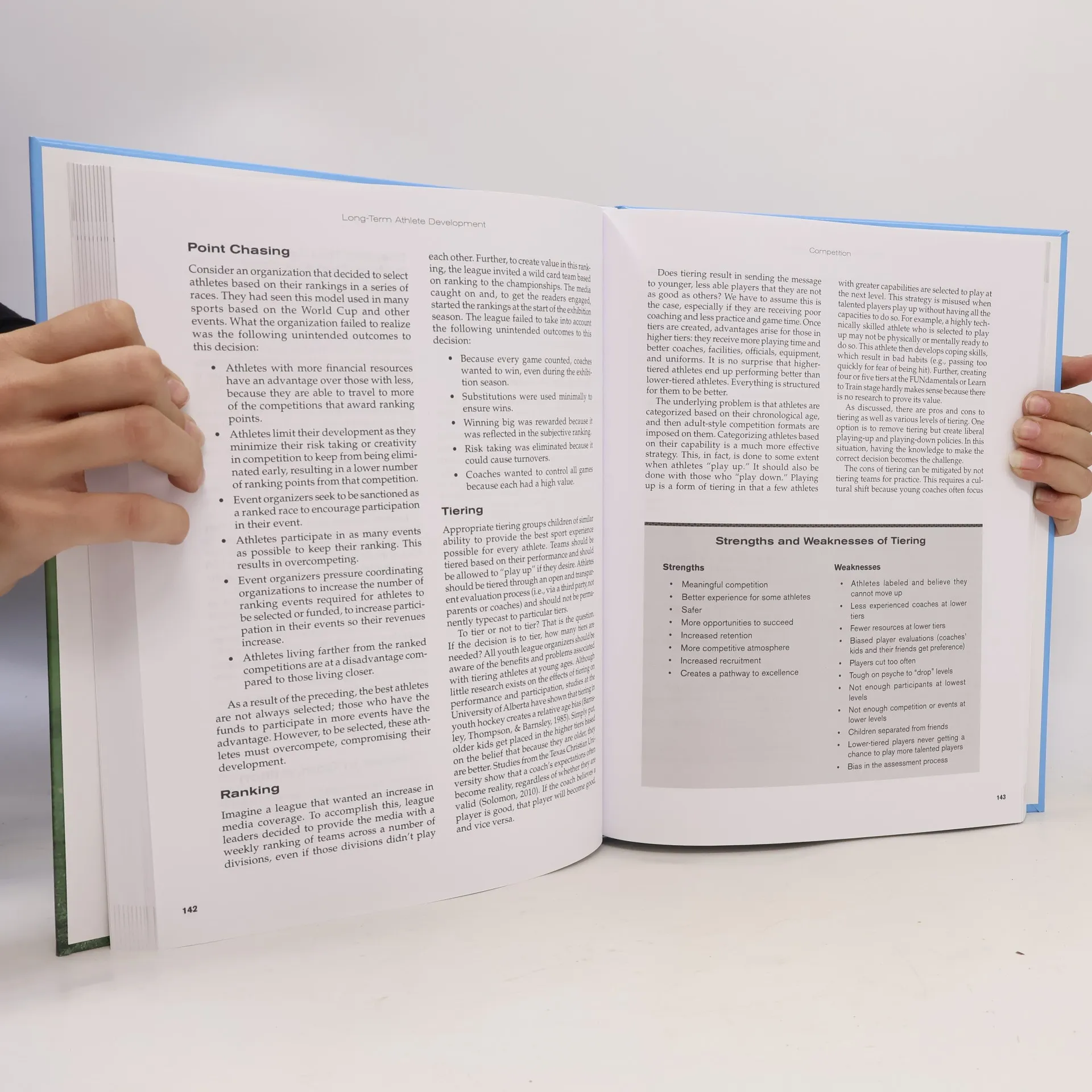
This resource outlines a systematic approach to developing sporting excellence and increasing participation in various sport organizations through the long-term athlete development (LTAD) model. It emphasizes an athlete-centered approach that integrates skill instruction with long-term planning and an understanding of human development. Sport administrators and coaches will find valuable insights to enhance participation and improve athlete performance and growth. This text provides a comprehensive explanation of the LTAD model, incorporating current research on talent development and assessment to aid sport leaders in planning athletic development throughout the lifespan or designing programs for specific groups, including those with disabilities. The authors, Balyi, Way, and Higgs, critique existing talent development models, address the limitations of LTAD, and highlight its benefits as a new approach. Readers can analyze their own programs and refine their coaching philosophies to achieve performance goals. The text features explanations and visuals to clarify concepts in talent identification and long-term athlete development, along with chapter-opening vignettes illustrating practical applications. Each chapter concludes with sources for further study and reflection questions to help readers apply the content. Key factors guiding the LTAD model, such as physical literacy and training variations, are discussed, along with
Zakup książki
Long-Term Athlete Development, Istvan Balyi, Richard Way, Colin Higgs
- Język

- Rok wydania
- 2013
- Oprawa
- (twarda)
Metody płatności
Nikt jeszcze nie ocenił.
- Tytuł
- Long-Term Athlete Development
- Język
- angielski
- Autorzy
- Istvan Balyi, Richard Way, Colin Higgs
- Wydawca
- Human Kinetics
- Rok wydania
- 2013
- Oprawa
- twarda
- Liczba stron
- 296
- ISBN10
- 0736092188
- ISBN13
- 9780736092180
- Seria
- Tagi
- Biznes, Tematyka psychologiczna, Sport, Tematyka medyczna, Edukacja & Szkolnictwo, Szkolenie, Coaching, Fizjologia, Sportowcy
- Opis
- This resource outlines a systematic approach to developing sporting excellence and increasing participation in various sport organizations through the long-term athlete development (LTAD) model. It emphasizes an athlete-centered approach that integrates skill instruction with long-term planning and an understanding of human development. Sport administrators and coaches will find valuable insights to enhance participation and improve athlete performance and growth. This text provides a comprehensive explanation of the LTAD model, incorporating current research on talent development and assessment to aid sport leaders in planning athletic development throughout the lifespan or designing programs for specific groups, including those with disabilities. The authors, Balyi, Way, and Higgs, critique existing talent development models, address the limitations of LTAD, and highlight its benefits as a new approach. Readers can analyze their own programs and refine their coaching philosophies to achieve performance goals. The text features explanations and visuals to clarify concepts in talent identification and long-term athlete development, along with chapter-opening vignettes illustrating practical applications. Each chapter concludes with sources for further study and reflection questions to help readers apply the content. Key factors guiding the LTAD model, such as physical literacy and training variations, are discussed, along with