



Więcej o książce
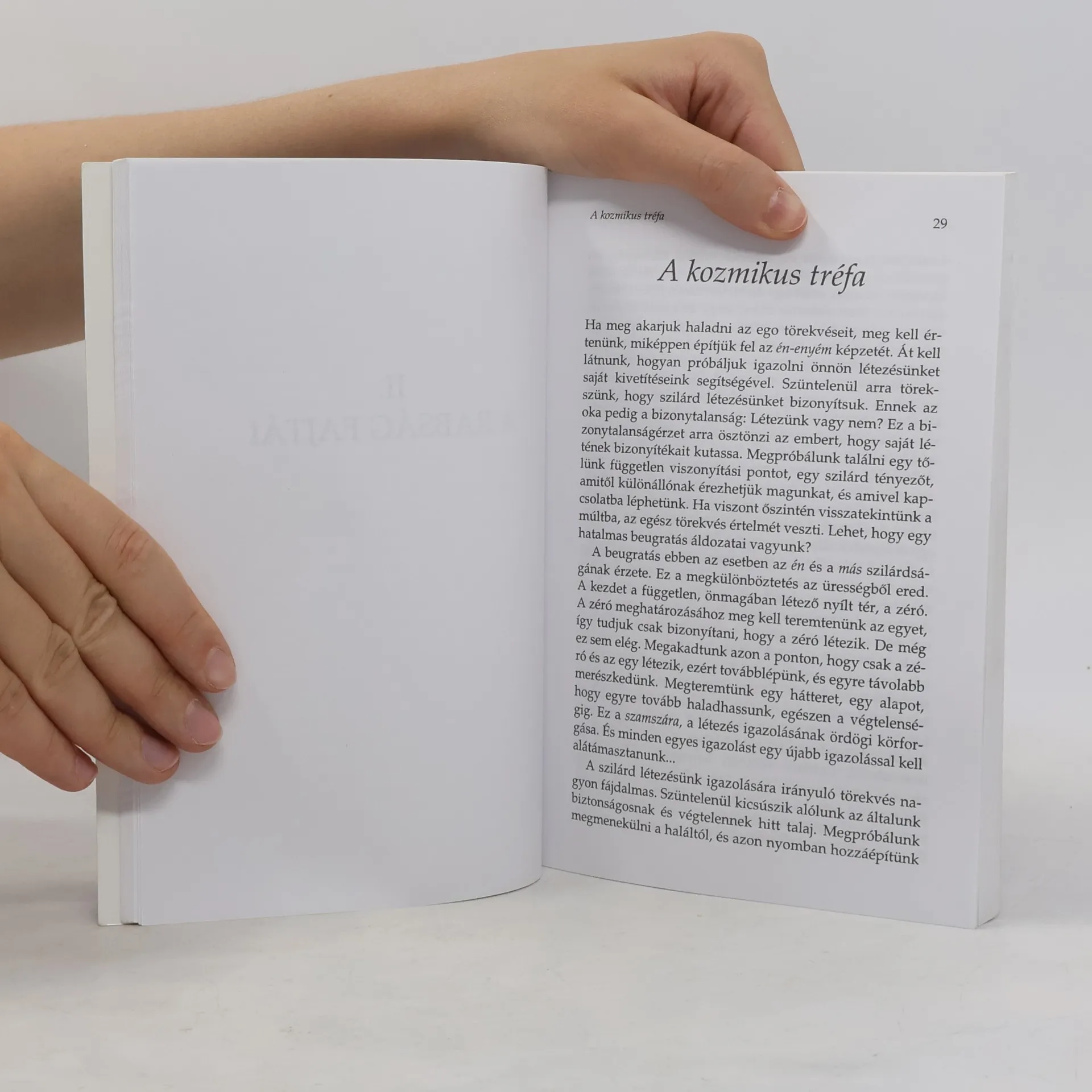
Freedom is generally thought of as the ability to achieve goals and satisfy desires. But what are the sources of these goals and desires? If they arise from ignorance, habitual patterns, and negative emotions, is the freedom to pursue these goals true freedom—or is it just a myth? In this book, Chögyam Trungpa explores the meaning of freedom in the profound context of Tibetan Buddhism. He shows how our attitudes, preconceptions, and even our spiritual practices can become chains that bind us to repetitive patterns of frustration and despair. He also explains how meditation can bring into focus the causes of frustration, and how these negative forces can aid us in advancing toward true freedom. Trungpa's unique ability to express the essence of Buddhist teachings in the language and imagery of contemporary American culture makes this book one of the best sources of the Buddhist doctrine ever written. This edition also contains a foreword by Pema Chödrön, a close student of Chögyam Trungpa and the best-selling author of When Things Fall Apart .
Zakup książki
A szabadság mítosza, Csögyam Trungpa
- Język

- Rok wydania
- 1998
- Oprawa
- (miękka),
- Stan książki
- Dobry
- Cena
- 42,70 zł
Metody płatności
Nikt jeszcze nie ocenił.
- Tytuł
- A szabadság mítosza
- Język
- węgierski
- Autorzy
- Csögyam Trungpa
- Wydawca
- Farkas Lörinc Imre
- Rok wydania
- 1998
- Oprawa
- miękka
- Liczba stron
- 174
- ISBN10
- 9637310452
- ISBN13
- 9789637310454
- Seria
- Kategorie
- Tagi
- Duchowość
- Opis
- Freedom is generally thought of as the ability to achieve goals and satisfy desires. But what are the sources of these goals and desires? If they arise from ignorance, habitual patterns, and negative emotions, is the freedom to pursue these goals true freedom—or is it just a myth? In this book, Chögyam Trungpa explores the meaning of freedom in the profound context of Tibetan Buddhism. He shows how our attitudes, preconceptions, and even our spiritual practices can become chains that bind us to repetitive patterns of frustration and despair. He also explains how meditation can bring into focus the causes of frustration, and how these negative forces can aid us in advancing toward true freedom. Trungpa's unique ability to express the essence of Buddhist teachings in the language and imagery of contemporary American culture makes this book one of the best sources of the Buddhist doctrine ever written. This edition also contains a foreword by Pema Chödrön, a close student of Chögyam Trungpa and the best-selling author of When Things Fall Apart .