

Parametry
- 624 strony
- 22 godziny czytania
Więcej o książce
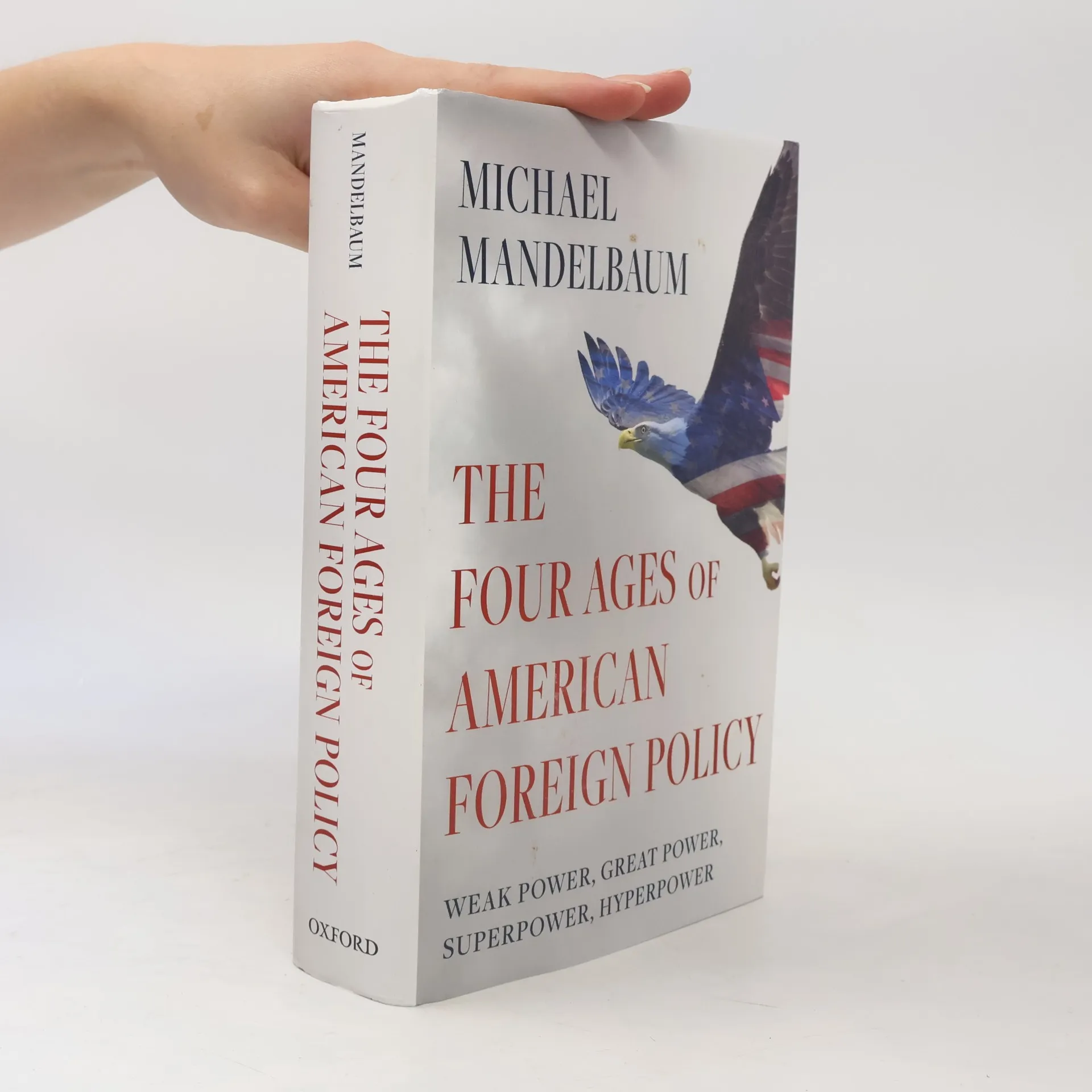
This framework provides a fresh perspective on the evolution of U.S. foreign policy over nearly 250 years. Originating as a collection of agrarian English colonies, the United States has transformed into the world's most powerful nation, boasting the largest economy and military. The author divides this evolution into four distinct periods, each marked by a consistent increase in American power relative to other nations. Engaging narratives highlight major events and key figures in each era, revealing fundamental continuities in the goals and methods of U.S. foreign policy. The United States is portrayed as a weak power from 1765 to 1865, a great power from 1865 to 1945, a superpower from 1945 to 1990, and finally, a hyperpower from 1990 to 2015. The author identifies three enduring features of American foreign policy: the goal of promoting cherished political ideas, the use of economic tools to achieve foreign policy objectives, and a policy formulation process influenced by public opinion. This history emphasizes that American foreign policy has been uniquely ideological, economic, and democratic. The work promises to reshape our understanding of how the U.S. rose to unprecedented global prominence.
Zakup książki
The Four Ages of American Foreign Policy, Michael Mandelbaum
- Język

- Rok wydania
- 2022
- Oprawa
- (twarda)
Metody płatności
Nikt jeszcze nie ocenił.
- Tytuł
- The Four Ages of American Foreign Policy
- Podtytuł
- Weak Power, Great Power, Superpower, Hyperpower
- Język
- angielski
- Autorzy
- Michael Mandelbaum
- Wydawca
- Oxford University Press
- Rok wydania
- 2022
- Oprawa
- twarda
- Liczba stron
- 624
- ISBN10
- 0197621791
- ISBN13
- 9780197621790
- Seria
- Tagi
- Tematy historyczne, Polityka, USA, Teorie polityczne, Stosunki międzynarodowe, Ameryka Północna, Pokój
- Opis
- This framework provides a fresh perspective on the evolution of U.S. foreign policy over nearly 250 years. Originating as a collection of agrarian English colonies, the United States has transformed into the world's most powerful nation, boasting the largest economy and military. The author divides this evolution into four distinct periods, each marked by a consistent increase in American power relative to other nations. Engaging narratives highlight major events and key figures in each era, revealing fundamental continuities in the goals and methods of U.S. foreign policy. The United States is portrayed as a weak power from 1765 to 1865, a great power from 1865 to 1945, a superpower from 1945 to 1990, and finally, a hyperpower from 1990 to 2015. The author identifies three enduring features of American foreign policy: the goal of promoting cherished political ideas, the use of economic tools to achieve foreign policy objectives, and a policy formulation process influenced by public opinion. This history emphasizes that American foreign policy has been uniquely ideological, economic, and democratic. The work promises to reshape our understanding of how the U.S. rose to unprecedented global prominence.