

Więcej o książce
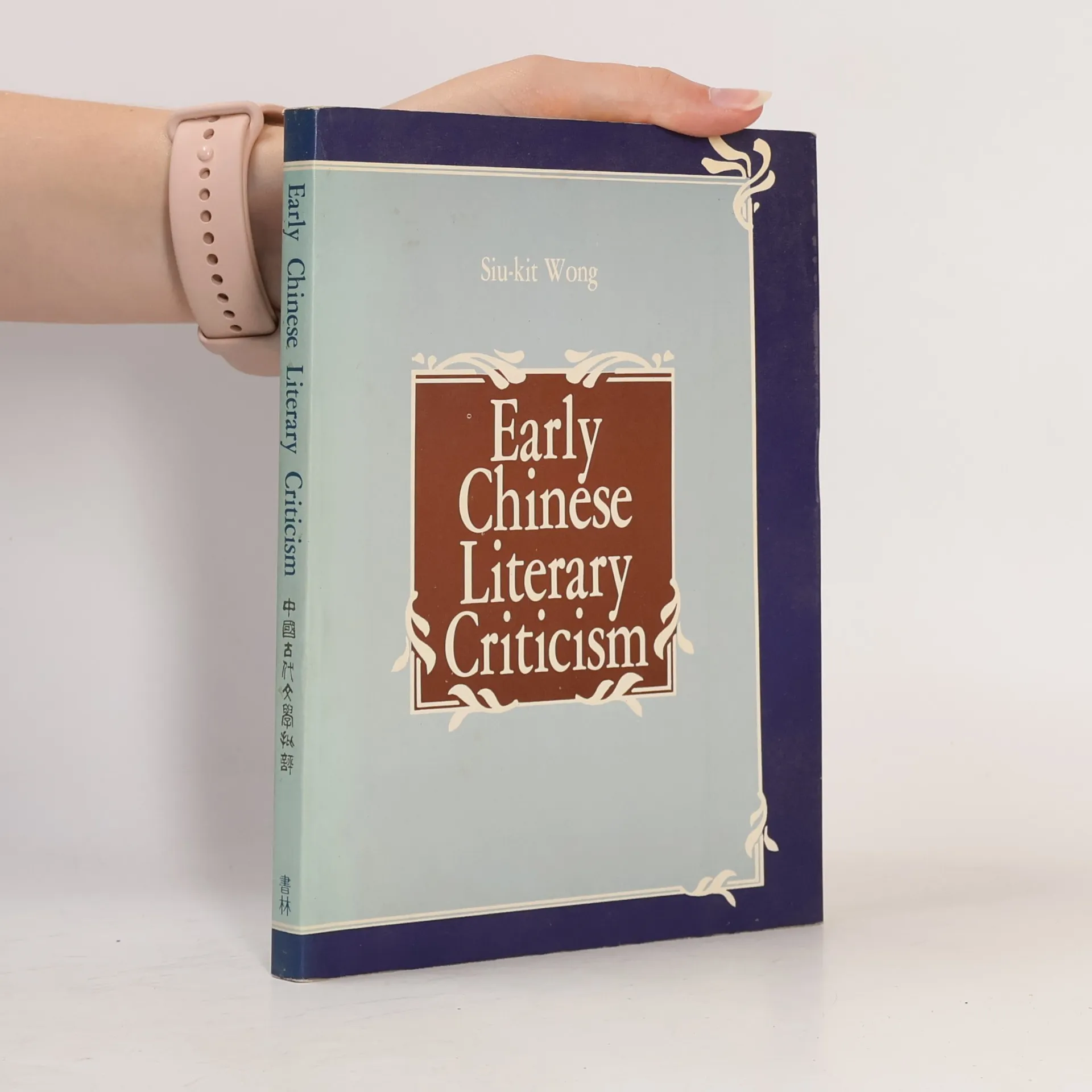
The nature of Chinese literary criticism is not as accurately understood as, say, that of Chinese poetry, both in modern Chinese scholarship and in international sinology. Convinced that we are not yet in a position to write a definitive history of Chinese literary criticism, the author has chosen, instead, to examine in detail the substance and implications of thirteen of the most important and influential specimens of early Chinese critical writings. The thirteen translations are intended to adhere closely to their sources (the original texts are included); they are meant to be interpreted by each reader for himself. Each translation is followed by an introduction which provides the essential background information of the text and a set of notes. In these notes the author pinpoints significant critical ideas as they occur and attempts to bring out the main features of early Chinese literary criticism. In the general introduction there is a summary of the observations made disparately in the notes. This study takes us up to the beginning of the sixth century.
Zakup książki
Early Chinese Literary Criticism, Siu-kit Wong, David Hawkes
- Język

- Rok wydania
- 1990
- Oprawa
- (twarda)
Metody płatności
Nikt jeszcze nie ocenił.
- Tytuł
- Early Chinese Literary Criticism
- Język
- angielski
- Autorzy
- Siu-kit Wong, David Hawkes
- Wydawca
- Bookman Books
- Rok wydania
- 1990
- Oprawa
- twarda
- ISBN10
- 9575860616
- ISBN13
- 9789575860615
- Seria
- Opis
- The nature of Chinese literary criticism is not as accurately understood as, say, that of Chinese poetry, both in modern Chinese scholarship and in international sinology. Convinced that we are not yet in a position to write a definitive history of Chinese literary criticism, the author has chosen, instead, to examine in detail the substance and implications of thirteen of the most important and influential specimens of early Chinese critical writings. The thirteen translations are intended to adhere closely to their sources (the original texts are included); they are meant to be interpreted by each reader for himself. Each translation is followed by an introduction which provides the essential background information of the text and a set of notes. In these notes the author pinpoints significant critical ideas as they occur and attempts to bring out the main features of early Chinese literary criticism. In the general introduction there is a summary of the observations made disparately in the notes. This study takes us up to the beginning of the sixth century.