



Więcej o książce
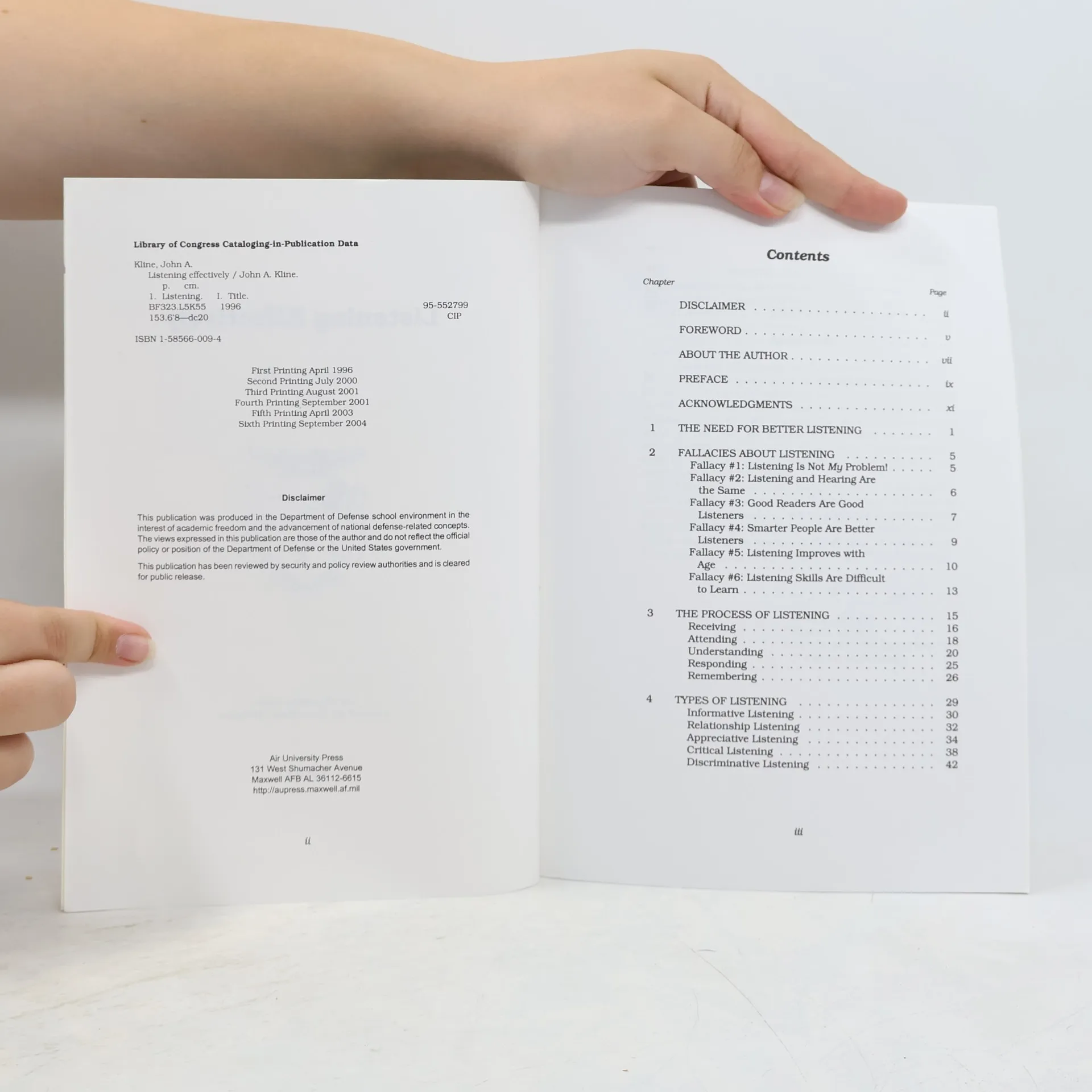
Listening Effectively offers a practical approach to enhancing listening skills, emphasizing that anyone can improve in this area. The first chapter establishes the necessity for better listening, highlighting that few individuals have received formal training in this skill, supported by real-life examples. The second chapter addresses common misconceptions about listening, challenging readers to reconsider their beliefs, which may be difficult for some. The third chapter outlines the listening process, detailing five essential steps: receiving, attending, understanding, responding, and remembering, with examples to illustrate each step. The fourth chapter categorizes the five types of listening—informative, relationship, appreciative, critical, and discriminative—while stressing the importance of adapting to different listening contexts. The final chapter provides guidelines for effective listening, exploring the interplay between thoughts, feelings, and actions related to listening. This book aims to equip readers with the tools necessary to become better listeners, ultimately enhancing their communication skills and relationships.
Zakup książki
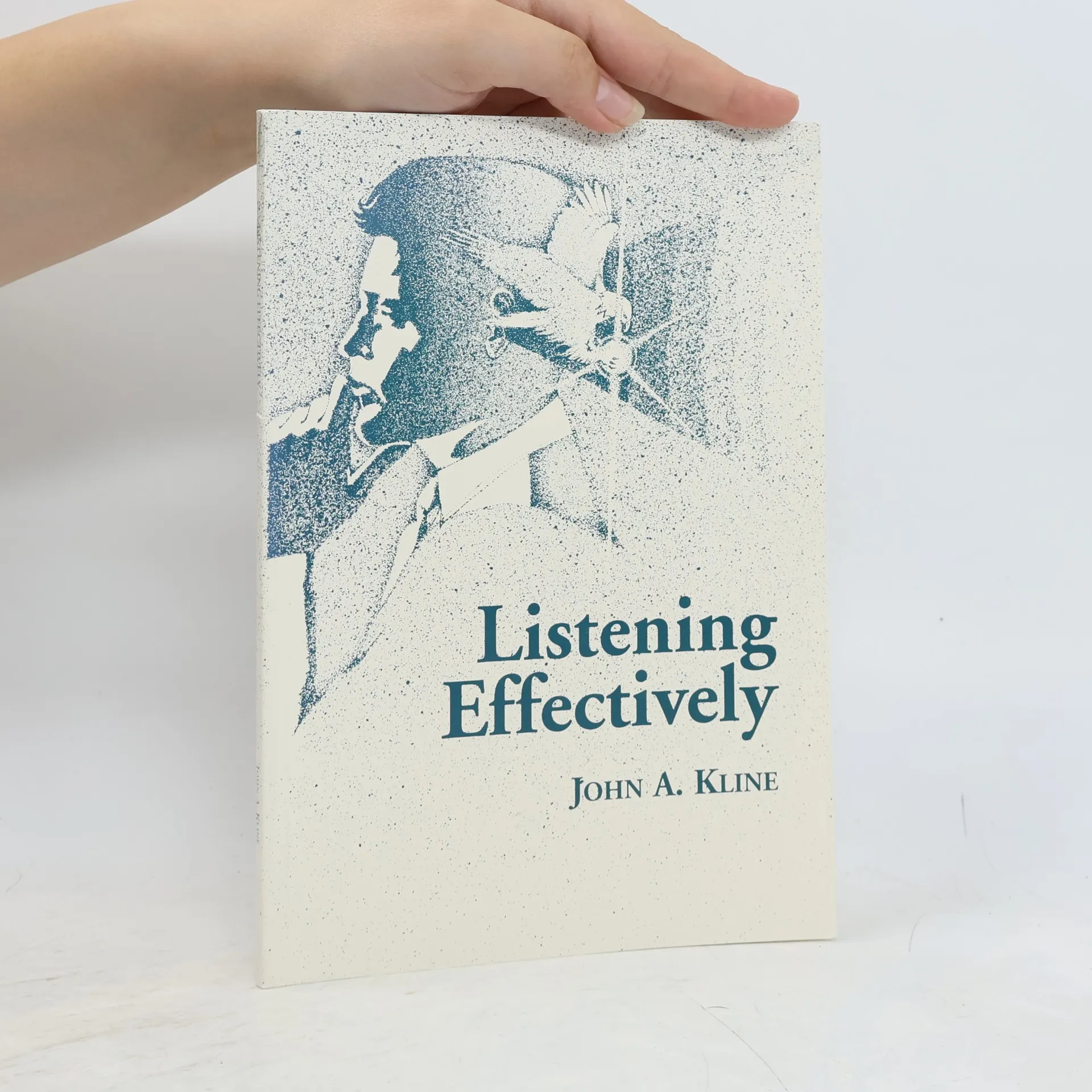
Listening Effectively, John A. Kline
- Język

- Rok wydania
- 2004
- Oprawa
- (miękka),
- Stan książki
- Bardzo dobry
- Cena
- 8,74 zł
Metody płatności
Nikt jeszcze nie ocenił.
- Tytuł
- Listening Effectively
- Język
- angielski
- Autorzy
- John A. Kline
- Wydawca
- Air University Press
- Rok wydania
- 2004
- Oprawa
- miękka
- Liczba stron
- 59
- ISBN10
- 1585660094
- ISBN13
- 9781585660094
- Seria
- Tagi
- Opis
- Listening Effectively offers a practical approach to enhancing listening skills, emphasizing that anyone can improve in this area. The first chapter establishes the necessity for better listening, highlighting that few individuals have received formal training in this skill, supported by real-life examples. The second chapter addresses common misconceptions about listening, challenging readers to reconsider their beliefs, which may be difficult for some. The third chapter outlines the listening process, detailing five essential steps: receiving, attending, understanding, responding, and remembering, with examples to illustrate each step. The fourth chapter categorizes the five types of listening—informative, relationship, appreciative, critical, and discriminative—while stressing the importance of adapting to different listening contexts. The final chapter provides guidelines for effective listening, exploring the interplay between thoughts, feelings, and actions related to listening. This book aims to equip readers with the tools necessary to become better listeners, ultimately enhancing their communication skills and relationships.