



Parametry
- 496 stron
- 18 godzin czytania
Więcej o książce
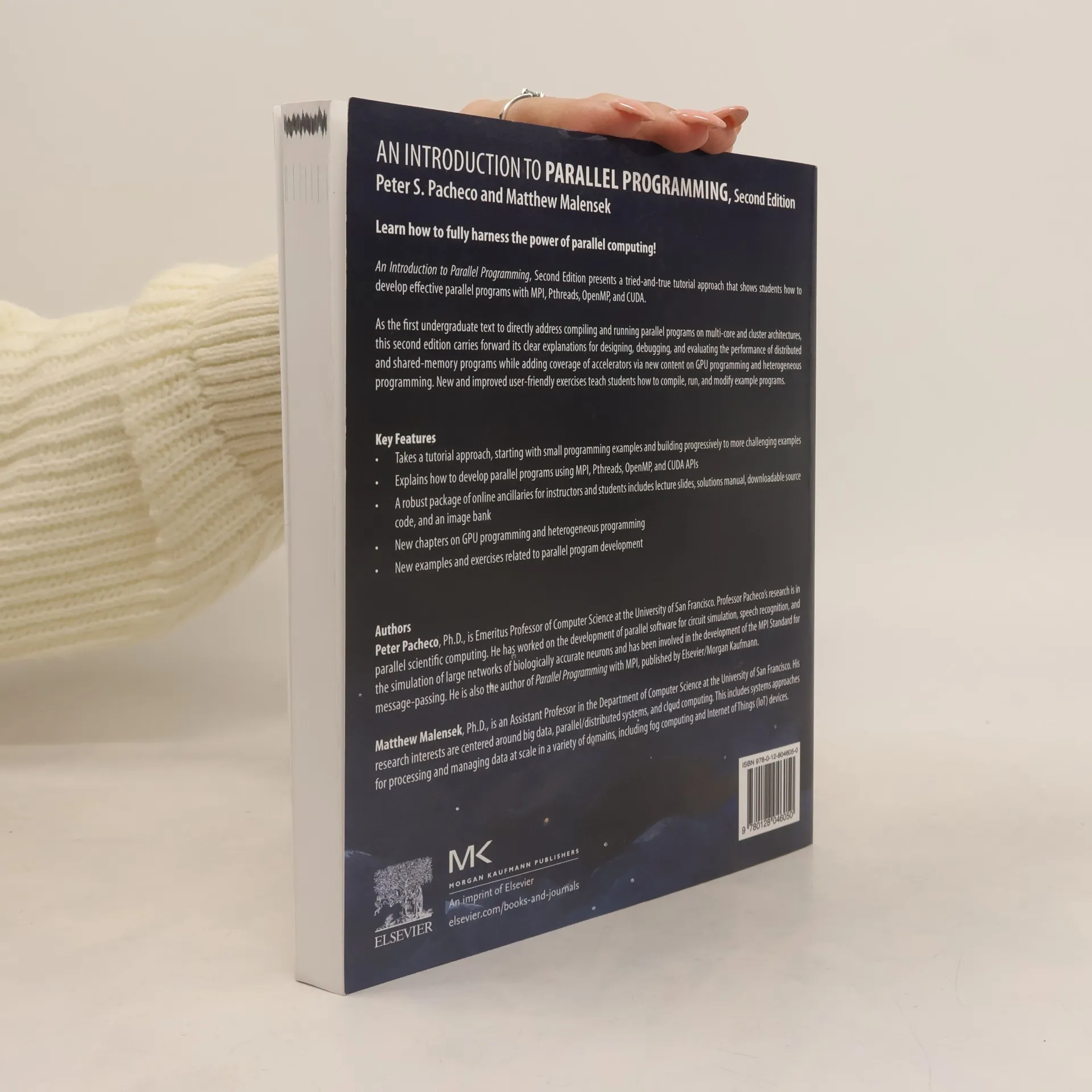
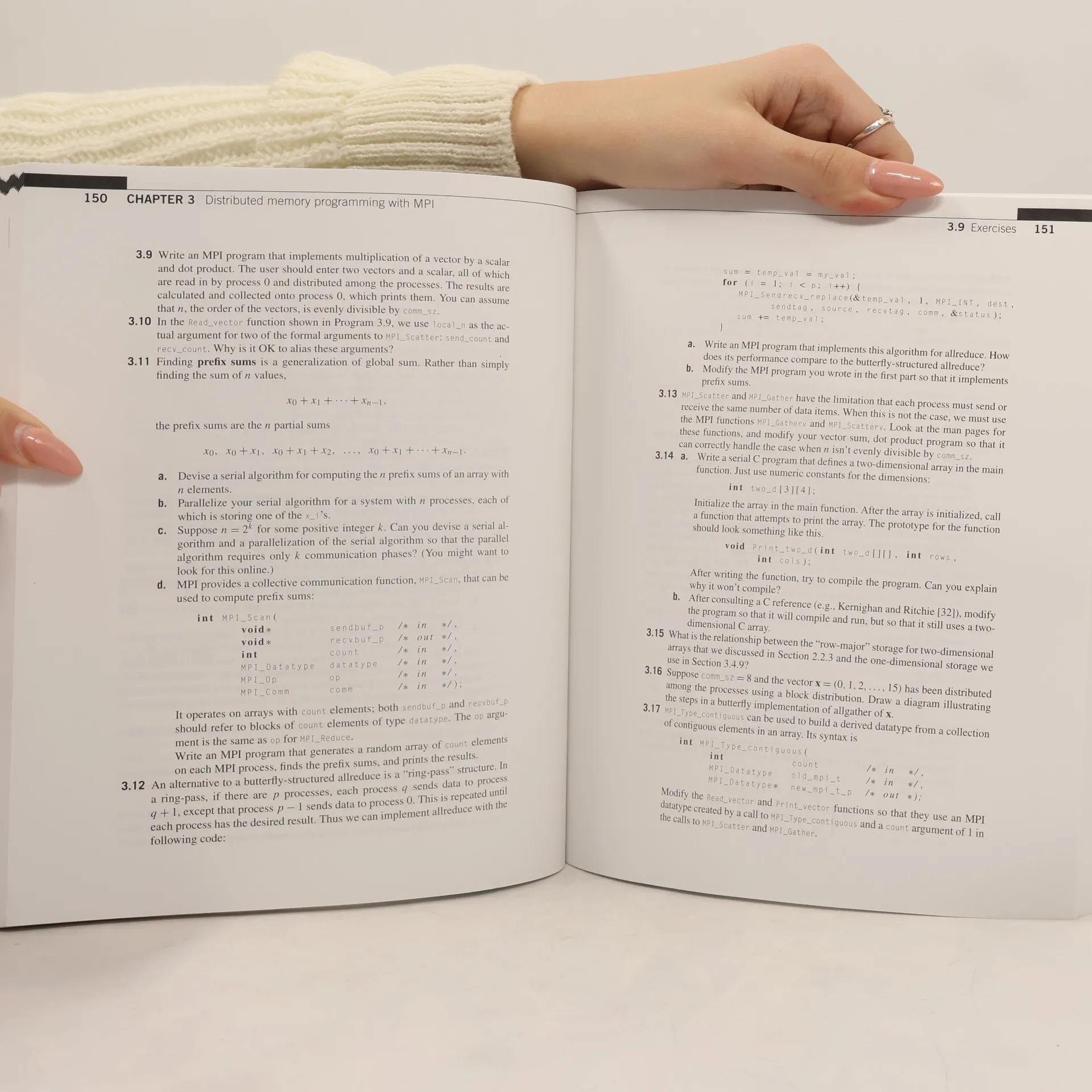
An Introduction to Parallel Programming, Second Edition presents a tried-and-true tutorial approach that shows students how to develop effective parallel programs with MPI, Pthreads and OpenMP. As the first undergraduate text to directly address compiling and running parallel programs on multi-core and cluster architecture, this second edition carries forward its clear explanations for designing, debugging and evaluating the performance of distributed and shared-memory programs while adding coverage of accelerators via new content on GPU programming and heterogeneous programming. New and improved user-friendly exercises teach students how to compile, run and modify example programs. Inhaltsverzeichnis 1. Why parallel computing 2. Parallel hardware and parallel software 3. Distributed memory programming with MPI 4. Shared-memory programming with Pthreads 5. Shared-memory programming with OpenMP 6. GPU programming with CUDA 7. Parallel program development 8. Where to go from here
Zakup książki
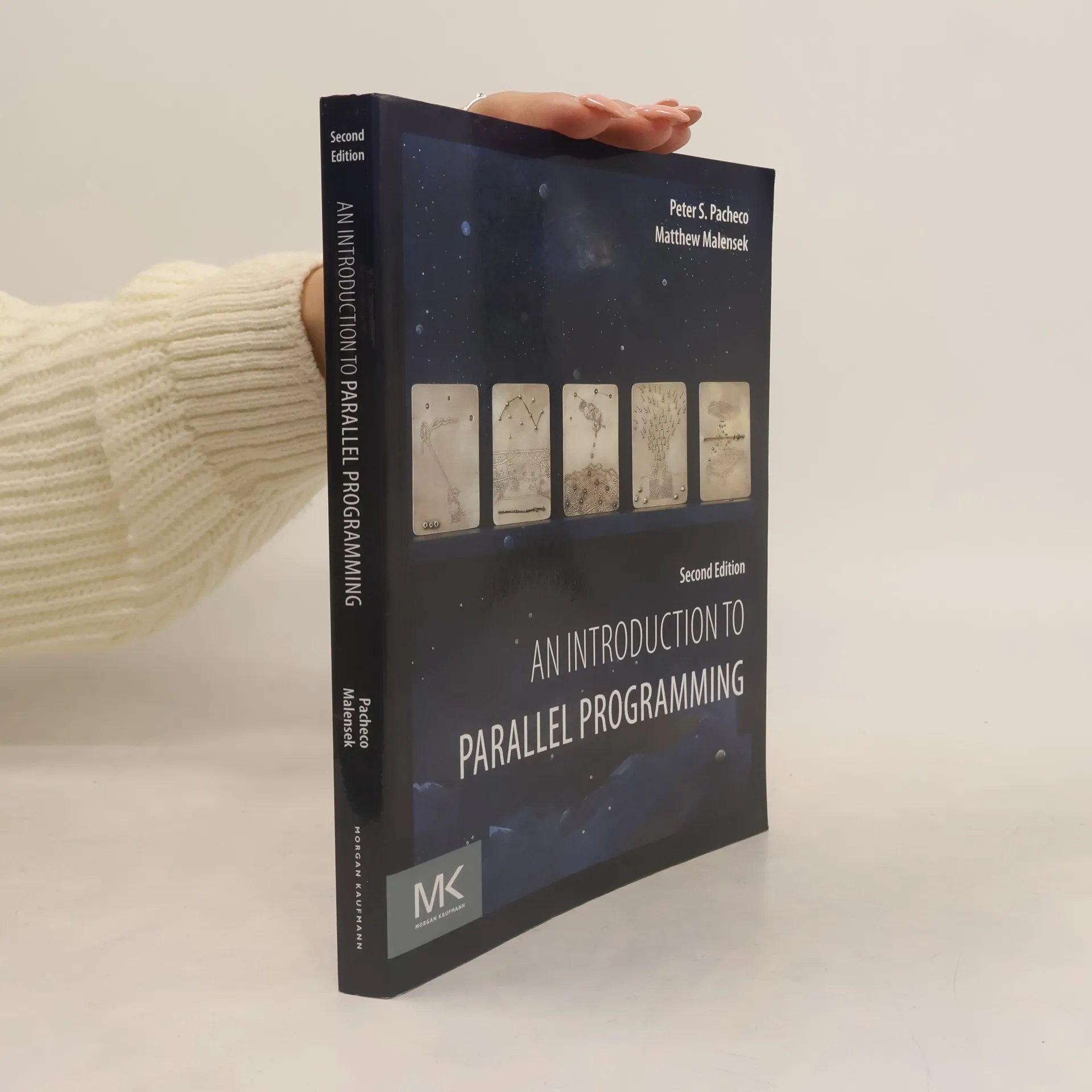
An Introduction to Parallel Programming - Second Edition, Peter S. Pacheco, Matthew Malensek
- Język

- Rok wydania
- 2022
- Oprawa
- (miękka),
- Stan książki
- Uszkodzony
- Cena
- 199,25 zł
Metody płatności
Nikt jeszcze nie ocenił.
- Tytuł
- An Introduction to Parallel Programming - Second Edition
- Język
- angielski
- Autorzy
- Peter S. Pacheco, Matthew Malensek
- Rok wydania
- 2022
- Oprawa
- miękka
- Liczba stron
- 496
- ISBN10
- 0128046058
- ISBN13
- 9780128046050
- Seria
- Kategorie
- Opis
- An Introduction to Parallel Programming, Second Edition presents a tried-and-true tutorial approach that shows students how to develop effective parallel programs with MPI, Pthreads and OpenMP. As the first undergraduate text to directly address compiling and running parallel programs on multi-core and cluster architecture, this second edition carries forward its clear explanations for designing, debugging and evaluating the performance of distributed and shared-memory programs while adding coverage of accelerators via new content on GPU programming and heterogeneous programming. New and improved user-friendly exercises teach students how to compile, run and modify example programs. Inhaltsverzeichnis 1. Why parallel computing 2. Parallel hardware and parallel software 3. Distributed memory programming with MPI 4. Shared-memory programming with Pthreads 5. Shared-memory programming with OpenMP 6. GPU programming with CUDA 7. Parallel program development 8. Where to go from here