




Więcej o książce
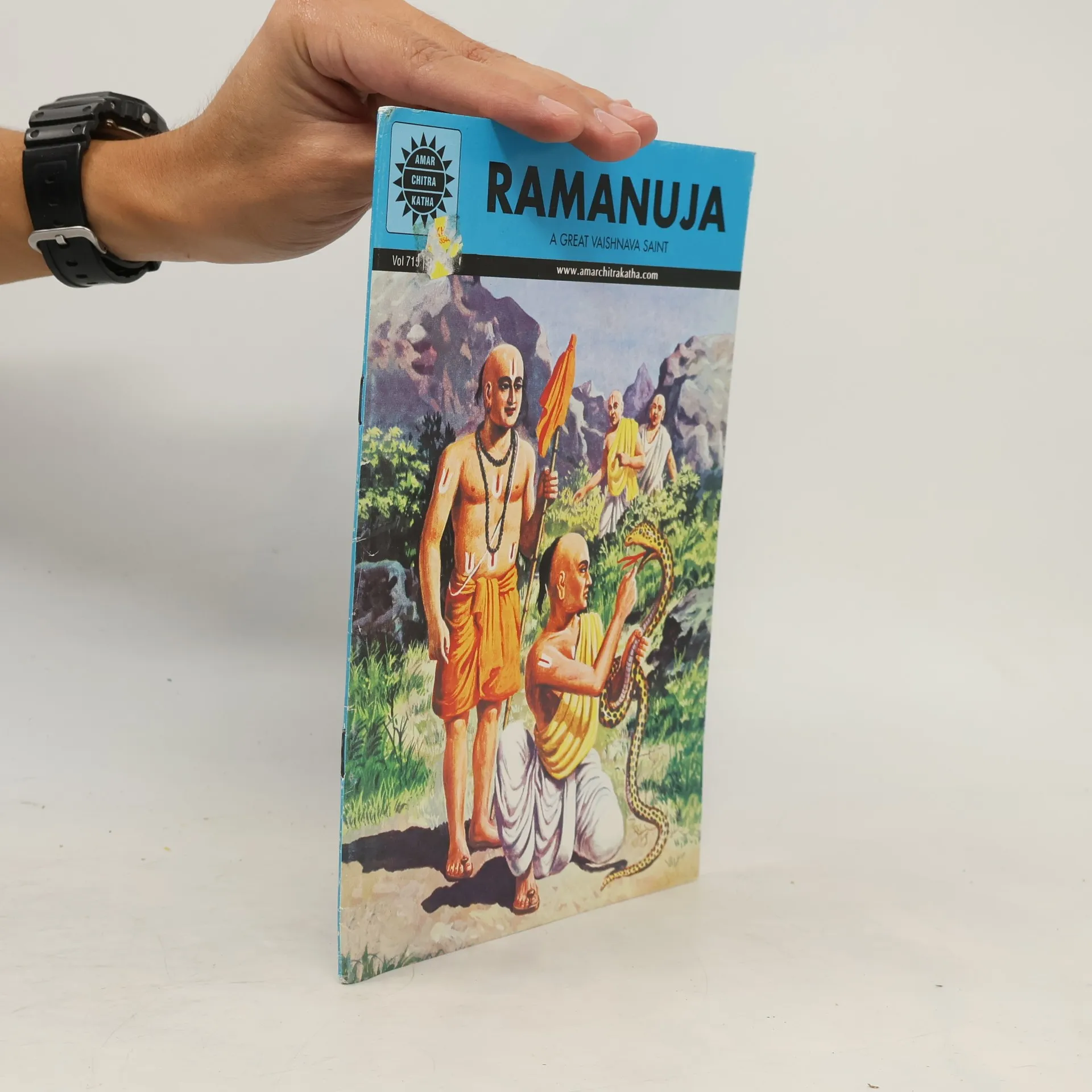
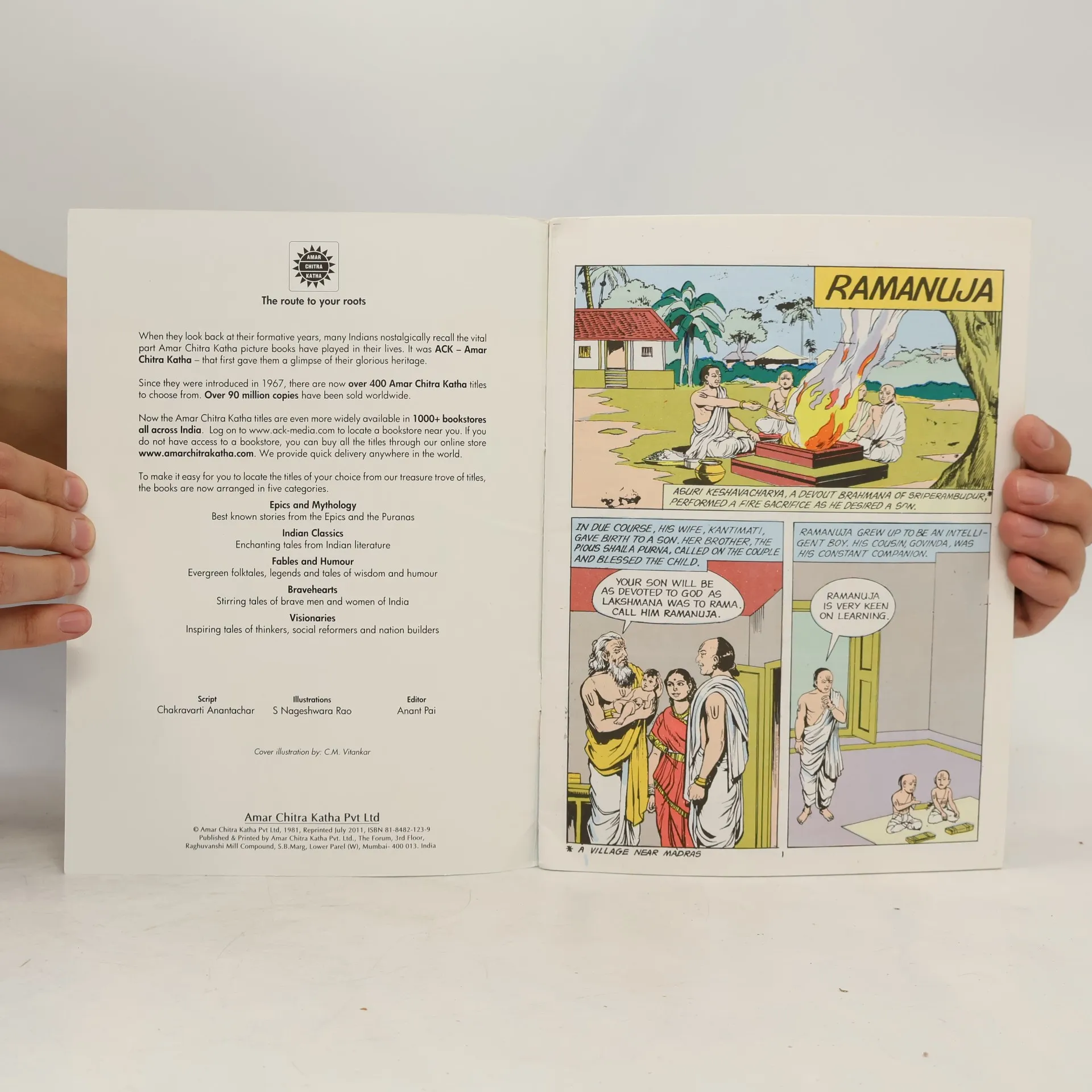
Ramanuja (1017-1137), the great Vaishnava saint-philosopher, upheld bhakti (loving surrender to God) as the sole path to the realization of God. His school of philosophy is knows as Vishishta-Advaita (qualified monism) and his followers, the Srivaishnavas. He wrote commentaries on the Brahmasutras, the Upanishads and the Bhagwad Gita. It was his view that these three philosophical texts proclaim bhakti as the chief means of realizing God. In his life and teachings, Ramanuja upheld that all humans are born equal and that caste or social status has no role in determining one's relationship with God. He accepted Kanchi Purna, who was not Brahmin, as his guru. One of his most worthy disciples, Dhanurdasa, was a non-Brahmin from a lower caste. For Ramanuja, a Vaishnava (man of God) is worthy of respect; but he defined as a true Vaishnava only one who has abundant love for God.
Zakup książki
Amar Chitra Katha - 719: Ramanuja, Anant Pai, Chakravati Anantachar
- Język

- Rok wydania
- 2011
- Oprawa
- (miękka),
- Stan książki
- Uszkodzony
- Cena
- 33,58 zł
Metody płatności
Nikt jeszcze nie ocenił.
- Tytuł
- Amar Chitra Katha - 719: Ramanuja
- Język
- angielski
- Autorzy
- Anant Pai, Chakravati Anantachar
- Wydawca
- Amar Chitra Katha Pvt Ltd
- Rok wydania
- 2011
- Oprawa
- miękka
- Liczba stron
- 34
- ISBN10
- 8184821239
- ISBN13
- 9788184821239
- Seria
- Tagi
- Komiksy
- Opis
- Ramanuja (1017-1137), the great Vaishnava saint-philosopher, upheld bhakti (loving surrender to God) as the sole path to the realization of God. His school of philosophy is knows as Vishishta-Advaita (qualified monism) and his followers, the Srivaishnavas. He wrote commentaries on the Brahmasutras, the Upanishads and the Bhagwad Gita. It was his view that these three philosophical texts proclaim bhakti as the chief means of realizing God. In his life and teachings, Ramanuja upheld that all humans are born equal and that caste or social status has no role in determining one's relationship with God. He accepted Kanchi Purna, who was not Brahmin, as his guru. One of his most worthy disciples, Dhanurdasa, was a non-Brahmin from a lower caste. For Ramanuja, a Vaishnava (man of God) is worthy of respect; but he defined as a true Vaishnava only one who has abundant love for God.