



Parametry
- 334 strony
- 12 godzin czytania
Więcej o książce
This volume presents an innovative analysis of Roman political culture in Italy from the first to the sixth century AD through seven case studies. It argues that during the era of single rule, political culture evolved as a product of the dual existence of the Roman Senate and local city councils. Although these institutions weakened under single rule, their continued function until the sixth century suggests they retained significance for their members amid societal changes. As their powers diminished, their role shifted from political to social, enabling elites to negotiate their positions within society. The tension between the participatory nature of these institutions and their restricted power led to complex social dynamics. Participants developed mutual expectations regarding behavior and were compelled to adopt specific social roles, while still maintaining a degree of agency. Encapsulated in honorific language and conventions that regulated behavior, they found a measure of autonomy. This nuanced perspective challenges the prevailing historical view that deliberative and participatory politics effectively ended with the establishment of the Roman monarchy under Augustus.
Zakup książki
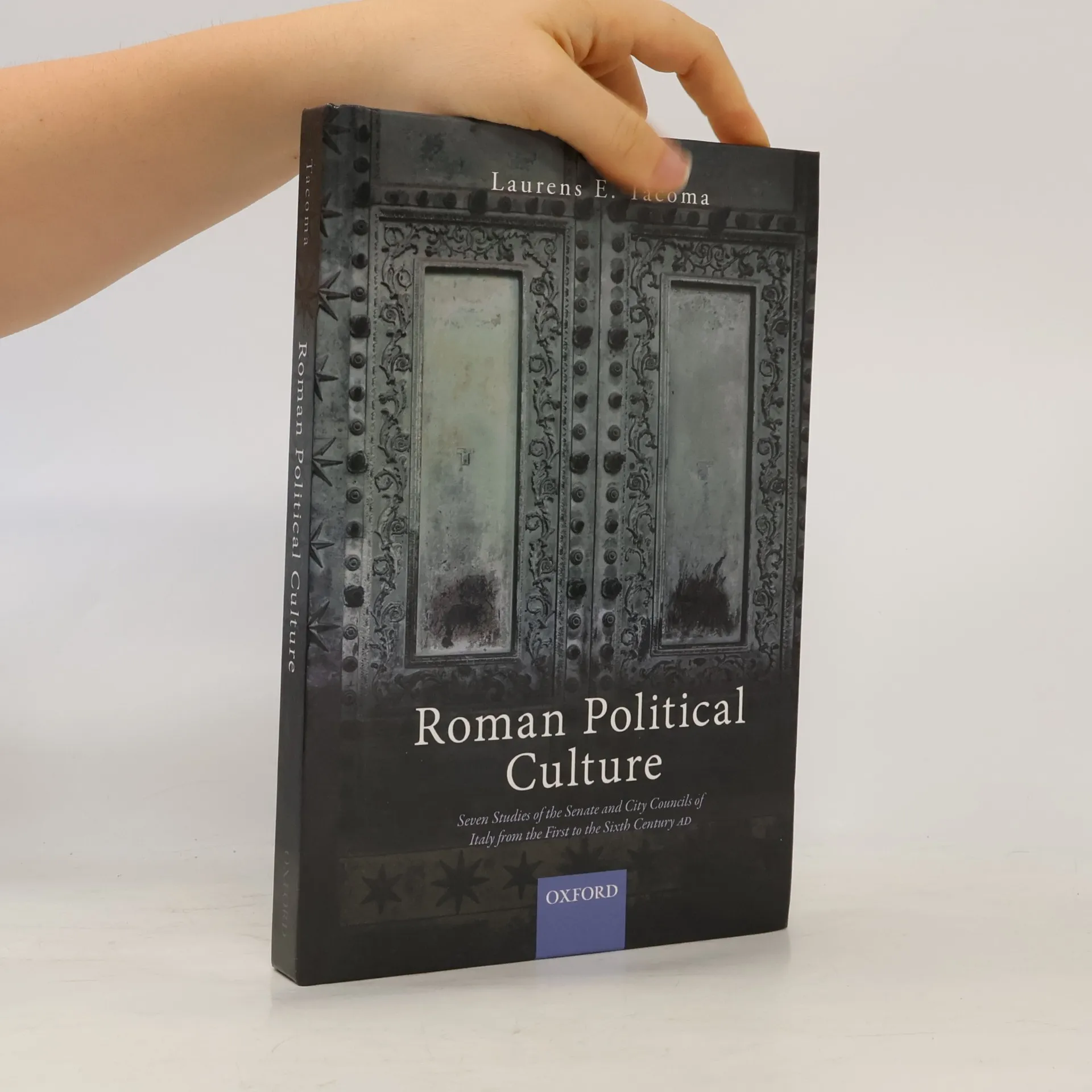
Roman Political Culture, Laurens Ernst Tacoma
- Język

- Rok wydania
- 2020
- Oprawa
- (twarda),
- Stan książki
- Dobry
- Cena
- 260,24 zł
Metody płatności
Nikt jeszcze nie ocenił.
- Tytuł
- Roman Political Culture
- Podtytuł
- Seven Studies of the Senate and City Councils of Italy from the First to the Sixth Century AD
- Język
- angielski
- Autorzy
- Laurens Ernst Tacoma
- Wydawca
- Oxford University Press
- Rok wydania
- 2020
- Oprawa
- twarda
- Liczba stron
- 334
- ISBN10
- 0198850808
- ISBN13
- 9780198850809
- Seria
- Kategorie
- Opis
- This volume presents an innovative analysis of Roman political culture in Italy from the first to the sixth century AD through seven case studies. It argues that during the era of single rule, political culture evolved as a product of the dual existence of the Roman Senate and local city councils. Although these institutions weakened under single rule, their continued function until the sixth century suggests they retained significance for their members amid societal changes. As their powers diminished, their role shifted from political to social, enabling elites to negotiate their positions within society. The tension between the participatory nature of these institutions and their restricted power led to complex social dynamics. Participants developed mutual expectations regarding behavior and were compelled to adopt specific social roles, while still maintaining a degree of agency. Encapsulated in honorific language and conventions that regulated behavior, they found a measure of autonomy. This nuanced perspective challenges the prevailing historical view that deliberative and participatory politics effectively ended with the establishment of the Roman monarchy under Augustus.