


Więcej o książce
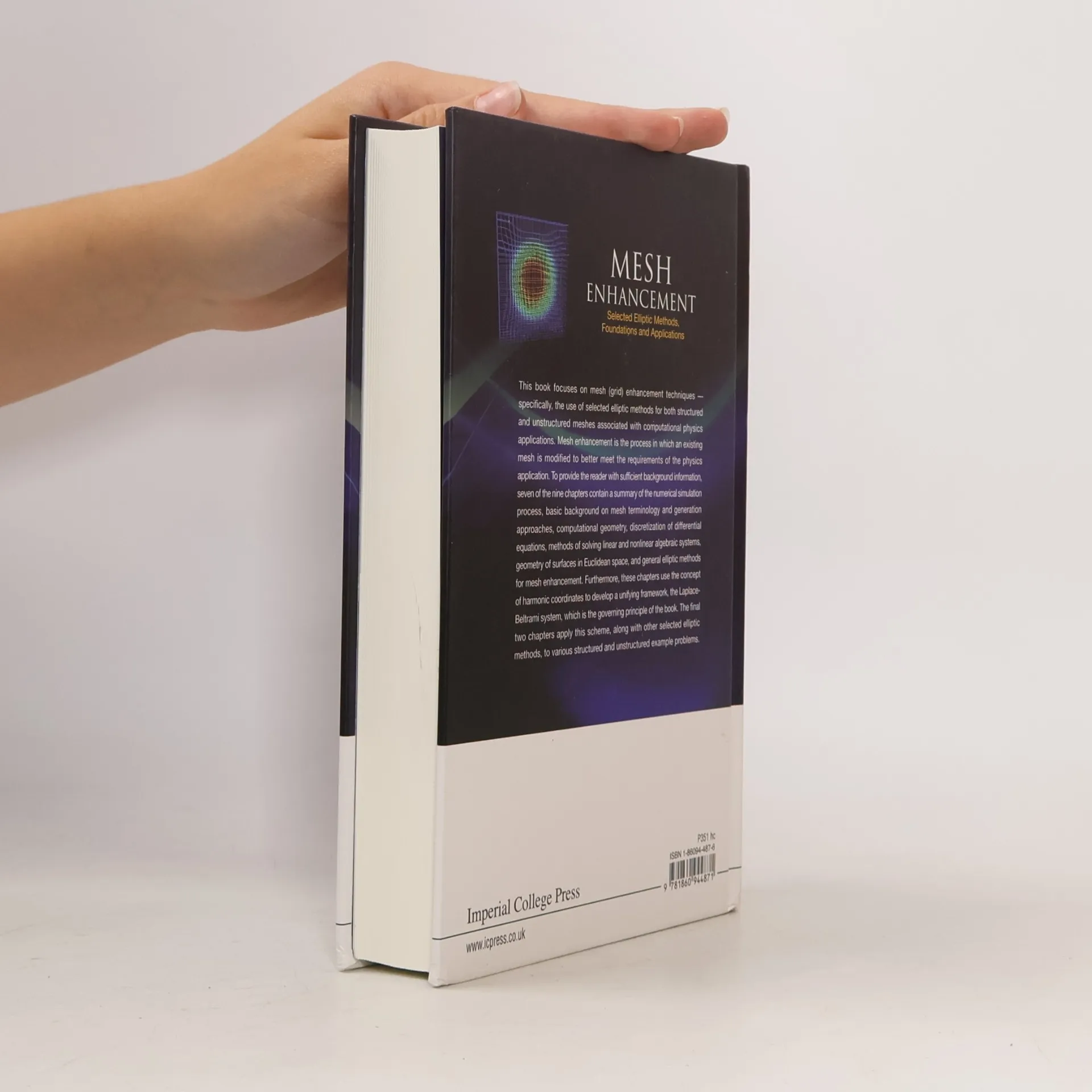
This book focuses on mesh (grid) enhancement techniques -- specifically, the use of selected elliptic methods for both structured and unstructured meshes associated with computational physics applications. Mesh enhancement is the process in which an existing mesh is modified to better meet the requirements of the physics application. To provide the reader with sufficient background information, seven of the nine chapters contain a summary of the numerical simulation process, basic background on mesh terminology and generation approaches, computational geometry, discretization of differential equations, methods of solving linear and nonlinear algebraic systems, geometry of surfaces in Euclidean space, and general elliptic methods for mesh enhancement. Furthermore, these chapters use the concept of harmonic coordinates to develop a unifying framework, the Laplace-Beltrami system, which is the governing principle of the book. The final two chapters apply this scheme, along with other selected elliptic methods, to various structured and unstructured example problems.
Zakup książki
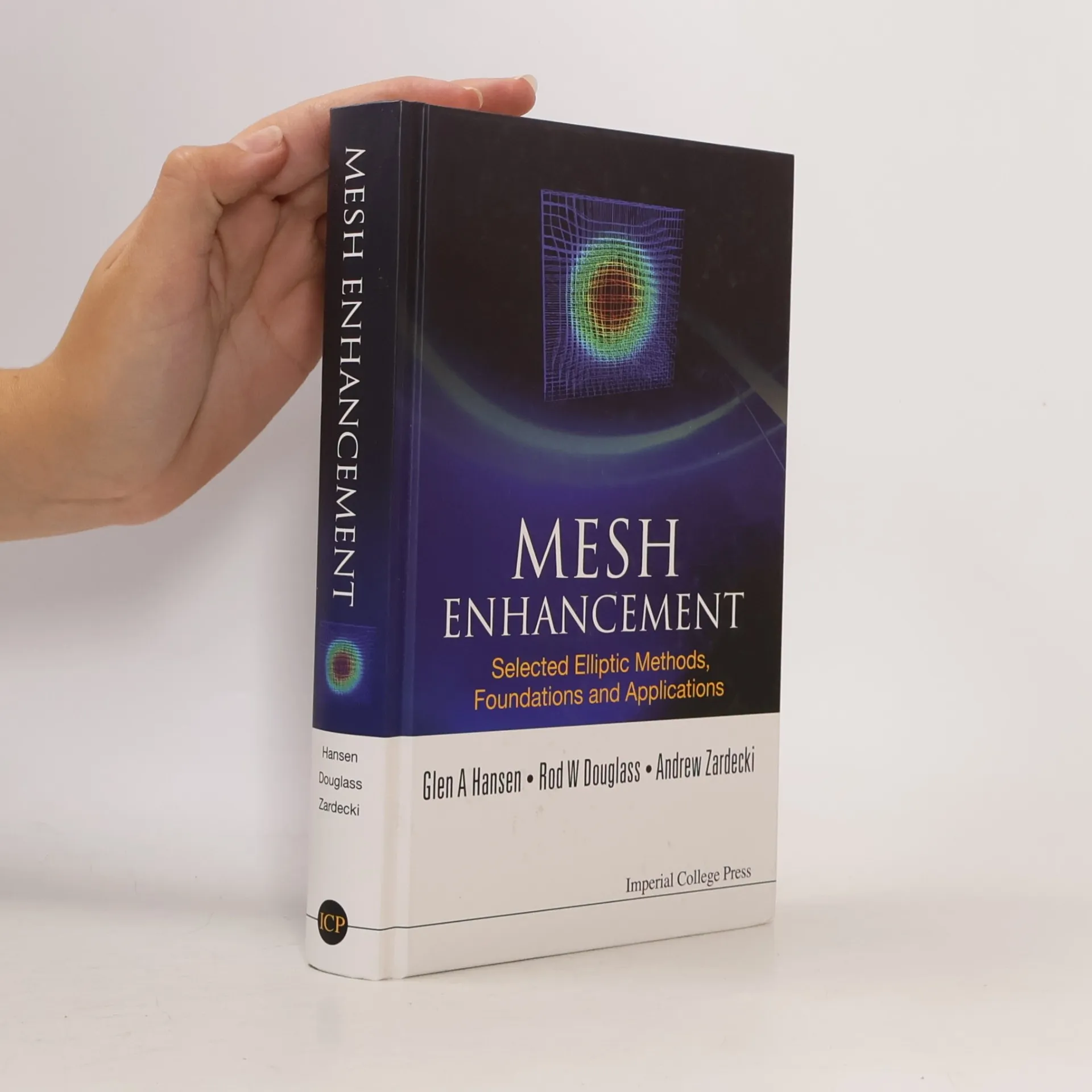
Mesh Enhancement, Glen A. Hansen, Rod W. Douglass, Andrew Zardecki
- Język

- Rok wydania
- 2005
- Oprawa
- (twarda),
- Stan książki
- Bardzo dobry
- Cena
- 501,79 zł
Metody płatności
Nikt jeszcze nie ocenił.
- Tytuł
- Mesh Enhancement
- Podtytuł
- Selected Elliptic Methods, Foundations and Applications
- Język
- angielski
- Autorzy
- Glen A. Hansen, Rod W. Douglass, Andrew Zardecki
- Wydawca
- Imperial College Press
- Rok wydania
- 2005
- Oprawa
- twarda
- Liczba stron
- 515
- ISBN10
- 1860944876
- ISBN13
- 9781860944871
- Seria
- Tagi
- Nauka, Literatura fachowa, Geometria
- Opis
- This book focuses on mesh (grid) enhancement techniques -- specifically, the use of selected elliptic methods for both structured and unstructured meshes associated with computational physics applications. Mesh enhancement is the process in which an existing mesh is modified to better meet the requirements of the physics application. To provide the reader with sufficient background information, seven of the nine chapters contain a summary of the numerical simulation process, basic background on mesh terminology and generation approaches, computational geometry, discretization of differential equations, methods of solving linear and nonlinear algebraic systems, geometry of surfaces in Euclidean space, and general elliptic methods for mesh enhancement. Furthermore, these chapters use the concept of harmonic coordinates to develop a unifying framework, the Laplace-Beltrami system, which is the governing principle of the book. The final two chapters apply this scheme, along with other selected elliptic methods, to various structured and unstructured example problems.