



Więcej o książce
The book presents a clear critique of contemporary capitalism, emphasizing a common sense that has permeated our lives through privatization, austerity, and financialization. It argues against waiting for another market crash to seek alternatives, highlighting 2008 as a pivotal moment for rethinking our economic systems. The text serves as a vital guide to understanding the realities of capitalism, challenging mainstream narratives propagated by academia and politics. It illuminates the principles of modern capitalism and its socio-ecological repercussions on working people, urging readers to envision new ways of organizing society beyond market fundamentalism and perpetual economic growth. The author provides a toolkit for dismantling the current system, advocating for a socially just alternative. Insightful and thorough, the book encourages readers to grasp how capitalism operates and to articulate the necessity for change. Originally aimed at younger audiences, it combines accessible explanations with real-world examples, making it an ideal introduction for those seeking to understand capitalism's shortcomings. The author, a political economy and economic geography professor, draws from his extensive knowledge and previous works to offer a compelling anti-capitalist critique.
Zakup książki
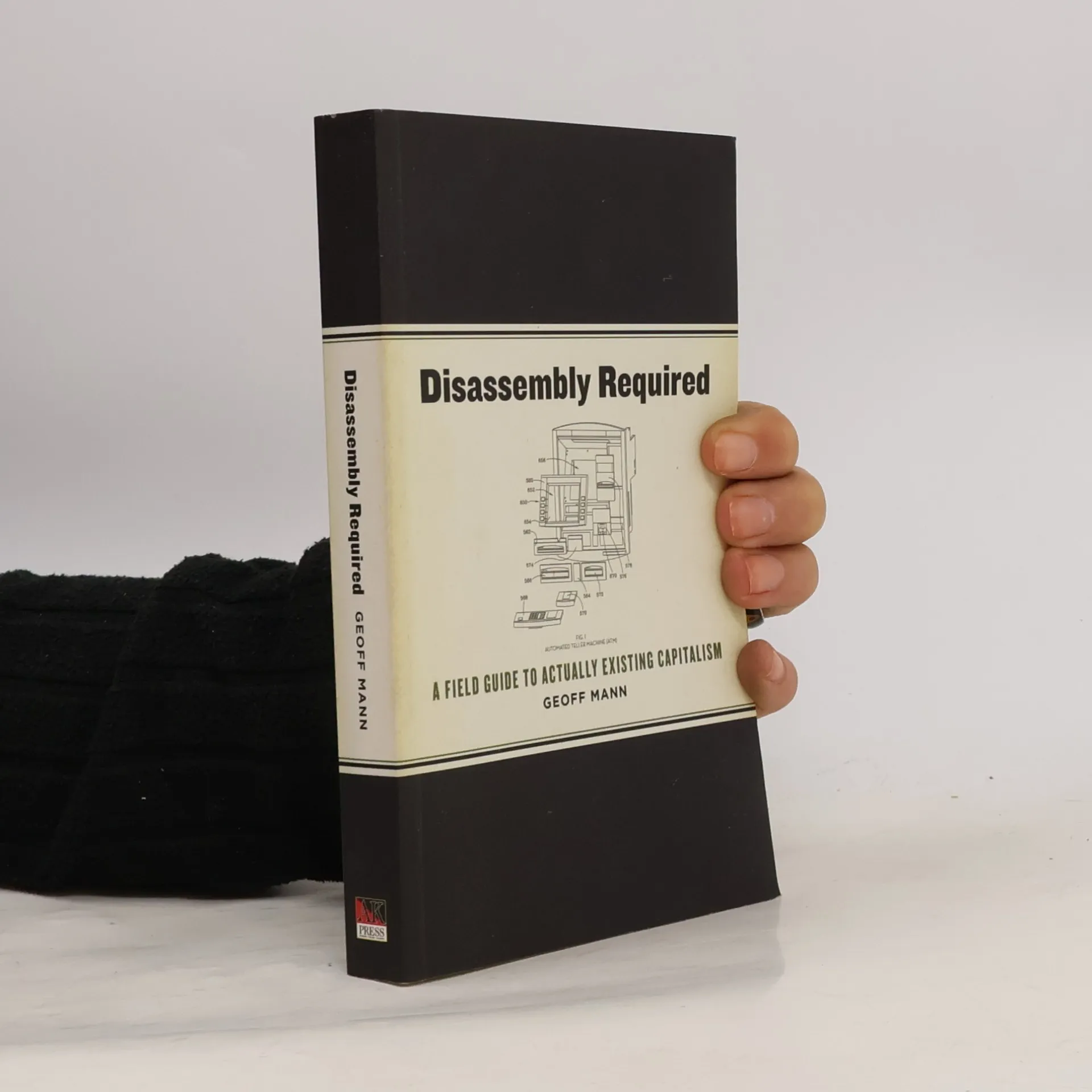
Disassembly Required, Geoff Mann
- Język

- Rok wydania
- 2013
- Oprawa
- (miękka),
- Stan książki
- Bardzo dobry
- Cena
- 10,59 zł
Metody płatności
Nikt jeszcze nie ocenił.
- Tytuł
- Disassembly Required
- Język
- angielski
- Autorzy
- Geoff Mann
- Wydawca
- AK Press
- Rok wydania
- 2013
- Oprawa
- miękka
- Liczba stron
- 160
- ISBN10
- 1849351260
- ISBN13
- 9781849351263
- Seria
- Tagi
- Tematy historyczne, Tematyka filozoficzna, Polityka, USA, Teorie polityczne, Teorie naukowe, Kapitalizm, Historia gospodarcza, Ekonomia polityczna
- Opis
- The book presents a clear critique of contemporary capitalism, emphasizing a common sense that has permeated our lives through privatization, austerity, and financialization. It argues against waiting for another market crash to seek alternatives, highlighting 2008 as a pivotal moment for rethinking our economic systems. The text serves as a vital guide to understanding the realities of capitalism, challenging mainstream narratives propagated by academia and politics. It illuminates the principles of modern capitalism and its socio-ecological repercussions on working people, urging readers to envision new ways of organizing society beyond market fundamentalism and perpetual economic growth. The author provides a toolkit for dismantling the current system, advocating for a socially just alternative. Insightful and thorough, the book encourages readers to grasp how capitalism operates and to articulate the necessity for change. Originally aimed at younger audiences, it combines accessible explanations with real-world examples, making it an ideal introduction for those seeking to understand capitalism's shortcomings. The author, a political economy and economic geography professor, draws from his extensive knowledge and previous works to offer a compelling anti-capitalist critique.