

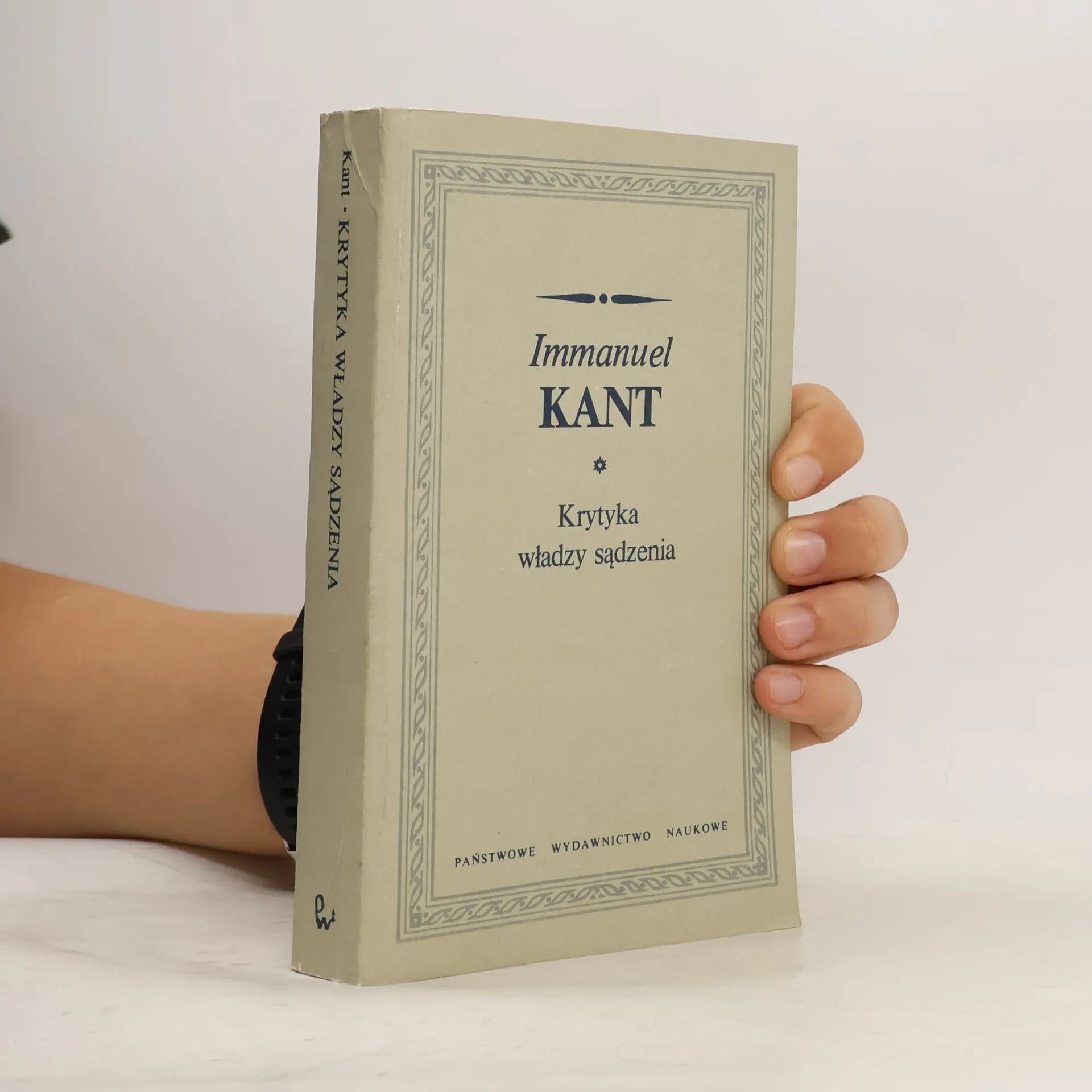


Krytyka władzy sądzenia
Więcej o książce
In THE CRITIQUE OF JUDGMENT (1790), Immanuel Kant (1724-1804) seeks to establish the a priori principles underlying the faculty of judgment, just as he did in his previous critiques of pure and practical reason. The first part deals with the subject of our aesthetic sensibility; we respond to certain natural phenomena as beautiful, says Kant, when we recognize in nature a harmonious order that satisfies the mind's own need for order. The second half of the critique concentrates on the apparent teleology in nature's design of organisms. Kant argues that our minds are inclined to see purpose and order in nature and this is the main principle underlying all of our judgments. Although this might imply a super sensible Designer, Kant insists that we cannot prove a supernatural dimension or the existence of God. Such considerations are beyond reason and are solely the province of faith.
Zakup książki
Krytyka władzy sądzenia, Immanuel Kant, Adam Landman, Jerzy Gałecki
- Język

- Rok wydania
- 1986
- Oprawa
- (miękka)
Metody płatności
Nikt jeszcze nie ocenił.
- Tytuł
- Krytyka władzy sądzenia
- Język
- polski
- Autorzy
- Immanuel Kant, Adam Landman, Jerzy Gałecki
- Rok wydania
- 1986
- Oprawa
- miękka
- Liczba stron
- 552
- ISBN10
- 8301036591
- ISBN13
- 9788301036591
- Seria
- Opis
- In THE CRITIQUE OF JUDGMENT (1790), Immanuel Kant (1724-1804) seeks to establish the a priori principles underlying the faculty of judgment, just as he did in his previous critiques of pure and practical reason. The first part deals with the subject of our aesthetic sensibility; we respond to certain natural phenomena as beautiful, says Kant, when we recognize in nature a harmonious order that satisfies the mind's own need for order. The second half of the critique concentrates on the apparent teleology in nature's design of organisms. Kant argues that our minds are inclined to see purpose and order in nature and this is the main principle underlying all of our judgments. Although this might imply a super sensible Designer, Kant insists that we cannot prove a supernatural dimension or the existence of God. Such considerations are beyond reason and are solely the province of faith.