




Więcej o książce
Published by the American Geophysical Union as part of the Geophysical Monograph Series, Volume 120, this work addresses the significant threat posed by earthquakes in urban areas. The January 16, 1995 Kobe earthquake, a magnitude 6.9 event, resulted in an estimated $200 billion in damages, highlighting the potential devastation in cities like Los Angeles, San Francisco, and Seattle along the Pacific plate boundary. Despite Japan's active earthquake prediction efforts, this event was unexpected, underscoring the challenges in forecasting such disasters. The irregular intervals of the largest earthquakes, occurring over hundreds to thousands of years, limit historical data and complicate phenomenological studies. The papers presented here explore a novel approach rooted in new insights into earthquake physics, facilitated by numerical simulations. These simulations allow for the investigation of earthquake dynamics in a controlled environment, enabling researchers to derive theoretical models that can be applied to real-world data. Advances in information technology have made these computational resources increasingly accessible, enhancing our ability to understand and predict seismic events.
Zakup książki
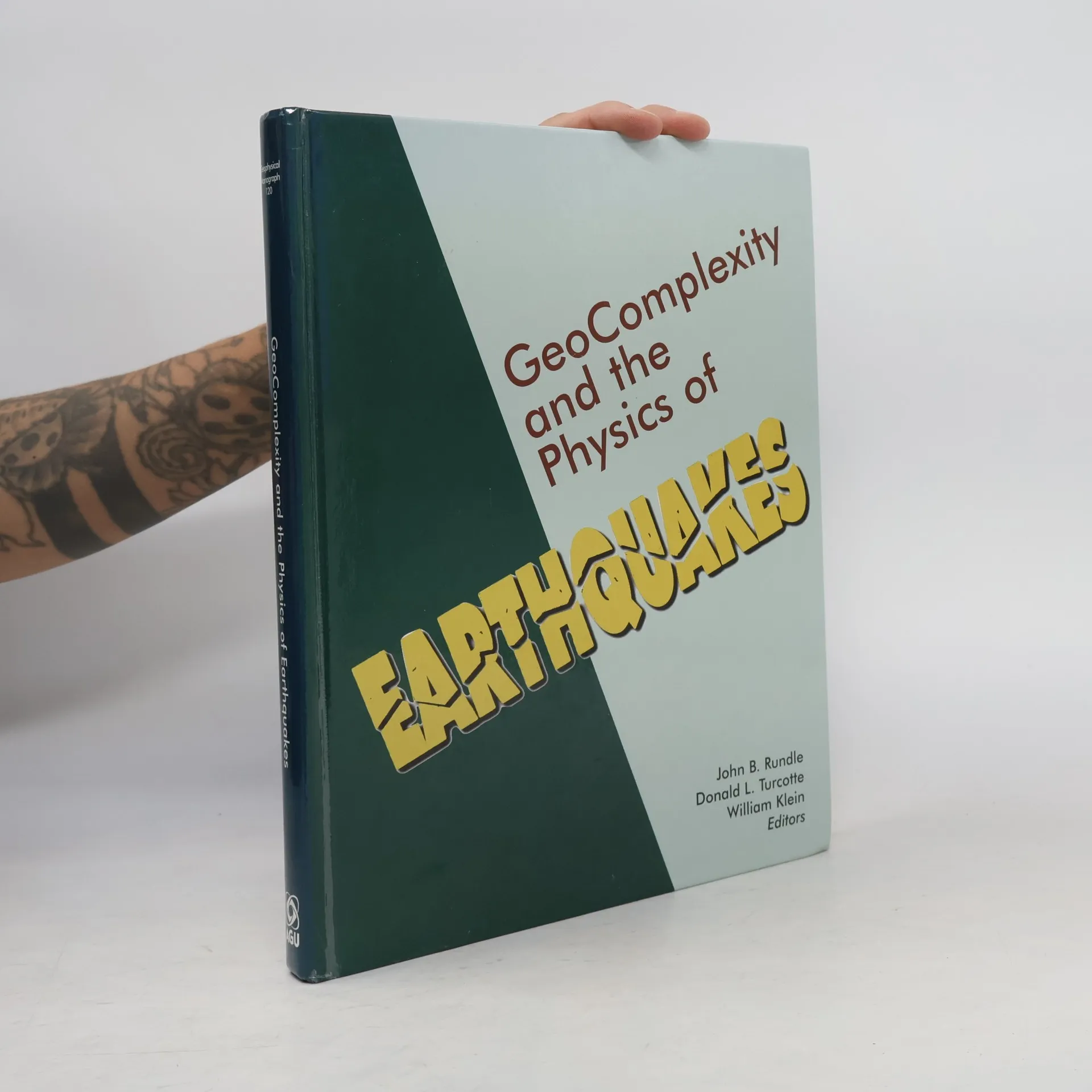
Geophysical Monograph - 120: Geocomplexity and the Physics of Earthquakes, John B. Rundle, Donald L. Turcotte, William Klein
- Język

- Rok wydania
- 2000
- Oprawa
- (twarda),
- Stan książki
- Uszkodzony
- Cena
- 239,99 zł
Metody płatności
Nikt jeszcze nie ocenił.
- Tytuł
- Geophysical Monograph - 120: Geocomplexity and the Physics of Earthquakes
- Język
- angielski
- Wydawca
- American Geophysical Union
- Rok wydania
- 2000
- Oprawa
- twarda
- Liczba stron
- 284
- ISBN10
- 0875909787
- ISBN13
- 9780875909783
- Seria
- Tagi
- Przyroda, Nauka, USA, Literatura fachowa, Geologia, Chaos, Modelka, Trzęsienia ziemi
- Opis
- Published by the American Geophysical Union as part of the Geophysical Monograph Series, Volume 120, this work addresses the significant threat posed by earthquakes in urban areas. The January 16, 1995 Kobe earthquake, a magnitude 6.9 event, resulted in an estimated $200 billion in damages, highlighting the potential devastation in cities like Los Angeles, San Francisco, and Seattle along the Pacific plate boundary. Despite Japan's active earthquake prediction efforts, this event was unexpected, underscoring the challenges in forecasting such disasters. The irregular intervals of the largest earthquakes, occurring over hundreds to thousands of years, limit historical data and complicate phenomenological studies. The papers presented here explore a novel approach rooted in new insights into earthquake physics, facilitated by numerical simulations. These simulations allow for the investigation of earthquake dynamics in a controlled environment, enabling researchers to derive theoretical models that can be applied to real-world data. Advances in information technology have made these computational resources increasingly accessible, enhancing our ability to understand and predict seismic events.