



Parametry
- 330 stron
- 12 godzin czytania
Więcej o książce
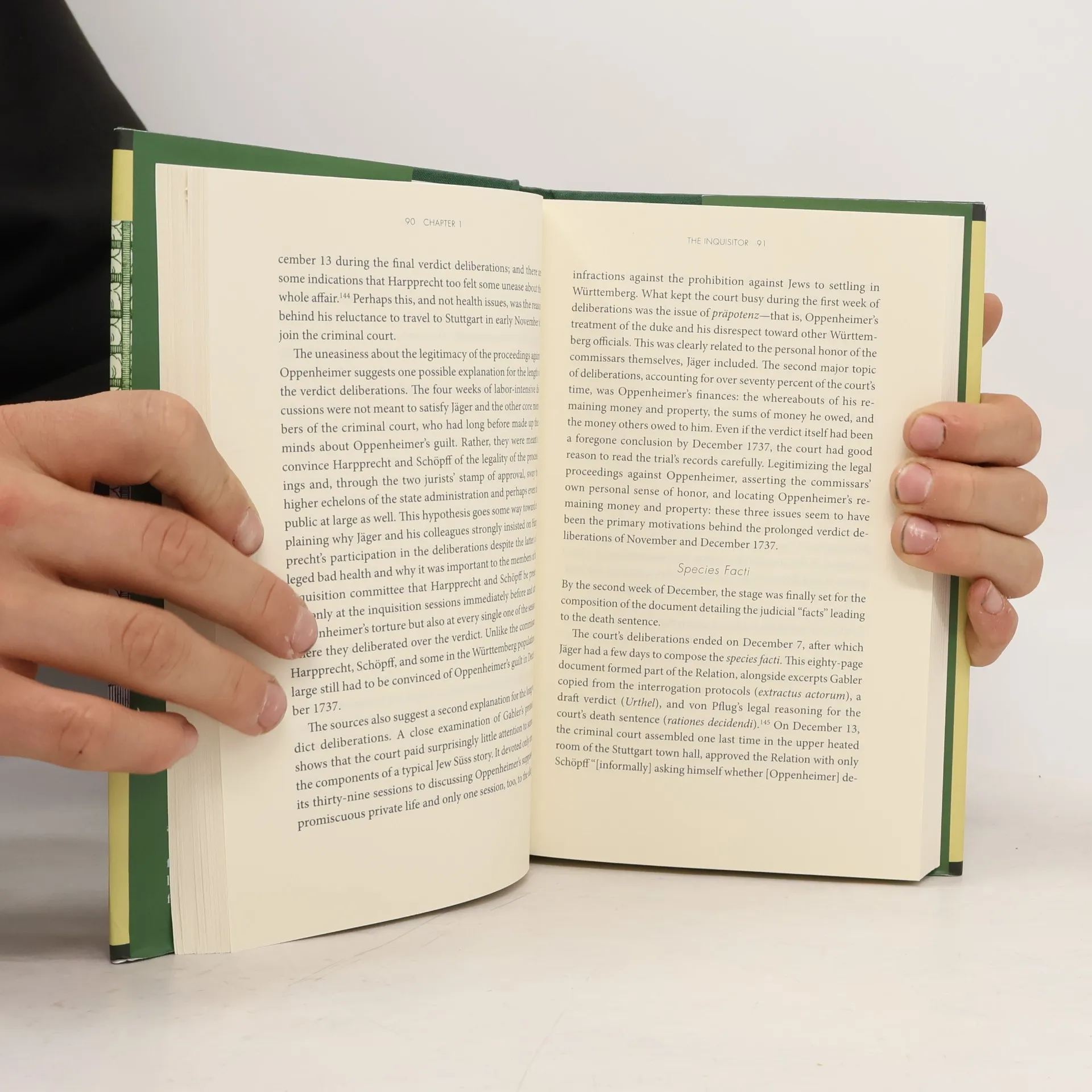
Joseph Süss Oppenheimer, known as 'Jew Süss,' is a significant figure in the history of anti-Semitism. In 1733, he became the 'court Jew' of Carl Alexander, the duke of Württemberg. Following the duke's unexpected death, Oppenheimer was arrested, tried, and condemned to death for vague 'misdeeds.' He was hanged on February 4, 1738, near Stuttgart, and is often remembered through various fictional portrayals, including a notorious Nazi propaganda film from 1940. This account delves into Oppenheimer's infamous trial, utilizing rare archival evidence to explore differing narratives about his life and death from four contemporaries: the leading inquisitor, a key eyewitness, a fellow court Jew who visited him before execution, and an early biographer. The result is a gripping tale filled with themes of greed, sex, violence, and disgrace, raising questions about the reliability of these narrators. By meticulously reconstructing the social context of the time and scrutinizing their accounts, the author presents a haunting and complex portrait of Oppenheimer during his final days, evoking a mix of emotion and reflection.
Zakup książki
The Many Deaths of Jew Süss, Yair Mintsḳer
- Język

- Rok wydania
- 2017
- Oprawa
- (twarda),
- Stan książki
- Dobry
- Cena
- 30,39 zł
Metody płatności
Nikt jeszcze nie ocenił.
- Tytuł
- The Many Deaths of Jew Süss
- Podtytuł
- The Notorious Trial and Execution of an Eighteenth-Century Court Jew
- Język
- angielski
- Autorzy
- Yair Mintsḳer
- Wydawca
- Princeton University Press
- Rok wydania
- 2017
- Oprawa
- twarda
- Liczba stron
- 330
- ISBN10
- 0691172323
- ISBN13
- 9780691172323
- Seria
- Kategorie
- Tagi
- Tematy historyczne, Polityka, USA, Niemcy, Europa, Społeczeństwo, Historia Europy, Żydzi, Pisanie, Judaica, XXI wiek, Historia Niemiec, XVIII wiek, Literatura Żydowska, Dowcipy & Anegdoty, Historia społeczna, Europa Środkowa, Pałace, Tortury, Dyskryminacja, Historia Żydów, Niepewność, Norymberga, Post, Sceptycyzm, Allegoria, Święte Cesarstwo Rzymskie, Jidysz, Dysputacja
- Opis
- Joseph Süss Oppenheimer, known as 'Jew Süss,' is a significant figure in the history of anti-Semitism. In 1733, he became the 'court Jew' of Carl Alexander, the duke of Württemberg. Following the duke's unexpected death, Oppenheimer was arrested, tried, and condemned to death for vague 'misdeeds.' He was hanged on February 4, 1738, near Stuttgart, and is often remembered through various fictional portrayals, including a notorious Nazi propaganda film from 1940. This account delves into Oppenheimer's infamous trial, utilizing rare archival evidence to explore differing narratives about his life and death from four contemporaries: the leading inquisitor, a key eyewitness, a fellow court Jew who visited him before execution, and an early biographer. The result is a gripping tale filled with themes of greed, sex, violence, and disgrace, raising questions about the reliability of these narrators. By meticulously reconstructing the social context of the time and scrutinizing their accounts, the author presents a haunting and complex portrait of Oppenheimer during his final days, evoking a mix of emotion and reflection.