

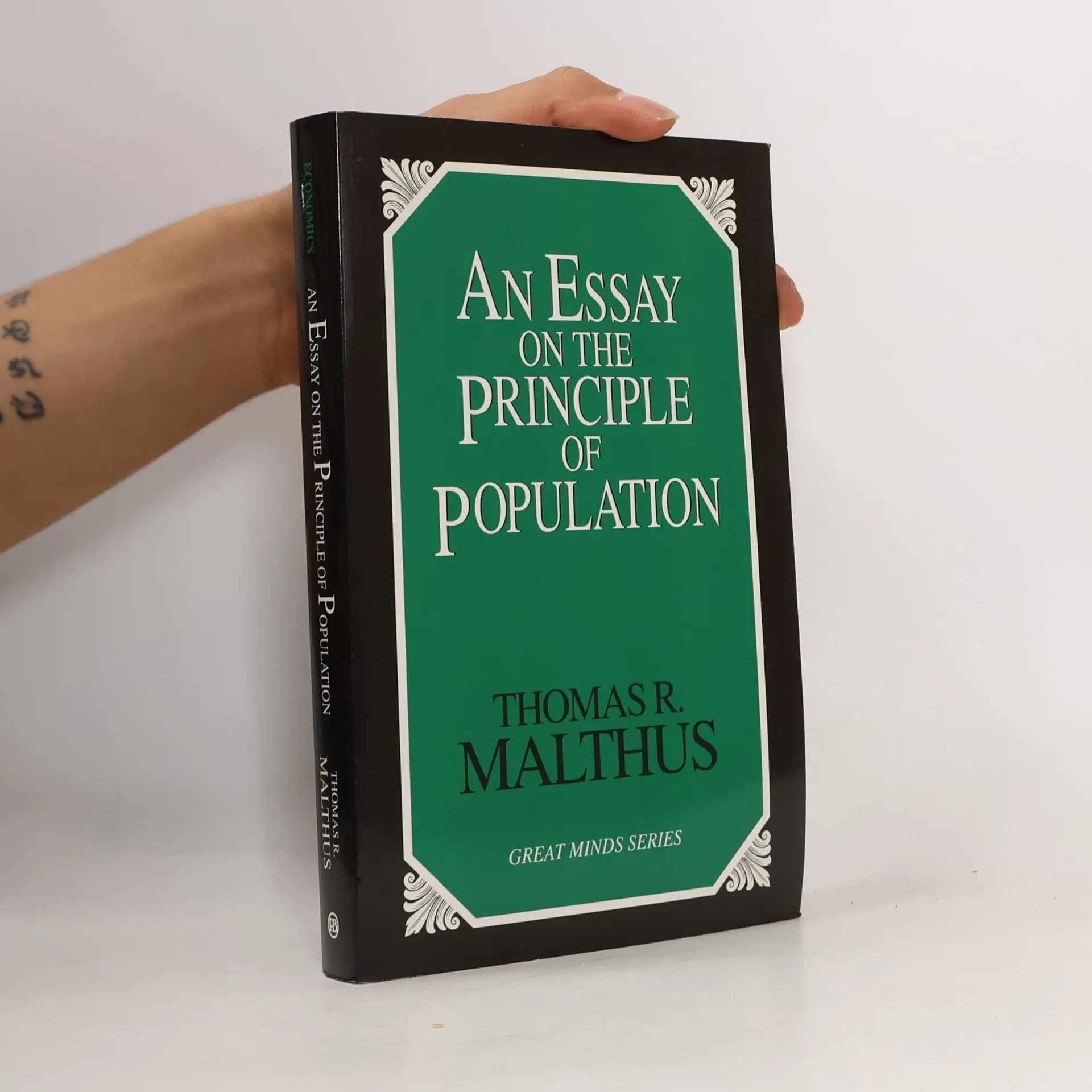
Kupujesz dokładnie tę książkę,która jest na zdjęciu.



Parametry
- 400 stron
- 14 godzin czytania
Więcej o książce
Focusing on the critical theme of population dynamics, the book presents Thomas R. Malthus's argument that unchecked population growth outpaces food supply, leading to dire societal consequences. Through mathematical proofs and scientific evidence, Malthus contends that preventive measures are essential to avoid overcrowding, disease, war, and poverty. His pessimistic outlook on humanity's future sparked significant debate among contemporary optimists and laid foundational ideas that influenced Charles Darwin's research.
Zakup książki
Great Minds Series: An Essay on the Principle of Population, Thomas Robert Malthus
- Język

- Rok wydania
- 1998
- Oprawa
- (miękka),
- Stan książki
- Bardzo dobry
- Cena
- 80,79 zł
Metody płatności
Nikt jeszcze nie ocenił.
- Tytuł
- Great Minds Series: An Essay on the Principle of Population
- Język
- angielski
- Autorzy
- Thomas Robert Malthus
- Wydawca
- Globe Pequot Press
- Rok wydania
- 1998
- Oprawa
- miękka
- Liczba stron
- 400
- ISBN10
- 1573922552
- ISBN13
- 9781573922555
- Seria
- Kategorie
- Tagi
- Tematy historyczne, Biznes, Przyroda, Poradniki, Tematyka filozoficzna, Polityka, Nauka, USA, Zdrowie, Technologia, Edukacja & Szkolnictwo, Szkoła, Społeczeństwo, Lingwistyka, Historia Europy, Przywództwo, Finanse, Teorie polityczne, Kultura, Historia USA, Rasa & Rasizm, Pieniądze, Etyka, Ewolucja, Sprawiedliwość społeczna, Demokracja, Obserwacja przyrody, Marksizm, Genetyka, Socjalizm, Kapitalizm, Oświecenie, Rząd, Aktywizm, Kosmologia, Filozofia polityczna, Filozofia nauki, Ateizm, Liberalizm, Myślenie krytyczne, Demografia, Teoria krytyczna, Ludność
- Opis
- Focusing on the critical theme of population dynamics, the book presents Thomas R. Malthus's argument that unchecked population growth outpaces food supply, leading to dire societal consequences. Through mathematical proofs and scientific evidence, Malthus contends that preventive measures are essential to avoid overcrowding, disease, war, and poverty. His pessimistic outlook on humanity's future sparked significant debate among contemporary optimists and laid foundational ideas that influenced Charles Darwin's research.