

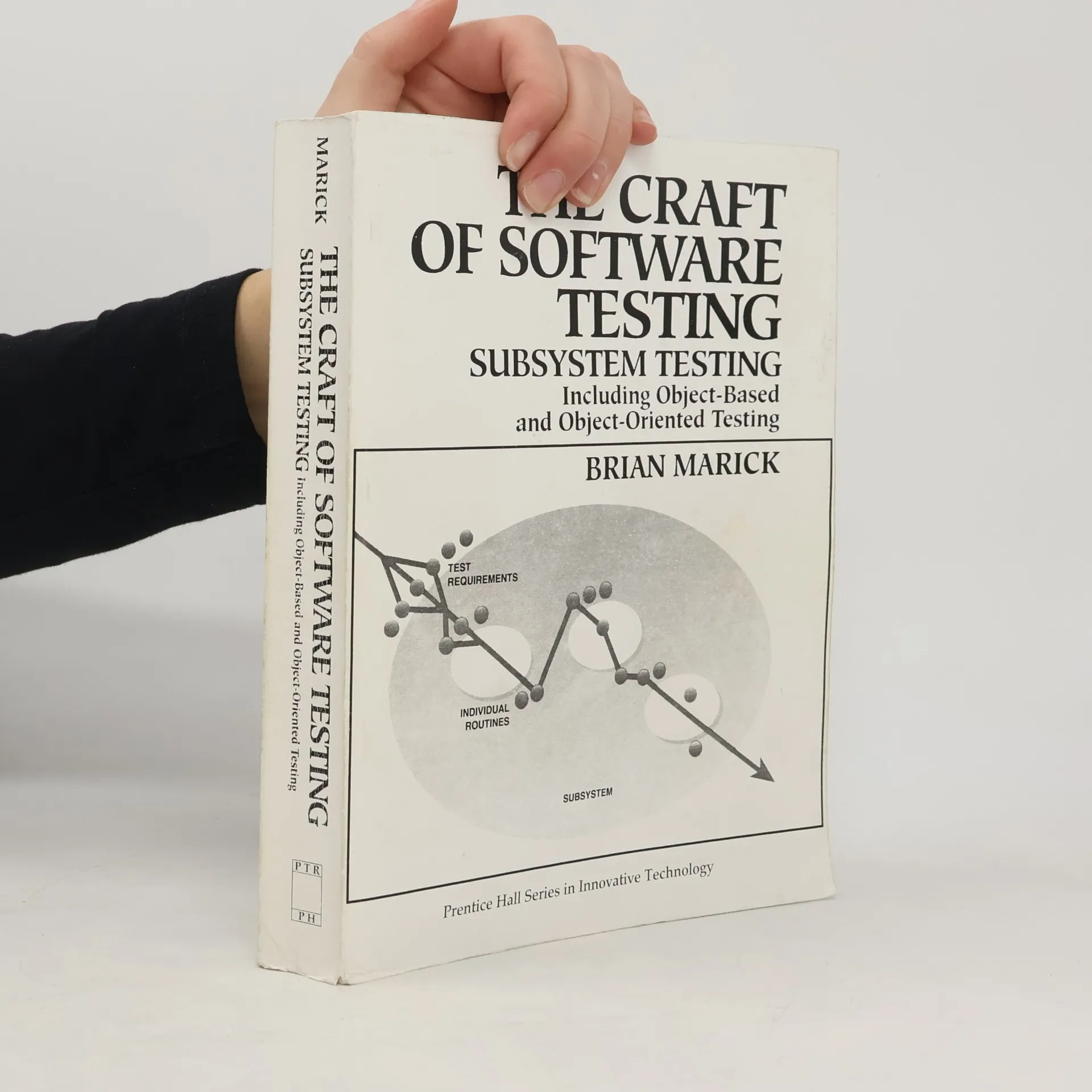
Prentice Hall Series in Innovative Technology: The Craft of Software Testing
Subsystem Testing Including Object-Based and Object-Oriented Testing
Autorzy
Parametry
- 553 strony
- 20 godzin czytania
Więcej o książce
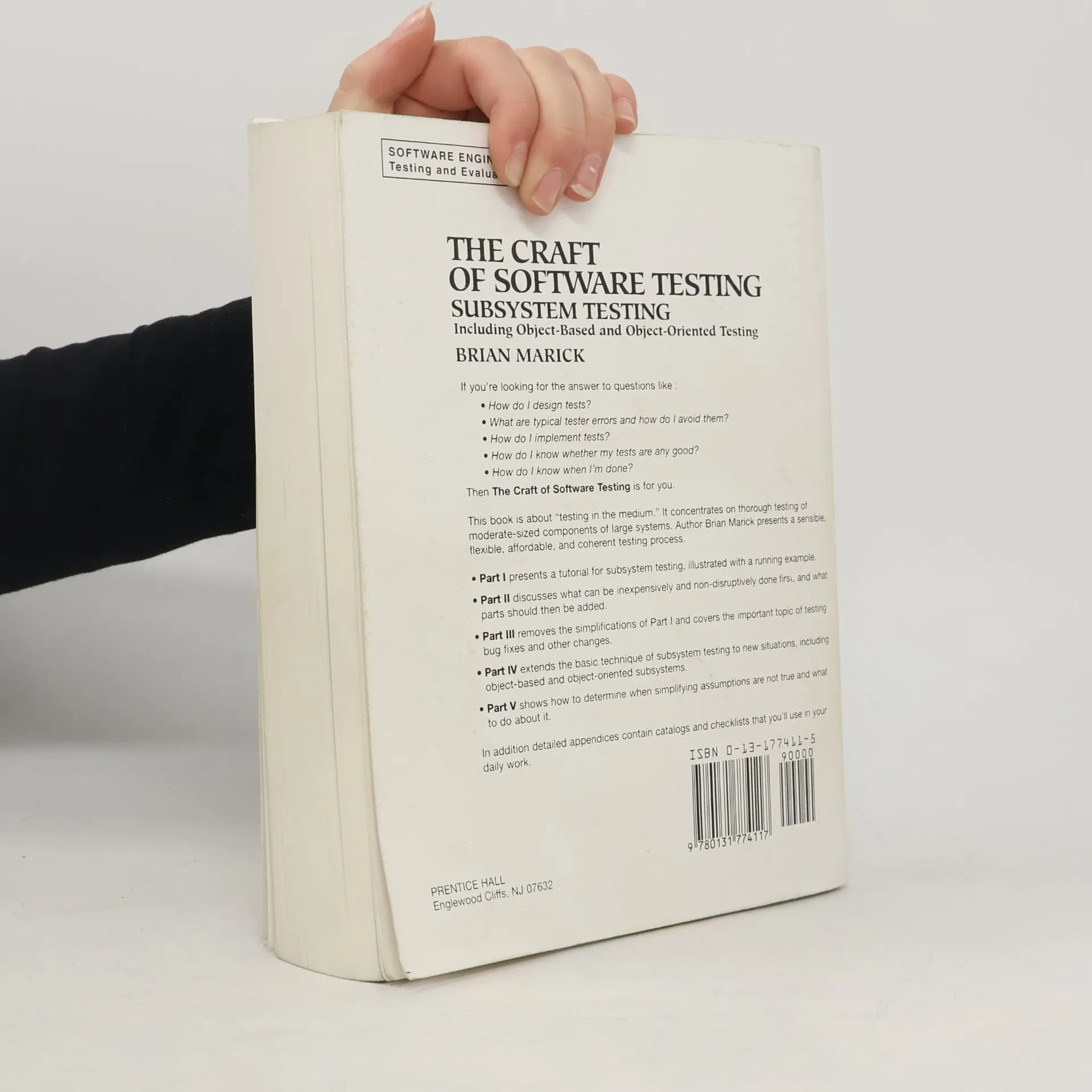
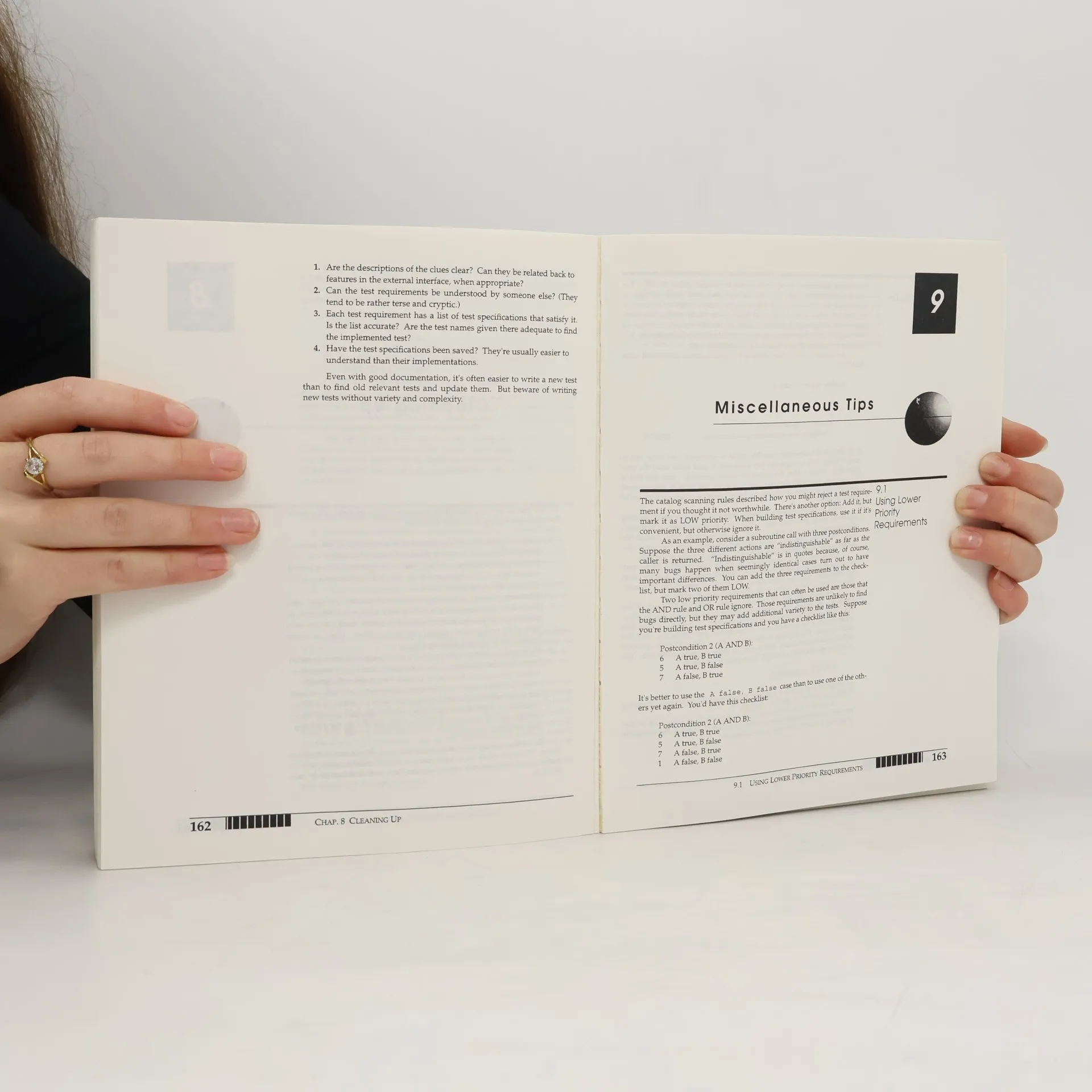
This reference presents, in detail, an effective, step-by-step, cost-effective approach to software testing that is based on common practice--with improvements inspired by academic testing research and practial experience. The approach is designed to be gradually adoptable, so that it does not disrupt current work, and it scales down gracefully under schedule pressure. Outlines a systematic process/strategy of software testing that incorporates test design, test implementation, and measurements of test quality. Explains solid testing techniques in detail and shows how to apply them to testing tasks. Answers such questions as: How do I design tests? What are common tester errors, and how do I avoid them? How do I implement tests? How do I know how good my tests are? How do I know when I've tested enough? Features unique coverge of testing bug fixes and other changes. For software developers testing their own code or designs; indepdendent testers testing someone else's code; and testers or developers testing bug fixes and other maintenance changes.ContentsPrefaceAn Overview of Software TestingPART 1: THE BASIC TECHNIQUES1. The Specification2. Introduction to the SREADHEX Example3. Building the Test Requirement Checklist4. Test Specifications5. Test Drivers and Suite Drivers6. Inspecting Code with the Question Catalog7. Using Coverage to Test the Test Suite8. Cleaning Up9. Miscellaneous TipsPART 2: ADOPTING SUBSYSTEM TESTING10. Getting Going11. Getting GoodPART 3: SUBSYSTEM TESTING IN PRACTICE12. Using More Typical Specifications (including none at all)13. Working with Large Subsystems14. Testing Bug Fixes and other Maintenance Changes15. Testing under Schedule PressurePART 4: EXAMPLES AND EXTENSIONS16. Syntax Testing17. A Second Complete Example: MAX18. Testing Consistency Relationships19. State Machines and Statecharts20. Testing Subsystems that Use Reusable Software21. Testing Object-Based Software22. Object-Oriented Software 1: Inheritance23. An Example of Testing Derived Classes24. Object-Oriented Software 2: Dynamic BindingPART 5: MULTIPLYING TEST REQUIREMENTS25. Simpler Test Requirement Multiplication26. Multiplying Operation Test RequirementsPART 6: APPENDICESA. Test Requirement Catalog (Student Version)B. Test Requirement CatalogC. POSIX-Specific Test Requirement catalog (Simple)D. Question Catalog for Code InspectionsE. Requirements for Complex Booleans CatalogF. Checklists for Test Writing
Zakup książki
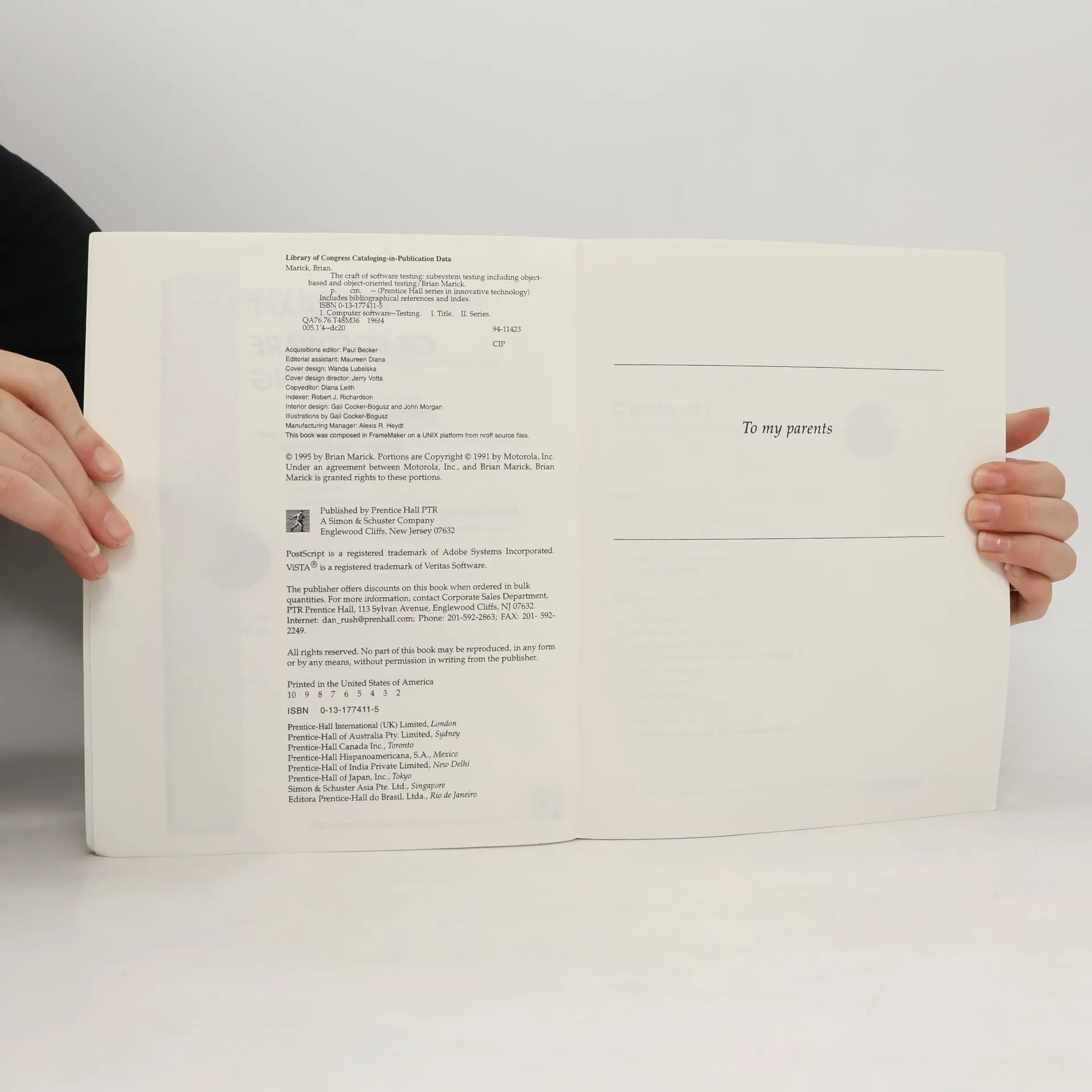
Prentice Hall Series in Innovative Technology: The Craft of Software Testing, Brian Marick
- Język

- Rok wydania
- 1995
- Oprawa
- (miękka),
- Stan książki
- Uszkodzony
- Cena
- 17,89 zł
Metody płatności
Nikt jeszcze nie ocenił.
- Tytuł
- Prentice Hall Series in Innovative Technology: The Craft of Software Testing
- Podtytuł
- Subsystem Testing Including Object-Based and Object-Oriented Testing
- Język
- angielski
- Autorzy
- Brian Marick
- Wydawca
- Prentice Hall
- Rok wydania
- 1995
- Oprawa
- miękka
- Liczba stron
- 553
- ISBN10
- 0131774115
- ISBN13
- 9780131774117
- Seria
- Opis
- This reference presents, in detail, an effective, step-by-step, cost-effective approach to software testing that is based on common practice--with improvements inspired by academic testing research and practial experience. The approach is designed to be gradually adoptable, so that it does not disrupt current work, and it scales down gracefully under schedule pressure. Outlines a systematic process/strategy of software testing that incorporates test design, test implementation, and measurements of test quality. Explains solid testing techniques in detail and shows how to apply them to testing tasks. Answers such questions as: How do I design tests? What are common tester errors, and how do I avoid them? How do I implement tests? How do I know how good my tests are? How do I know when I've tested enough? Features unique coverge of testing bug fixes and other changes. For software developers testing their own code or designs; indepdendent testers testing someone else's code; and testers or developers testing bug fixes and other maintenance changes.ContentsPrefaceAn Overview of Software TestingPART 1: THE BASIC TECHNIQUES1. The Specification2. Introduction to the SREADHEX Example3. Building the Test Requirement Checklist4. Test Specifications5. Test Drivers and Suite Drivers6. Inspecting Code with the Question Catalog7. Using Coverage to Test the Test Suite8. Cleaning Up9. Miscellaneous TipsPART 2: ADOPTING SUBSYSTEM TESTING10. Getting Going11. Getting GoodPART 3: SUBSYSTEM TESTING IN PRACTICE12. Using More Typical Specifications (including none at all)13. Working with Large Subsystems14. Testing Bug Fixes and other Maintenance Changes15. Testing under Schedule PressurePART 4: EXAMPLES AND EXTENSIONS16. Syntax Testing17. A Second Complete Example: MAX18. Testing Consistency Relationships19. State Machines and Statecharts20. Testing Subsystems that Use Reusable Software21. Testing Object-Based Software22. Object-Oriented Software 1: Inheritance23. An Example of Testing Derived Classes24. Object-Oriented Software 2: Dynamic BindingPART 5: MULTIPLYING TEST REQUIREMENTS25. Simpler Test Requirement Multiplication26. Multiplying Operation Test RequirementsPART 6: APPENDICESA. Test Requirement Catalog (Student Version)B. Test Requirement CatalogC. POSIX-Specific Test Requirement catalog (Simple)D. Question Catalog for Code InspectionsE. Requirements for Complex Booleans CatalogF. Checklists for Test Writing