

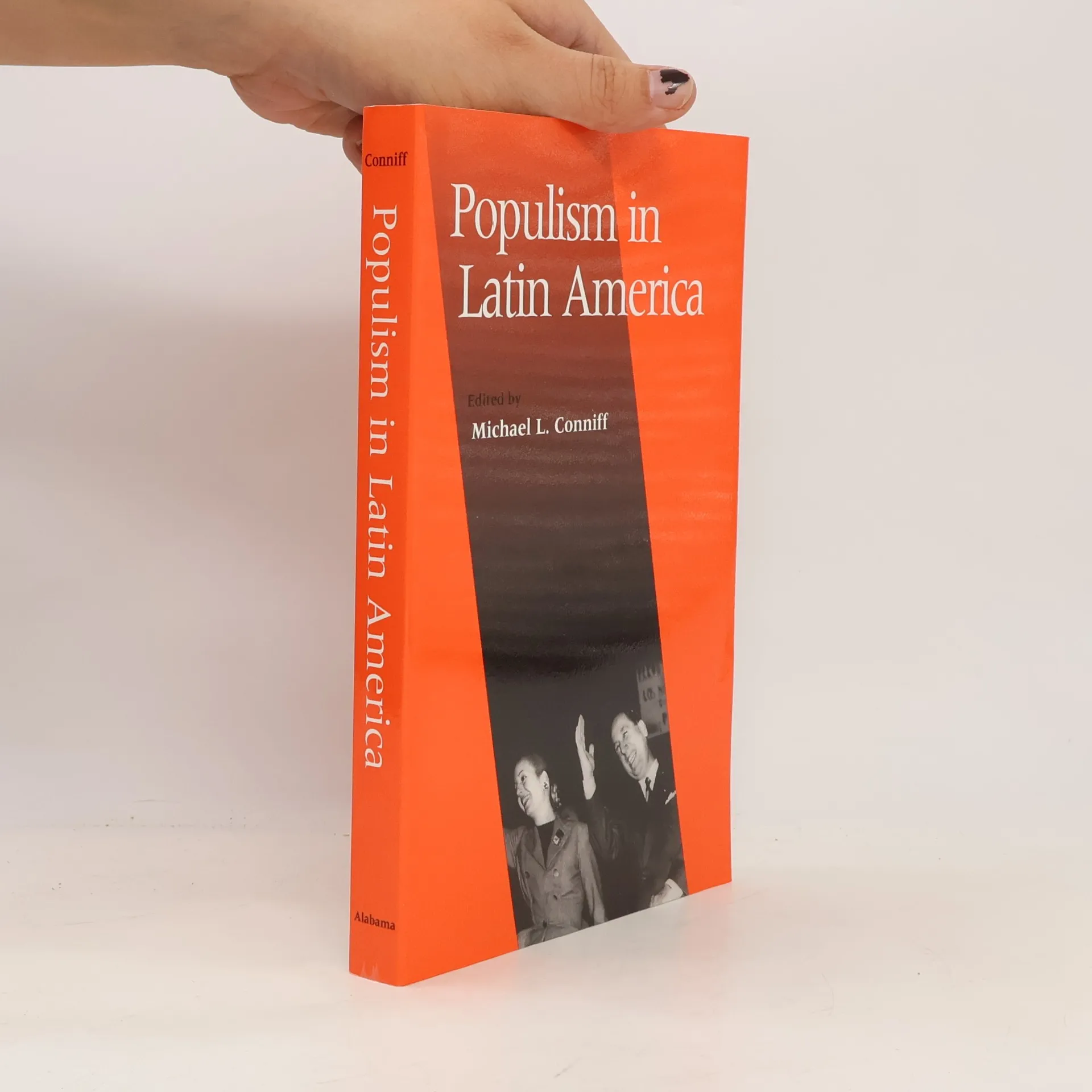
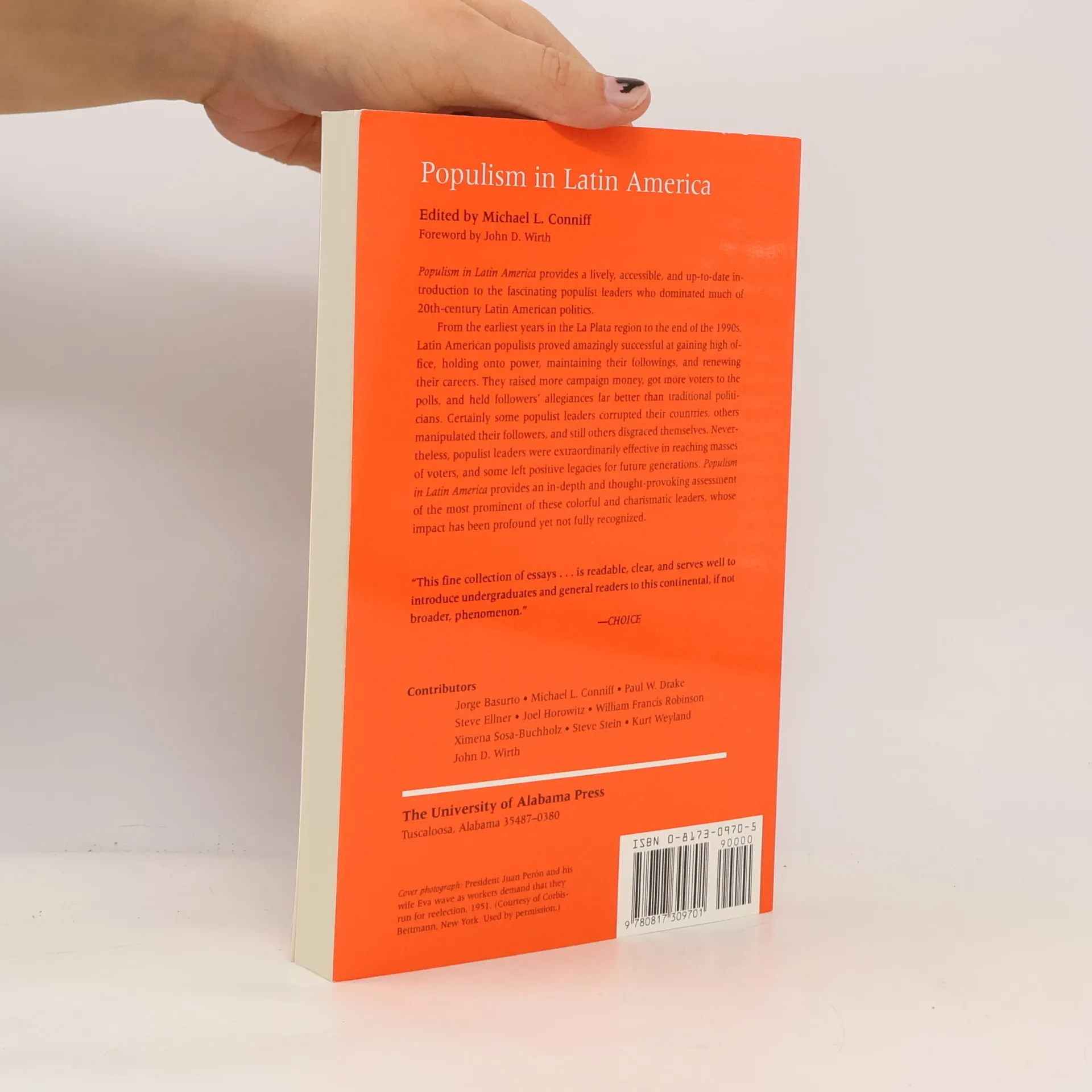

Populism in Latin America
Parametry
- 272 strony
- 10 godzin czytania
Więcej o książce
Populism in Latin America provides a lively, accessible, and up-to- date introduction to the fascinating populist leaders who dominated much of 20th-century Latin American politics. From the earliest years in the La Plata region to the end of the 1990s, Latin American populists proved amazingly successful at gaining high office, holding onto power, maintaining their followings, and renewing their careers. They raised more campaign money, got more voters to the polls, and held followers' allegiances far better than traditional politicians. Certainly some populist leaders corrupted their countries, others manipulated their followers, and still others disgraced themselves. Nevertheless, populist leaders were extraordinarily effective in reaching masses of voters, and some left positive legacies for future generations. Populism in Latin America provides an in-depth and thought-provoking assessment of the most prominent of these colorful and charismatic leaders, whose impact has been profound yet not fully recognized. Latin American scholars here survey the populist experiences in those nations most profoundly influenced by this distinctively Latin American way of conducting the public's business--Argentina, Brazil, Chile, Mexico, Peru, Venezuela, Ecuador, and Panama. Joel Horowitz, for example, examines Argentina's strong legacy of populism, beginning with the remarkable Hip-lito Yrigoyen, moving through the archetypal Juan and Evita Perón, and ending with still-active president Carlos Menem. Ximena Sosa-Buchholz provides a fascinating view of populism in Ecuador, a country often overlooked by students of modern politics. Kurt Weyland challenges the notion that neoliberal, or monetarist, economic policies are incompatible with populism. Other populist leaders profiled include Lazaro Cardenas, Romulo Betancourt, and Alberto Fujimori to name a few. In his epilogue and bibliographic essay, volume editor Michael Conniff suggests new directions for further research and offers a comprehensive survey of the evolution of major writings, theories, and methodologies in the field.
Zakup książki
Populism in Latin America, John D. Wirth, Steve Stein, Steve Ellner, Michael L. Conniff
- Język

- Rok wydania
- 1999
- Oprawa
- (miękka)
Metody płatności
Nikt jeszcze nie ocenił.
- Tytuł
- Populism in Latin America
- Język
- angielski
- Wydawca
- University of Alabama Press
- Rok wydania
- 1999
- Oprawa
- miękka
- Liczba stron
- 272
- ISBN10
- 0817309705
- ISBN13
- 9780817309701
- Seria
- Kategorie
- Tagi
- Zbiory, antologie, Polityka, USA, Literatura fachowa, Prace zebrane, Ameryka Południowa, Ameryka Łacińska, Populizm
- Opis
- Populism in Latin America provides a lively, accessible, and up-to- date introduction to the fascinating populist leaders who dominated much of 20th-century Latin American politics. From the earliest years in the La Plata region to the end of the 1990s, Latin American populists proved amazingly successful at gaining high office, holding onto power, maintaining their followings, and renewing their careers. They raised more campaign money, got more voters to the polls, and held followers' allegiances far better than traditional politicians. Certainly some populist leaders corrupted their countries, others manipulated their followers, and still others disgraced themselves. Nevertheless, populist leaders were extraordinarily effective in reaching masses of voters, and some left positive legacies for future generations. Populism in Latin America provides an in-depth and thought-provoking assessment of the most prominent of these colorful and charismatic leaders, whose impact has been profound yet not fully recognized. Latin American scholars here survey the populist experiences in those nations most profoundly influenced by this distinctively Latin American way of conducting the public's business--Argentina, Brazil, Chile, Mexico, Peru, Venezuela, Ecuador, and Panama. Joel Horowitz, for example, examines Argentina's strong legacy of populism, beginning with the remarkable Hip-lito Yrigoyen, moving through the archetypal Juan and Evita Perón, and ending with still-active president Carlos Menem. Ximena Sosa-Buchholz provides a fascinating view of populism in Ecuador, a country often overlooked by students of modern politics. Kurt Weyland challenges the notion that neoliberal, or monetarist, economic policies are incompatible with populism. Other populist leaders profiled include Lazaro Cardenas, Romulo Betancourt, and Alberto Fujimori to name a few. In his epilogue and bibliographic essay, volume editor Michael Conniff suggests new directions for further research and offers a comprehensive survey of the evolution of major writings, theories, and methodologies in the field.