This clear and comprehensive text explores contemporary Soviet/Russian international relations, comparing foreign policy formation under Gorbachev, Yeltsin, Medvedev, and Putin. Challenging conventional views of Moscow's foreign policy, Andrei Tsygankov shows that definitions of national interest depend on visions of national identity and are rooted both in history and domestic politics. Yet the author also highlights the role of the external environment in affecting the balance of power among competing domestic groups. Drawing on both Russian and Western sources, Tsygankov traces how Moscow's policies have shifted under different leaders' visions of Russia's national interests

Andrei P. Tsygankov Książki


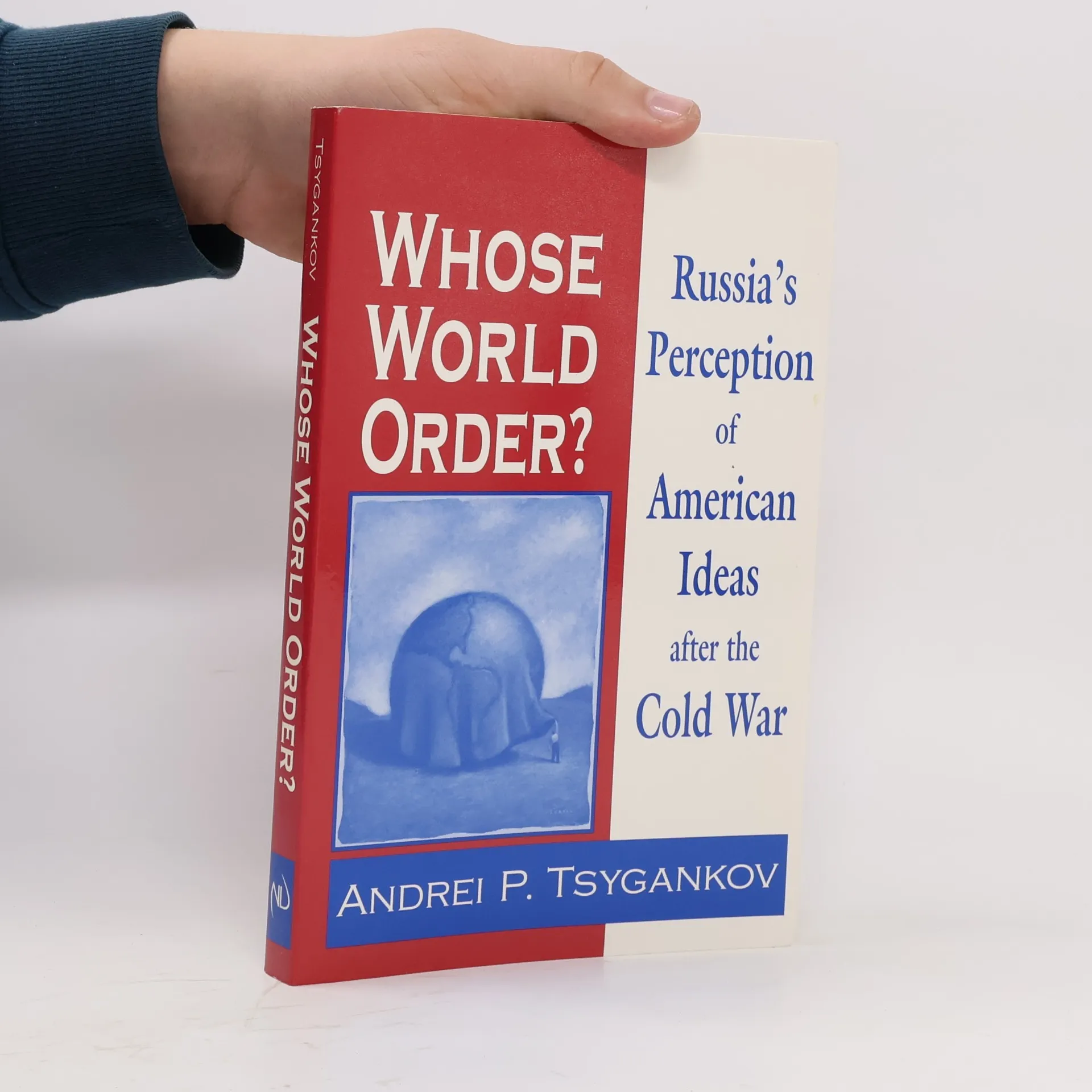
Whose World Order?
Russia's Perception of American Ideas After the Cold War
- 224 strony
- 8 godzin czytania
Exploring the reception of American world order ideas by Russian elites, the book examines how concepts like Fukuyama's "end of history" and Huntington's "clash of civilizations" are perceived in Russia. Tsygankov argues that these theories are often seen as ethnocentric and limiting, hindering social creativity and justifying a Western-centric global order. He emphasizes the importance of understanding cultural perceptions in international relations and suggests ways to overcome ethnocentric biases, making this work significant for scholars in related fields.