The authors of The Red Web examine the shifting role of Russian expatriates
throughout history, and their complicated, unbreakable relationship with the
mother country---be it antagonistic or far too chummy.
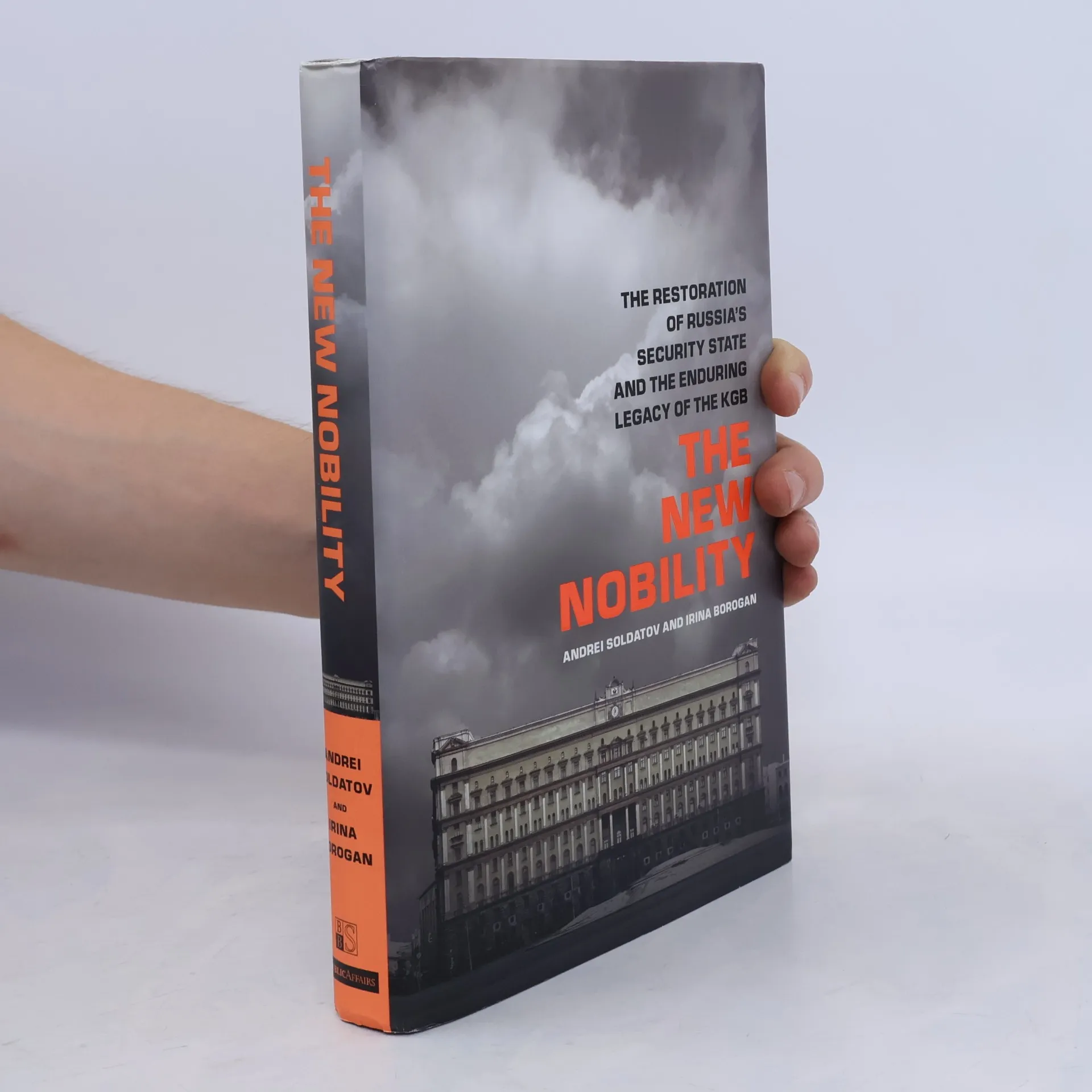
The Restoration of Russia's Security State and the Enduring Legacy of the KGB
320 stron
12 godzin czytania
In The New Nobility, two courageous Russian investigative journalists open up the closed and murky world of the Russian Federal Security Service. While Vladimir Putin has been president and prime minister of Russia, the Kremlin has deployed the security services to intimidate the political opposition, reassert the power of the state, and carry out assassinations overseas. At the same time, its agents and spies were put beyond public accountability and blessed with the prestige, benefits, and legitimacy lost since the Soviet collapse.The security services have played a central— and often mysterious—role at key turning points in Russia during these tumultuous years: from the Moscow apartment house bombings and theater siege, to the war in Chechnya and the Beslan massacre. The security services are not all-powerful; they have made clumsy and sometimes catastrophic blunders. But what is clear is that after the chaotic 1990s, when they were sidelined, they have made a remarkable return to power, abetted by their most famous alumnus, Putin.
Two of Russia’s best investigative journalists tell the story of how the hopes of their generation of optimistic Russians in the 1990s faded to be replaced by autocracy, fear, and betrayalOur Dear Friends in Moscow tells the story of a group of young Russians, part of an idealistic generation who came of age in Moscow at the end of the twentieth century, just as the communist era imploded and a future full of potential, and uncertainty, stood in front of them. Initially, the group seized and enjoyed the freedoms of the new era, but quickly the notion that Russia was destined to join the West, and Europe, in a new partnership began to fade. At home the economy imploded, civil war stalked the Russian border in Chechnya, and terrorism came to Moscow. More discreetly, the new Russian government began to pull back from reconciliation with the United States and the West; by the time of Vladimir Putin’s second and apparently endless term as president, the country had embraced a kind of ethno-nationalism and as heading for war at home and abroad. The group is torn apart by the shift in Russia. Some flee; others become sinister agents of the ever more aggressive state. The center cannot hold.