

De tuinman van Aden" bevat de herinneringen van de schrijver en diplomaat Breman (84) aan uiteenlopende ontmoetingen in uiteenlopende oorden. Van het Italië onder Mussolini tot de Leidse universiteit begin jaren vijftig.
Jan Breman Kolejność książek (chronologicznie)



Koloniaal profijt van onvrije arbeid
Het Preanger stelsel van gedwongen koffieteelt op Java
- 456 stron
- 16 godzin czytania
In een onderzoek dat meer dan 30 jaar omspant, behandelt hij de werking en uitwerking van gedwongen koffieteelt onder de koloniale heerschappij, en de invloed op het maatschappelijk bestel in de hooglanden van West-Java. Hij laat zien hoe de VOC de inheemse landadel inschakelde als goedkope vorm van bestuur. Deze landadel hield de boerenbevolking door middel van uitbuiting en onderdrukking in het gareel. En die opzet slaagde volkomen, zoals Multatuli in zijn Max Havelaar al beschreef. Breman levert in deze studie de feitelijke onderbouwing van de aanklacht door Multatuli, anderhalve eeuw geleden.
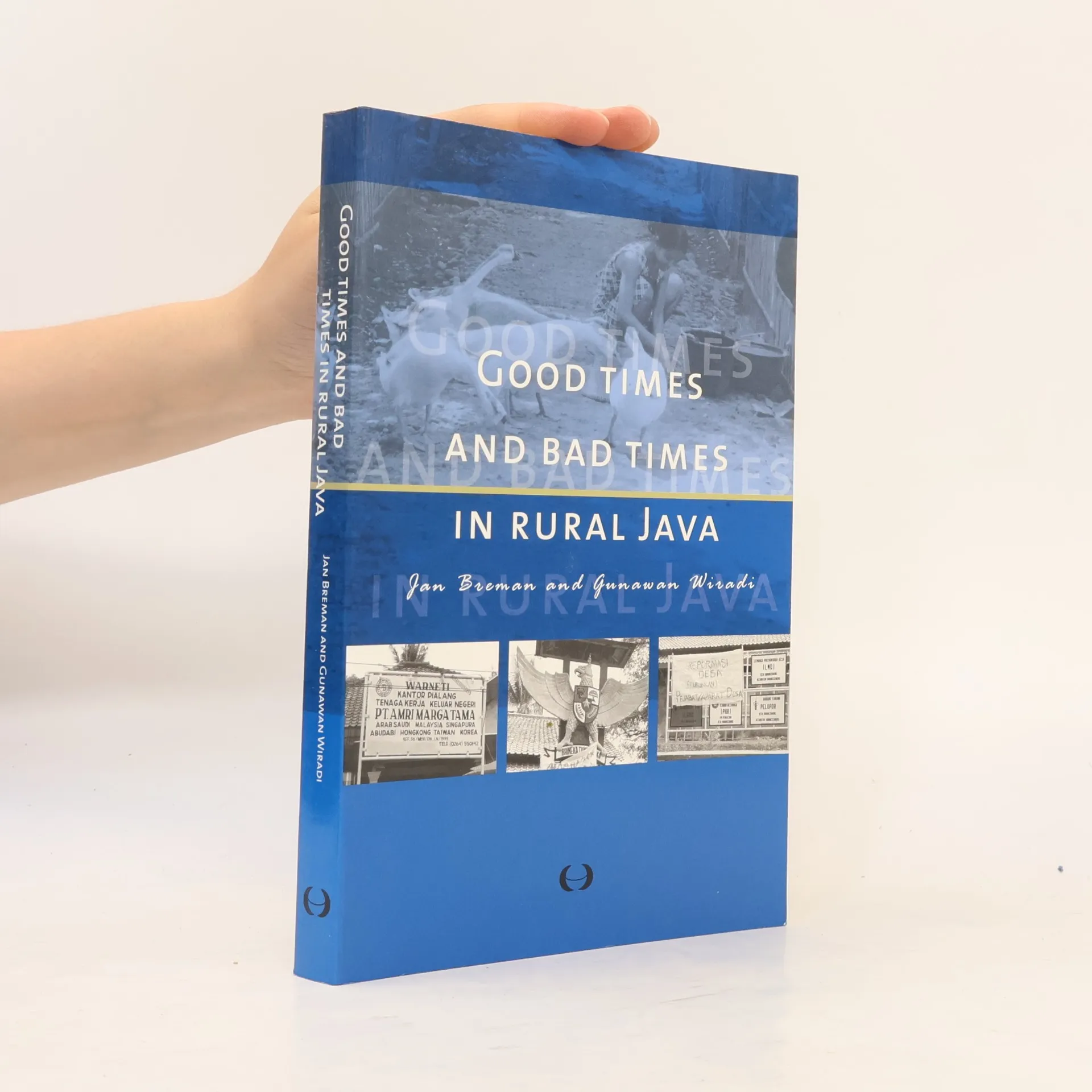
Good Times and Bad Times in Rural Java
Case Study of Socio-Economic Dynamics in Two Villages Towards the End of the Twentieth Century
- 330 stron
- 12 godzin czytania
The causes of the Asian economic crisis have been the subject of fierce debates among economists, yet little is known about the impact on employment and wellbeing. In Indonesia, the worst affected country, the malaise turned into a political and societal upheaval which brought an end to the New Order regime. Based on anthropological fieldwork in two villages along the coast of West Java, the monograph discusses the repercussions for work and welfare in the rural hinterland.The authors criticize the policies of the government of Indonesia as well as those of other transnational agencies on what has happened and what should be done. Their micro-study on socio-economic dynamics in two localities, researched in a longitudinal perspective, argues that since the start of the crisis the poverty level, then already much higher than officially conceded, rose to include more than half of all households. In contrast to the received wisdom that the village still functions as a community, the crisis has widened the gap between the rural rich and poor. The fieldwork findings are held to justify conclusions for areas with similar structural densely populated, with a highly skewed pattern of land distribution, long-distance labour circulation between city and countryside and involving a substantial part of the total workforce, especially the landpoor and the landless.
Of Peasants, Paupers and Migrants
- 500 stron
- 18 godzin czytania
Patronage Exploitatn
Changing Agrarian Relations in South Gujarat, India
Rural sociology field study on production relations between landowners and landless agricultural workers in South Gujarat, India - looks at historical background of bonded labour and landowner patronage; describes the traditional hali system of servitude founded on caste; based on data collected from 1962 to 1963, describes agrarian structure and social structure in two villages. Bibliography.