

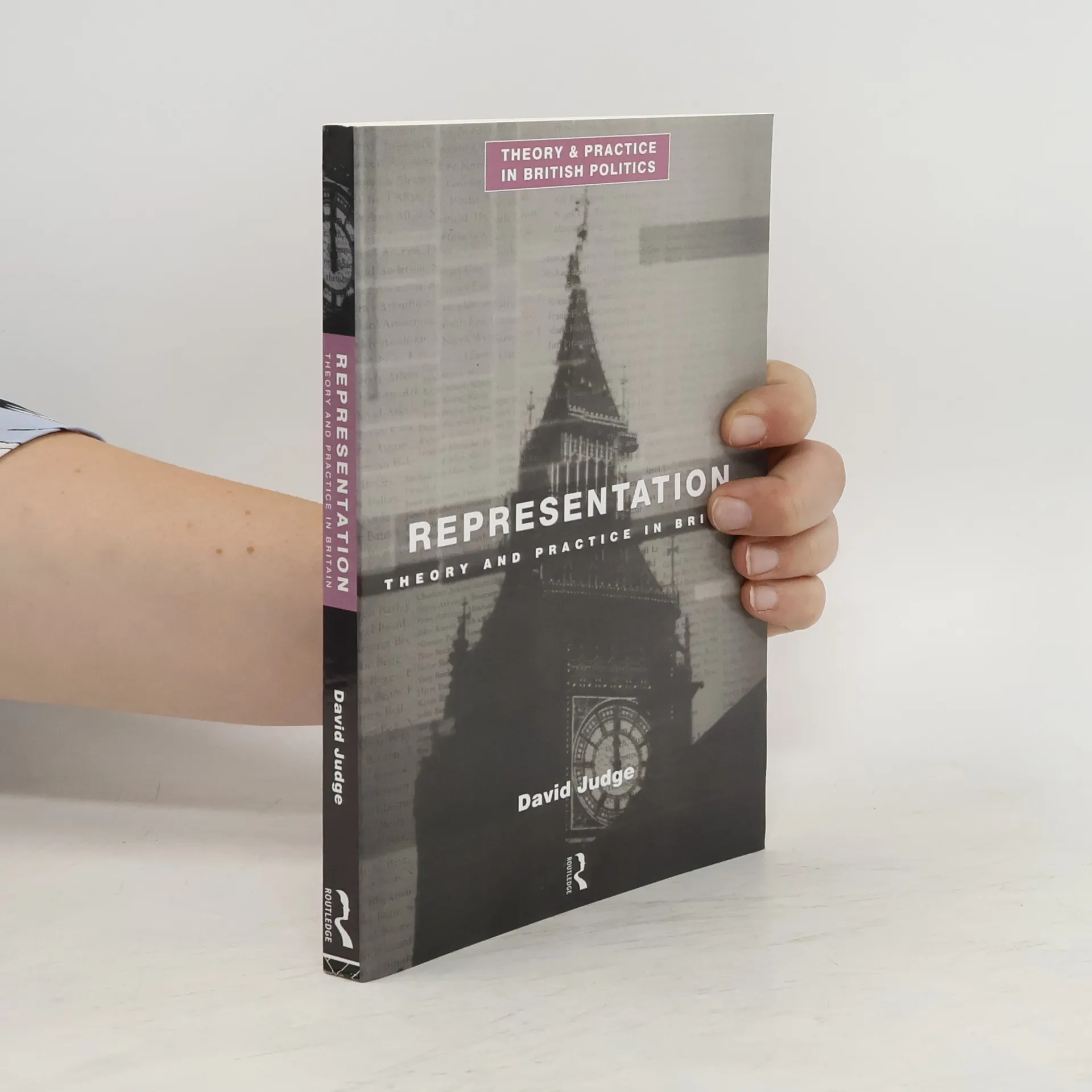
This book examines the meaning and practice of political representation in Britain. It reveals the intricate connections between theory and action and how different notions of representation coexist in a complex and potent mix. The thoughts of major theorists - from Edmund Burke, Jeremy Bentham, John Stuart Mill, through G.D.H. Cole to Paul Hirst - are used to outline the diversity of ideas and practical forms of representation in Britain. Clear accounts of microcosmic, trustee, party, interest, functional, associational and territorial modes of representation are provided as a foundation from which ideas about 'post-parliamentary governance' and the 'crisis of legitimacy' are analysed. A wide-ranging review of representation at local, subnational, national and European levels reveals the concept's fundamental significance in the practice of modern politics.
David Judge Książki

Providing a comprehensive overview of the main theories which structure debate on urban politics, the internationally respected contributors to this textbook provide a clear and coherent account which is organized around four major questions. The first part looks at issues of power and examines both traditional and recent theories of power in cities. The nature of public bureaucracy and those officials that have a leadership role within city government are discussed in the second part. The third part examines the ways that citizens are involved in the process of urban politics. The final part seeks to place urban politics in terms of the social economic environment and the complex architecture of government in which it has