

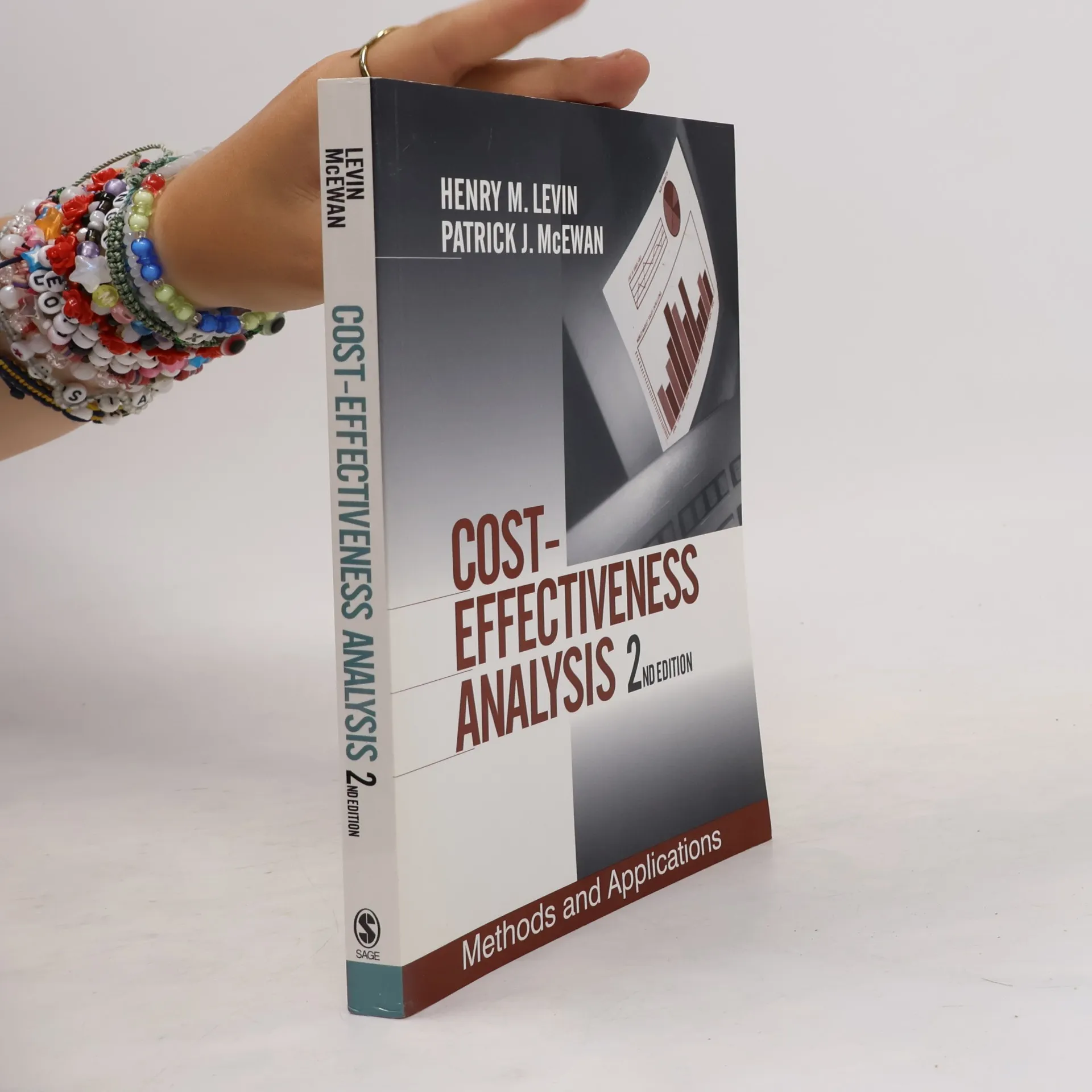
This Second Edition of Cost-Effectiveness Analysis continues to provide the most current, step-by-step guide to planning and implementing a cost analysis study. Henry M. Levin and Patrick J. McEwan use detailed and varied examples from studies and articles, ranging from education to public health, to introduce the principles and practice of cost-effectiveness analysis. The authors take account of both the costs and the effects of selecting alternatives, and suggest methods of minimizing the costs of research. New to this expanded coverage of cost effectiveness from types of technique to use, to how to interpret the data; the latest information on cost benefits analysis and how to relate it to outcome measures; in-depth chapter-end exercises to enable readers to sharpen their ability to evaluate policy options and program effectiveness; feedback appendix for readers to evaluate their responses to exercises; comprehensive bibliography of methodological sources on cost analysis and educational settings grouped by category. This thorough volume primes the reader to deal with any evaluation situation by studying cost-effective analysis in relation to cost-benefit analysis, cost-utility analysis, and cost-feasibility analysis.
Henry M. Levin Książki
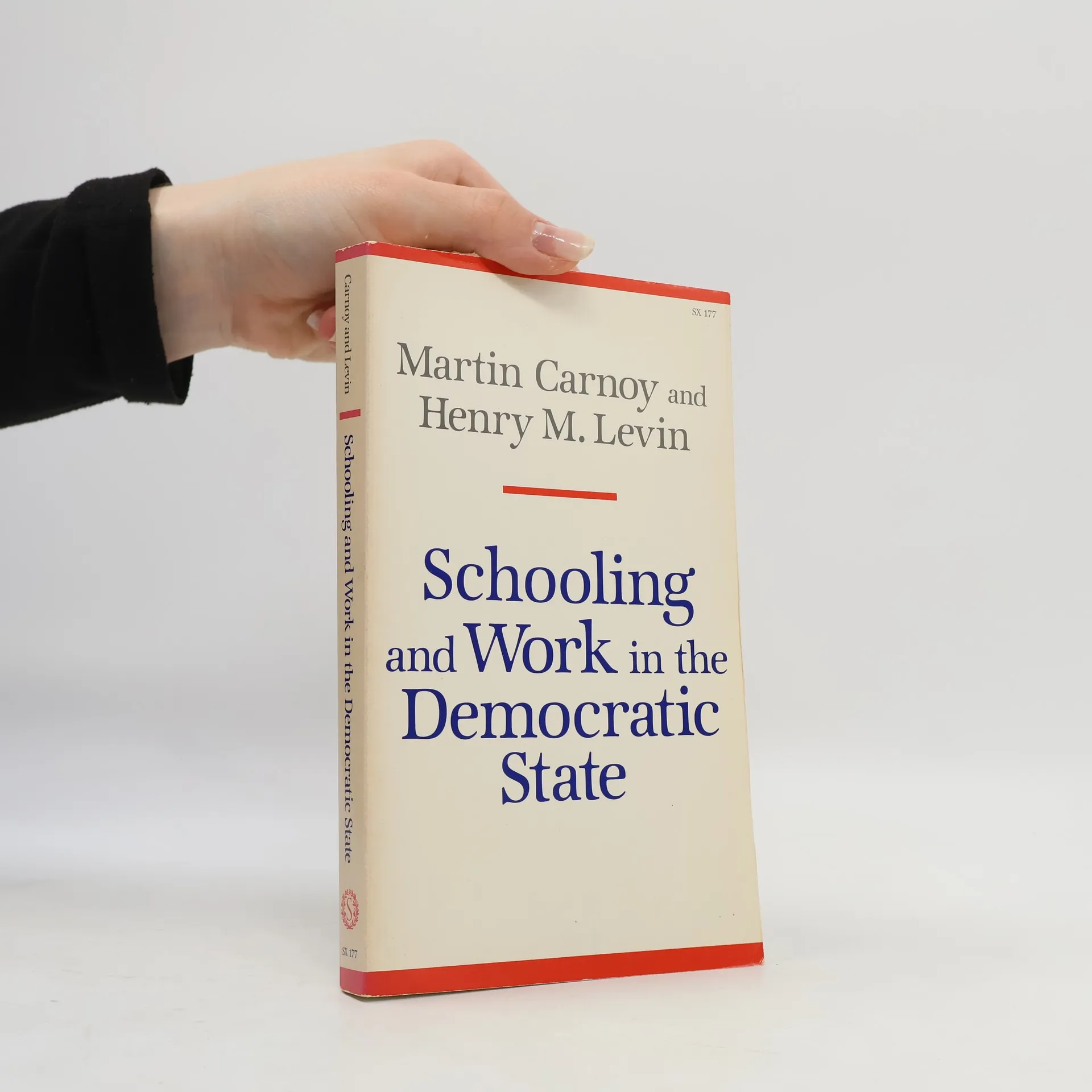
Schooling and Work in the Democratic State
- 320 stron
- 12 godzin czytania
A new explanation of the relation between schooling and work in the democratic, advanced industrial state emerges from this study that rejects both traditional views and the more recent Marxian perspective. Traditional views consider schools as autonomous institutions that are able to pursue the goals of equality and social mobility irrespective of the inequalities of capitalist society; the Marxian perspective views schools as serving the role of producing wage-labor for capitalistic exploitation. The authors suggest that the shortcomings of both views are rooted in the fact that they do not recognize the true functions of the democratic, capitalist state. The state is seen as an arena for struggle between forces pushing for egalitarian, democratic reforms and those seeking to use the resources of the state for private capital accumulation. Depending on which side has primacy at the moment, schools will reflect one set of goals over the other. However, victory is never complete, and the tide of battle has shifted back and forth historically. The authors develop this theory through interpreting the dynamic relation between U.S. schools and the workplace. Based on this approach, they predict changes in both schooling and work as well as the forms that future conflicts between the contending forces are likely to take.