Bookbot

Karen S. Cook Kolejność książek (chronologicznie)

    Russell Sage Foundation Series on Trust: Cooperation Without Trust?
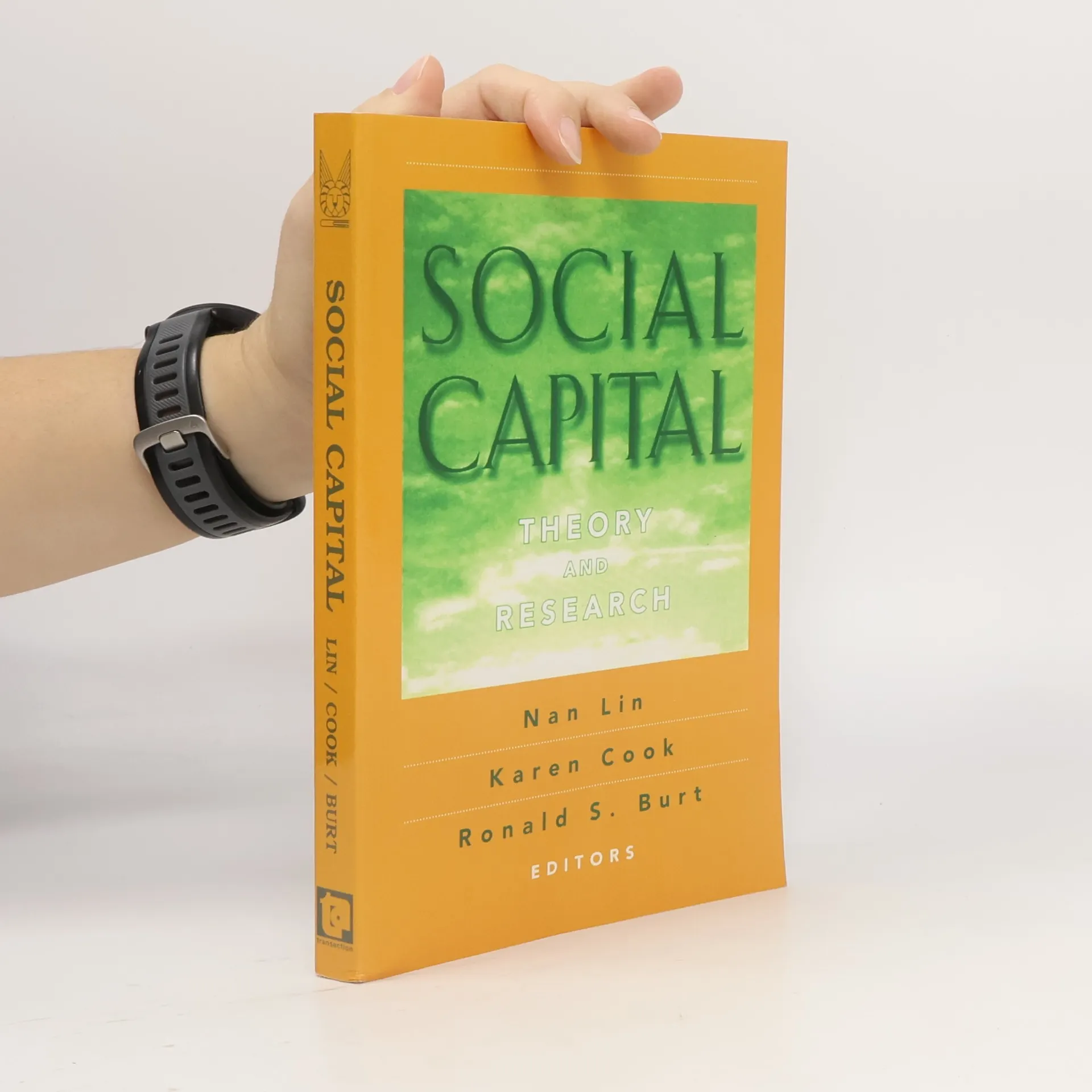
    Social Capital
    • Some social theorists assert that trust is essential for a democratic society's smooth functioning, yet recent surveys indicate a decline in trust in the United States. This raises concerns about the nation's future. In their analysis, the authors argue that a society can still operate effectively without trust. While trust can enhance relationships, they demonstrate that mutually beneficial cooperation can occur through other mechanisms. For instance, concerns about reputation can deter individuals from breaking agreements in small communities, while state enforcement of contracts allows business partners to trade without needing to trust each other. Monitoring employee behavior enables employers to delegate significant responsibilities without relying on trust. The authors explore various mechanisms for fostering cooperation without trust, including self-regulation in professional societies, management compensation schemes, and social capital networks. They suggest that a lack of trust, or even distrust, can sometimes foster cooperation by prompting individuals to mitigate risks and develop robust institutions. Historical examples, such as the founding fathers' distrust of government, illustrate how such skepticism led to accountable governance structures. Ultimately, the book posits that trust may complement, rather than replace, institutional mechanisms, indicating that a decline in trust does not necessarily threaten soci

      Russell Sage Foundation Series on Trust: Cooperation Without Trust?2007
    • Social Capital

      Theory and Research

      • 346 stron
      • 13 godzin czytania

      Leading scholars in the field of social networks from diverse disciplines present the first systematic and comprehensive collection of current theories and empirical research on the informal connections that individuals have for support, help, and information from other people. Expanding on concepts originally formulated by Pierre Bourdieu and James Coleman, this seminal work will find an essential place with educators and students in the fields of social networks, rational choice theory, institutions, and the socioeconomics of poverty, labor markets, social psychology, and race. The volume is divided into three parts. The first segment clarifies social capital as a concept and explores its theoretical and operational bases. Additional segments provide brief accounts that place the development of social capital in the context of the family of capital theorists, and identify some critical but controversial perspectives and statements regarding social capital in the literature. The editors then make the argument for the network perspective, why and how such a perspective can clarify controversies and advance our understanding of a whole range of instrumental and expressive outcomes. Social Capital further provides a forum for ongoing research programs initiated by social scientists working at the crossroads of formal theory and new methods. These scholars and programs share certain understandings and approaches in their analyses of social capital. They argue that social networks are the foundation of social capital. Social networks simultaneously capture individuals and social structure, thus serving as a vital conceptual link between actions and structural constraints, between micro- and macro-level analyses, and between relational and collective dynamic processes. They are further cognizant of the dual significance of the "structural" features of the social networks and the "resources" embedded in the networks as defining elements of social capital.

      Social Capital2001