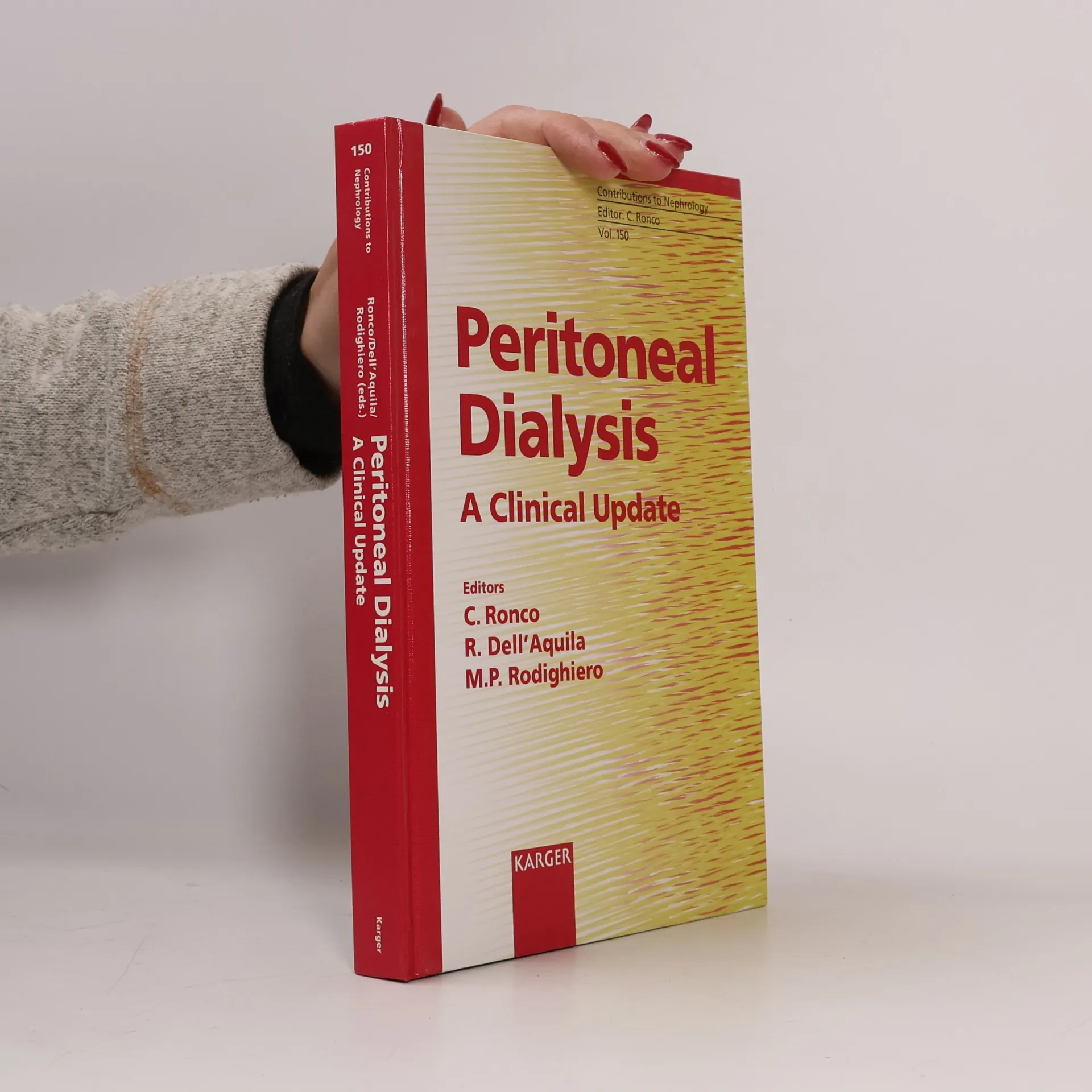
Contributions to Nephrology - 150: Peritoneal Dialysis
- 353 strony
- 13 godzin czytania
Even though peritoneal dialysis (PD) is by now well established and its advantages in terms of clinical efficacy, social impact and individual tolerance are acknowledged, it is still underutilized on a global scale. In view of this fact, the publication at hand has two objectives, namely to provide help to identify possible obstacles to a wider application of PD and to advance a project called USS PD: Understanding, Starting and Sustaining Peritoneal Dialysis (initiated by the Department of Nephrology, Dialysis and Transplantation of the St. Bortolo Hospital in Vicenza, Italy). The initial part of this book is thus dedicated to basic principles of PD, as understanding how this technique works is one of the prerequisites to improve the quality of its application and, ultimately, its outcomes. In the second part, in-depth reviews help the physician to identify the benefits and problems involved in a PD program, facilitating the initiation of a new program or the start of new patients on PD. The third part, finally, is dedicated to potential complications and technical solutions designed to solve the problems of the different techniques. This helps physicians to sustain the use of PD after having acquired the know how and the capacity of starting the program. Everyone interested in understanding and implementing PD will highly profit from the papers presented in this publication.