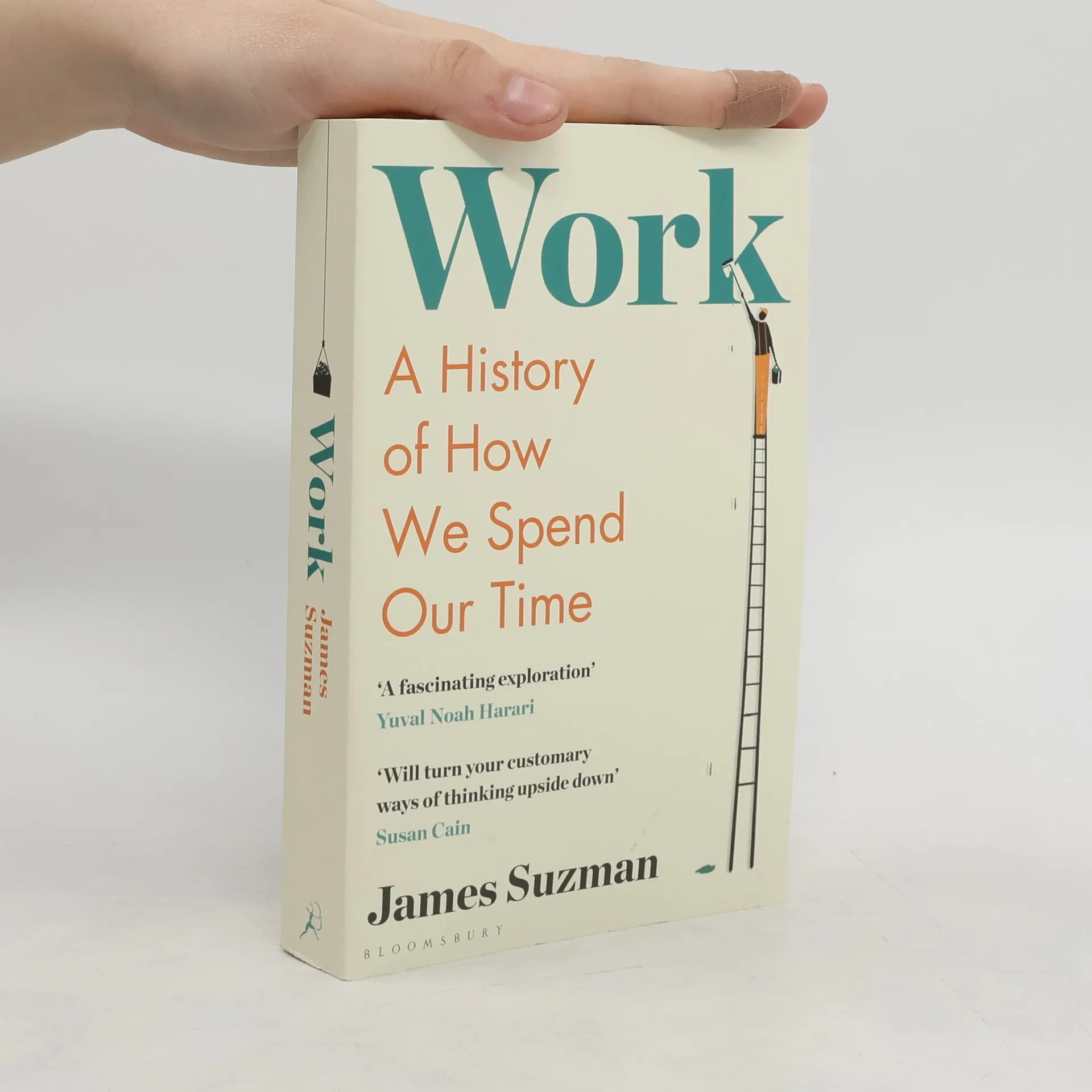
What can we learn from the Bushmen? If the success of a civilisation is measured by its endurance over time, then the Bushmen of the Kalahari are by far the most successful in human history. Anthropologist James Suzman spent twenty-five years in Southern Africa documenting their way of life and encounters with modern society, gathering invaluable lessons about work, wealth, happiness, equality and time
_______________ 'A fascinating exploration that challenges our basic assumptions of what work means' - Yuval Noah Harari 'There is eminently underlinable stuff on most pages ... Fascinating' - The Times 'One of those few books that will turn your customary ways of thinking upside down' - Susan Cain 'Illuminating' - New Statesman _______________ A revolutionary new history of humankind through the prism of work, from the origins of life on Earth to our ever more automated present The work we do brings us meaning, moulds our values, determines our social status and dictates how we spend most of our time. But this wasn't always the case: for 95% of our species' history, work held a radically different importance. How, then, did work become the central organisational principle of our societies? How did it transform our bodies, our environments, our views on equality and our sense of time? And why, in a time of material abundance, are we working more than ever before?
A Deep History, from the Stone Age to the Age of Robots
464 strony
17 godzin czytania
This book offers a revolutionary history of humankind through the lens of work, authored by leading anthropologist James Suzman. Work shapes our identity, status, and how we spend our time, influencing our self-worth and values. But are we inherently driven to work as much as we do? Did our Stone Age ancestors have the same work ethic? What would a world look like where work is less central?
Suzman explores the concept of work from the origins of life to our automated present, challenging fundamental assumptions about human identity. Drawing from various disciplines, he reveals that while we find joy and purpose in work, our ancestors engaged in far less labor and viewed work differently. He traces the roots of our modern work culture back to the agricultural revolution, which transformed human experience through the shift from foraging to food production and urban living. This transition altered our relationships, environments, and perceptions of time.
Suzman argues that we are at a pivotal moment in history, where automation could redefine our relationship with work, potentially leading to a more sustainable and equitable future for humanity.