
Bookbot

Bobby Woolf

    The Design Patterns Smalltalk Companion
    Enterprise Integration Patterns
    • Enterprise Integration Patterns

      • 683 strony
      • 24 godziny czytania

      Enterprise Integration Patterns provides an invaluable catalog of sixty-five patterns, with real-world solutions that demonstrate the formidable of messaging and help you to design effective messaging solutions for your enterprise. The authors also include examples covering a variety of different integration technologies, such as JMS, MSMQ, TIBCO ActiveEnterprise, Microsoft BizTalk, SOAP, and XSL. A case study describing a bond trading system illustrates the patterns in practice, and the book offers a look at emerging standards, as well as insights into what the future of enterprise integration might hold. This book provides a consistent vocabulary and visual notation framework to describe large-scale integration solutions across many technologies. It also explores in detail the advantages and limitations of asynchronous messaging architectures. The authors present practical advice on designing code that connects an application to a messaging system, and provide extensive information to help you determine when to send a message, how to route it to the proper destination, and how to monitor the health of a messaging system. If you want to know how to manage, monitor, and maintain a messaging system once it is in use, get this book.
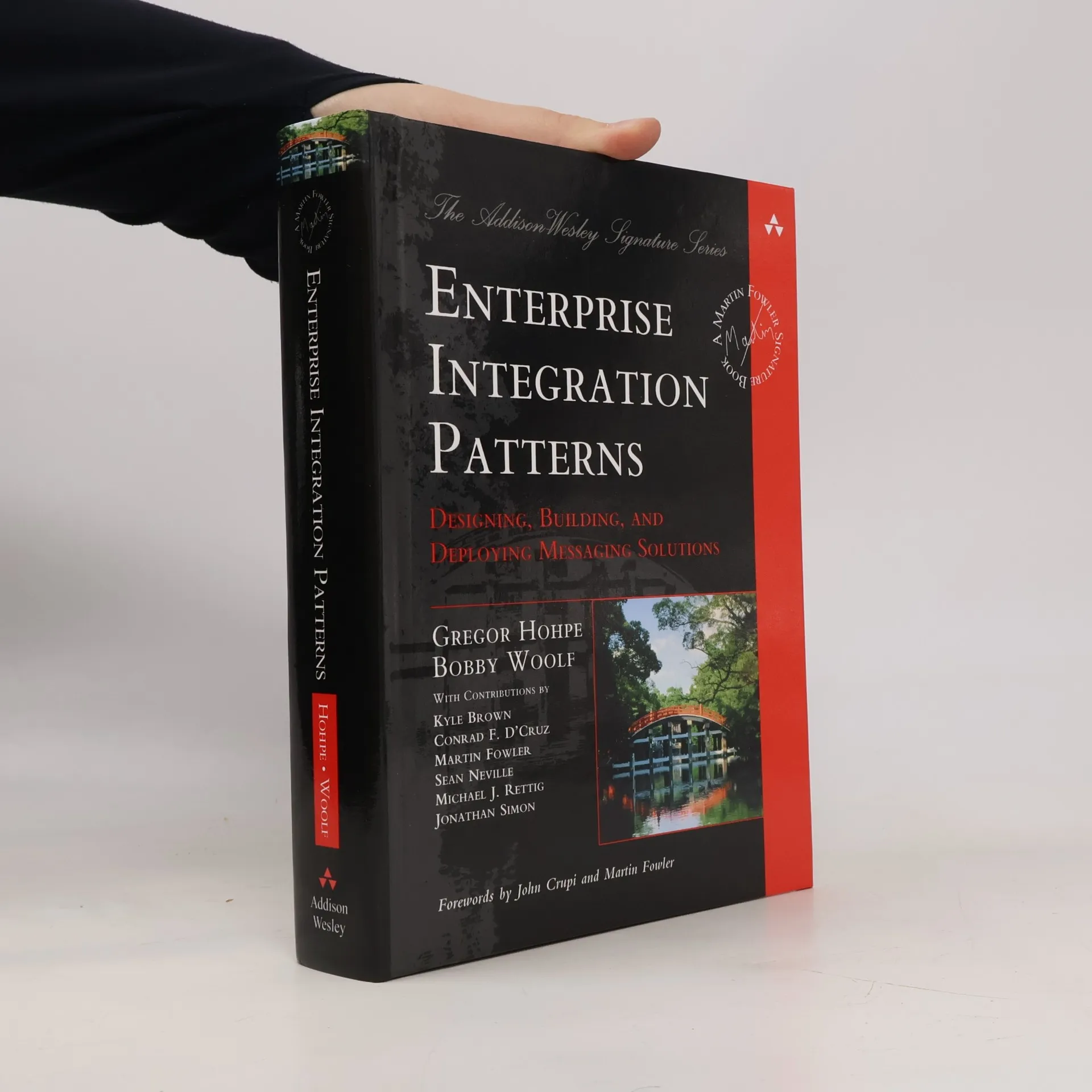
      Enterprise Integration Patterns2004
      4,1
    • The Design Patterns Smalltalk Companion

      • 444 strony
      • 16 godzin czytania

      When the classic book Design Patterns was first published in 1994, the landscape of object-oriented software engineering was forever changed. The 23 patterns contained in the seminal work vastly improved the discipline of object-oriented software design. That book, and the concepts it presented, allowed software professionals to solve specific design problems by reusing successful designs. Design Patterns was a gift to the world of software development, yet Smalltalk programmers could not take full advantage of the book's popular ideas because most of the original patterns were presented from a C++ perspective. In The Design Patterns Smalltalk Companion, the classic work has been tailored and enhanced to address the specific needs of the Smalltalk programmer. The catalog of simple and succinct solutions has been written in Smalltalk code, and the material is discussed from the perspective of the Smalltalk programmer. The full source code that supports the 23 patterns is also available via the Addison-Wesley Web site. Assembled and written in close conjunction with the authors of Design Patterns, this is the definitive patterns reference for those programming in Smalltalk. This book provides efficient solutions to your Smalltalk design problems, ultimately helping you become a better software designer.

      The Design Patterns Smalltalk Companion1998