

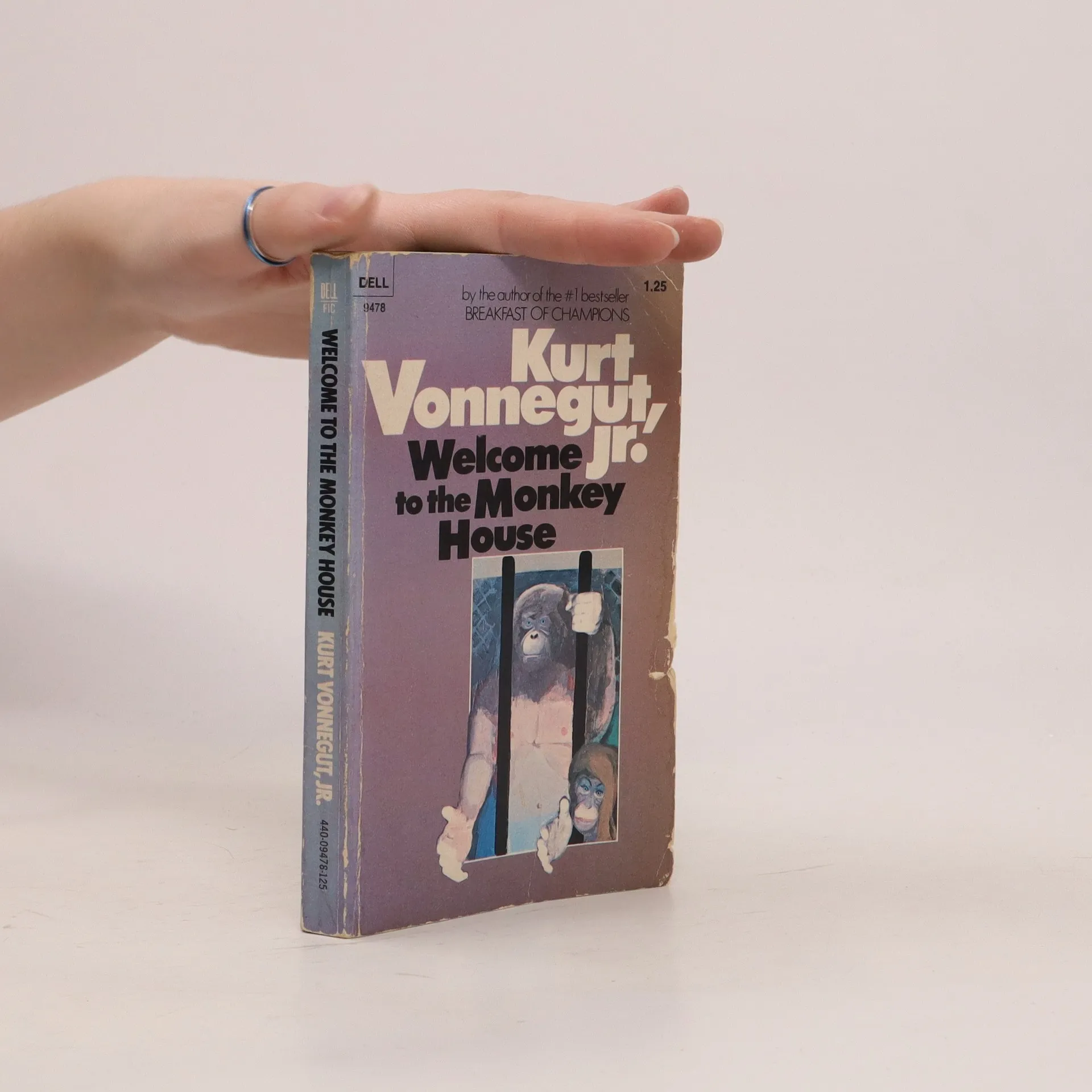
Since its original publication in 1968, Welcome to the Monkey House has been one of Kurt Vonnegut’s most beloved works. This special edition celebrates a true master of the short-story form by including multiple variant drafts of what would eventually be the title story. In a fascinating accompanying essay, “Building the Monkey House: At Kurt Vonnegut’s Writing Table,” noted Vonnegut scholar Gregory D. Sumner walks readers through Vonnegut’s process as the author struggles—false start after false start—to hit upon what would be one of his greatest stories. The result is the rare chance to watch a great writer hone his craft in real time. Includes the following stories: “Where I Live” “Harrison Bergeron” “Who Am I This Time?” “Welcome to the Monkey House” “Long Walk to Forever” “The Foster Portfolio” “Miss Temptation” “All the King’s Horses” “Tom Edison’s Shaggy Dog” “New Dictionary” “Next Door” “More Stately Mansions” “The Hyannis Port Story” “D.P.” “Report on the Barnhouse Effect” “The Euphio Question” “Go Back to Your Precious Wife and Son” “Deer in the Works” “The Lie” “Unready to Wear” “The Kid Nobody Could Handle” “The Manned Missiles” “Epicac” “Adam” “Tomorrow and Tomorrow and Tomorrow”
Kurt Wagenseil Książki




W powieści Nexus (1961), ostatnim tomie autobiograficznej trylogii 'Różoukrzyżowanie' ('The Rosy Crucifixion'), Henry Miller, wówczas już pisarz o ugruntowanej pozycji, ukazuje z trzydziestoletniej perspektywy swoje osobiste, bolesne doświadczenia z okresu małżeństwa z June Mansfield (Mona), która zaangażowała się w miłosny związek z młodą ekscentryczną malarką. Głęboko zraniony i upokorzony Miller, wciąż zakochany i zafascynowany osobowością żony, ale świadomy straconych szans, nie przestaje walczyć o swoją godność, rozpaczliwie szukając oparcia i ukojenia w niezrealizowanych jeszcze marzeniach o karierze pisarskiej. Choć sam uważa się za artystę, z ironicznym dystansem i zjadliwym humorem kreśli obraz nowojorskiej bohemy, szydząc z jej snobizmu i pretensjonalności. Daje się zarazem poznać jako wspaniały obserwator ludzkich charakterów i zachowań, jego dzieło zaś, podobnie jak pierwsze dwa tomy trylogii, to ogromny poemat kreacyjny, urzekający bogactwem stylów i konwencji językowych oraz emocjonalną i intelektualną spontanicznością.
Zwrotnik Raka
- 333 strony
- 12 godzin czytania
Now hailed as an American classic, Tropic of Cancer , Henry Miller’s masterpiece, was banned as obscene in this country for twenty-seven years after its first publication in Paris in 1934. Only a historic court ruling that changed American censorship standards, ushering in a new era of freedom and frankness in modern literature, permitted the publication of this first volume of Miller’s famed mixture of memoir and fiction, which chronicles with unapologetic gusto the bawdy adventures of a young expatriate writer, his friends, and the characters they meet in Paris in the 1930s. Tropic of Cancer is now considered, as Norman Mailer said, "one of the ten or twenty great novels of our century."
The Progress of Julius
- 285 stron
- 10 godzin czytania
A chilling story of ambition, Daphne du Maurier's third novel has lost none of its ability to unsettle and disturb. Julius Lévy has grown up in a peasant family in a village on the banks of the Seine. A quick-witted urchin caught up in the Franco-Prussian War, he is soon forced by tragedy to escape France for Algeria. Once there, he learns the ease of swindling, the rewards of love affairs, and the value of secrecy. Cruel and insensitive, Julius claws his way to the top, caring nothing for others--until his daughter, Gabriel, is born. Julius' attachment to her will become his strongest bond--and his greatest weakness.