

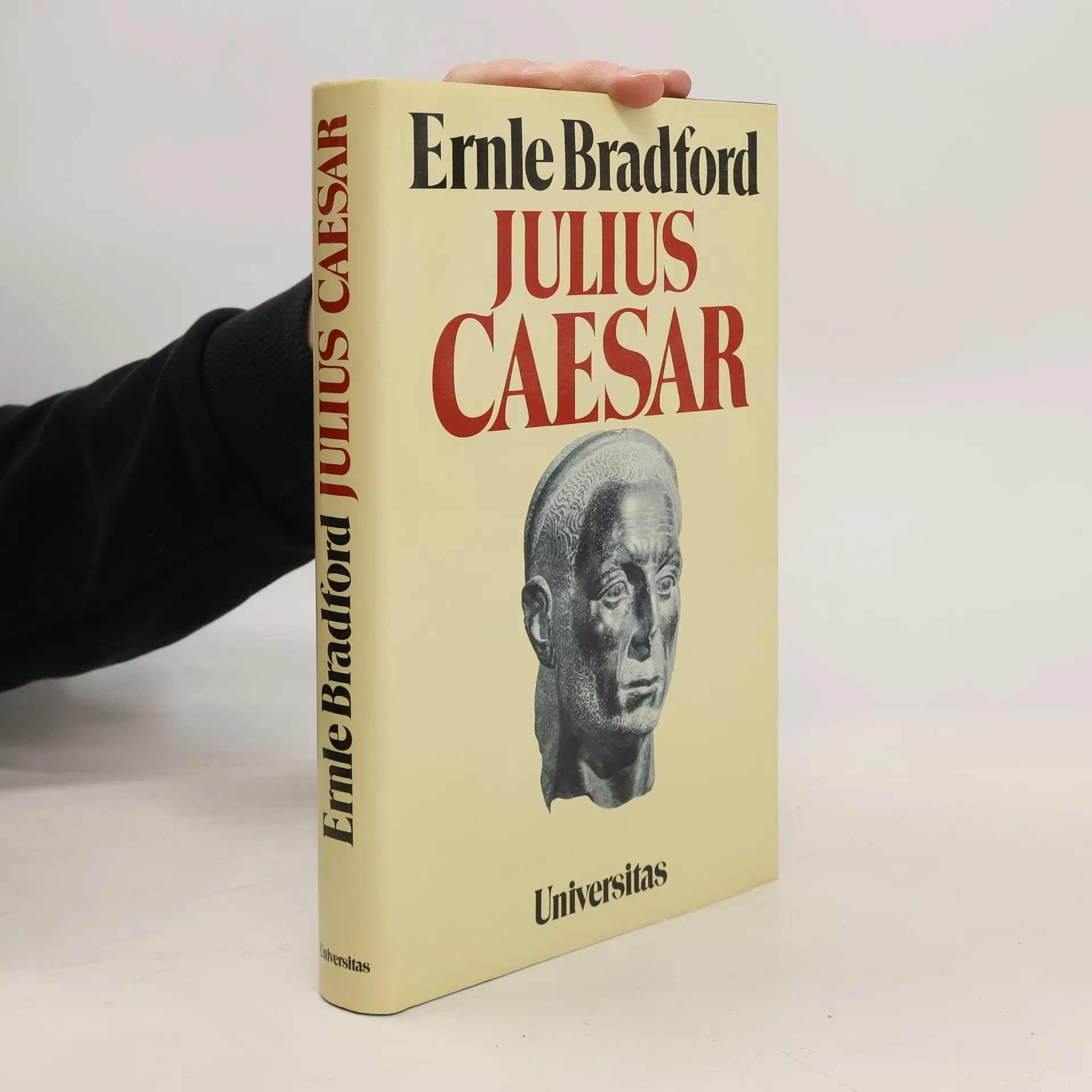


Więcej o książce
Although endowed with oratorical and literary gifts, Julius Caesar is known to us primarily as a man of action. So it's not surprising that Bradford's popular biography is largely a succession of actions--most of them, also unsurprisingly, military actions. Caesar was indeed almost always fighting someone, either subjugating northern Europe, Britain, or Egypt, or engaged in civil war with the forces of Pompey. Bradford (Hannibal, Nelson, etc.) is reasonably good on the big campaigns and the big battles, apportioning judicious doses of praise, blame, or fortune as he sees fit (and he's aware, too, that most of Caesar's opponents were not well-trained troops). But on Caesar as a political figure, Bradford is on softer ground. Caesar, he claims, had finely honed political instincts; by this Bradford seems to mean that he knew how to pass around the spoils. The claim that Caesar's republican adversaries sealed the fate of republicanism when they assassinated him, bringing chaos to the order he had maintained and ushering in Imperial rule, has a nice ring to it; but there is not enough background to the conflict between Caesar, Cicero, Cato, and the rest to substantiate it. In short, all the usual material is here--from calendars to Cleopatra--and while it's pretty easy to take, it doesn't add up to much that is enduring. For general readers, though: as serviceable an introduction as presently exists.


Zakup książki
Julius Caesar, Ernle Dusgate Selby Bradford
- Język

- Rok wydania
- 1985
- Oprawa
- (twarda)
Metody płatności
Brakuje nam tutaj Twojej recenzji.
- Tytuł
- Julius Caesar
- Język
- niemiecki
- Autorzy
- Ernle Dusgate Selby Bradford
- Wydawca
- Universitas
- Rok wydania
- 1985
- Oprawa
- twarda
- Liczba stron
- 272
- ISBN10
- 3800410818
- ISBN13
- 9783800410811
- Seria
- Ocena
- 1,5 z 5
- Opis
- Although endowed with oratorical and literary gifts, Julius Caesar is known to us primarily as a man of action. So it's not surprising that Bradford's popular biography is largely a succession of actions--most of them, also unsurprisingly, military actions. Caesar was indeed almost always fighting someone, either subjugating northern Europe, Britain, or Egypt, or engaged in civil war with the forces of Pompey. Bradford (Hannibal, Nelson, etc.) is reasonably good on the big campaigns and the big battles, apportioning judicious doses of praise, blame, or fortune as he sees fit (and he's aware, too, that most of Caesar's opponents were not well-trained troops). But on Caesar as a political figure, Bradford is on softer ground. Caesar, he claims, had finely honed political instincts; by this Bradford seems to mean that he knew how to pass around the spoils. The claim that Caesar's republican adversaries sealed the fate of republicanism when they assassinated him, bringing chaos to the order he had maintained and ushering in Imperial rule, has a nice ring to it; but there is not enough background to the conflict between Caesar, Cicero, Cato, and the rest to substantiate it. In short, all the usual material is here--from calendars to Cleopatra--and while it's pretty easy to take, it doesn't add up to much that is enduring. For general readers, though: as serviceable an introduction as presently exists.