



Więcej o książce
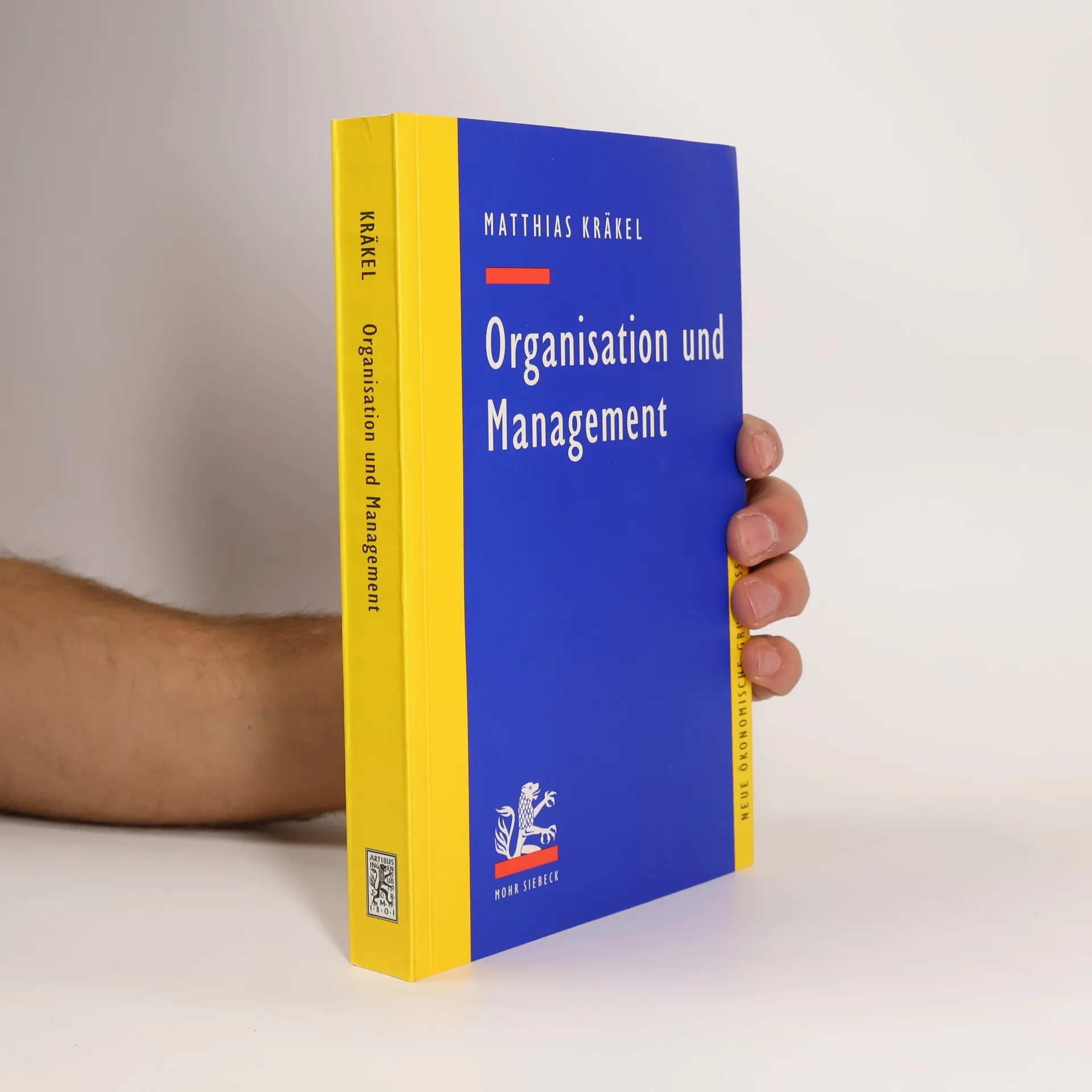
Modern economically-oriented organization and management theory is rooted in new institutional economics. Matthias Krakel explores the existence of firms through this lens, addressing key organizational and management challenges faced by contemporary corporations and proposing potential solutions. He evaluates the specific advantages and disadvantages of professional partnerships, cooperatives, and franchising. In the fifth edition, several sections have been revised and expanded. Notably, the segment on internal allocation of key resources has been clarified, presenting three solutions—profit sharing, the Groves/Loeb mechanism, and auctions—more comprehensively than in the previous edition. Additionally, the section on free-rider problems in teamwork has been updated, and discussions on the shareholder value approach by Tirole (2001) have been slightly enhanced. Reviews of earlier editions highlight the book as a well-written and insightful textbook, particularly beneficial for students specializing in organization. It serves as a valuable complement to existing organizational textbooks, especially for those aiming to develop a model-theoretical understanding of business organizational issues. The author employs a straightforward and accessible writing style, elucidating theoretical arguments with numerous practical examples.


Zakup książki
Organisation und Management, Matthias Kräkel
- Język

- Rok wydania
- 1999
- Oprawa
- (miękka)
Metody płatności
Nikt jeszcze nie ocenił.
- Tytuł
- Organisation und Management
- Język
- niemiecki
- Autorzy
- Matthias Kräkel
- Wydawca
- Mohr Siebeck
- Rok wydania
- 1999
- Oprawa
- miękka
- Liczba stron
- 437
- ISBN10
- 3161469321
- ISBN13
- 9783161469329
- Seria
- Tagi
- Biznes
- Opis
- Modern economically-oriented organization and management theory is rooted in new institutional economics. Matthias Krakel explores the existence of firms through this lens, addressing key organizational and management challenges faced by contemporary corporations and proposing potential solutions. He evaluates the specific advantages and disadvantages of professional partnerships, cooperatives, and franchising. In the fifth edition, several sections have been revised and expanded. Notably, the segment on internal allocation of key resources has been clarified, presenting three solutions—profit sharing, the Groves/Loeb mechanism, and auctions—more comprehensively than in the previous edition. Additionally, the section on free-rider problems in teamwork has been updated, and discussions on the shareholder value approach by Tirole (2001) have been slightly enhanced. Reviews of earlier editions highlight the book as a well-written and insightful textbook, particularly beneficial for students specializing in organization. It serves as a valuable complement to existing organizational textbooks, especially for those aiming to develop a model-theoretical understanding of business organizational issues. The author employs a straightforward and accessible writing style, elucidating theoretical arguments with numerous practical examples.