


Więcej o książce
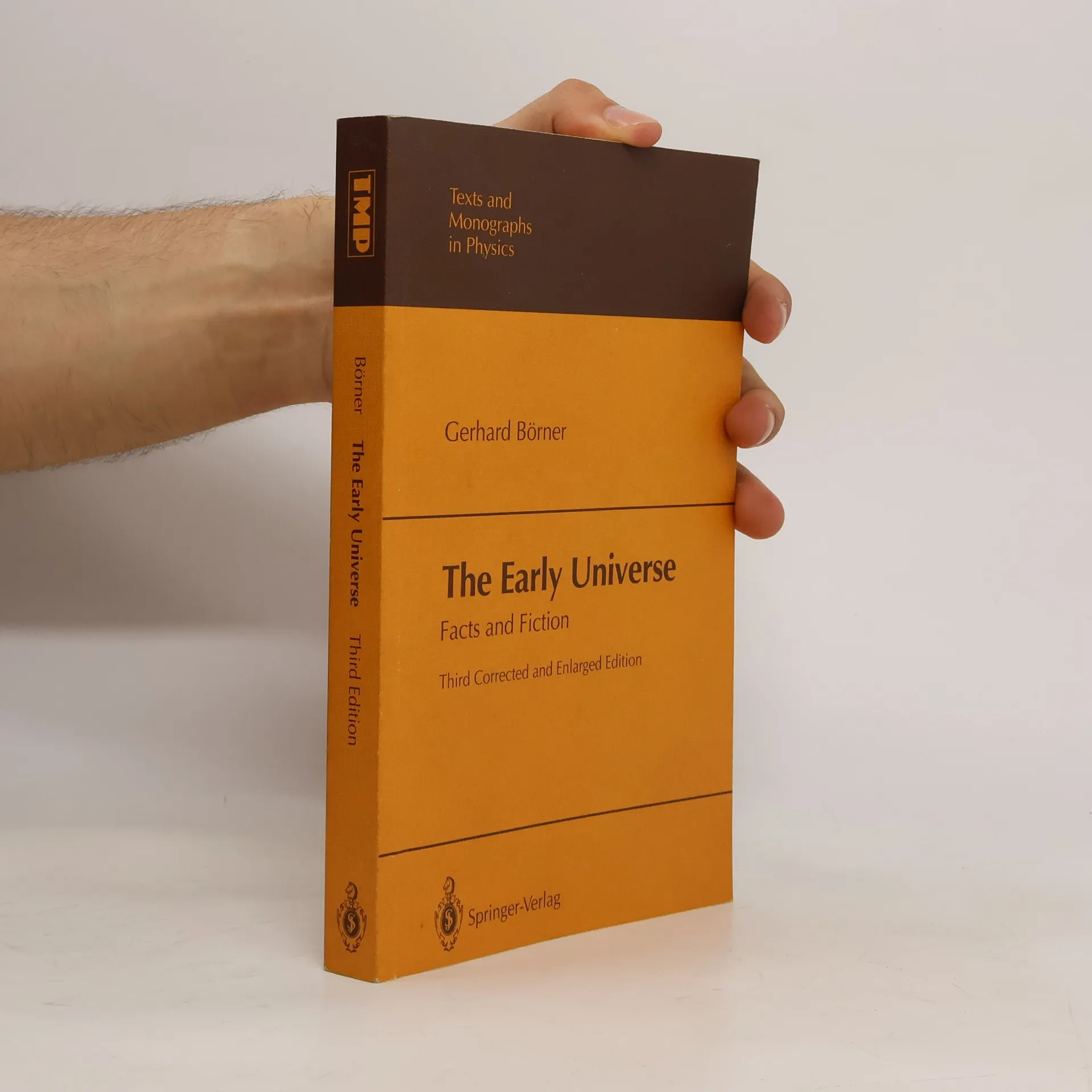
In this corrected and enlarged edition of Börner's well respected textbook, you will find an up-to-date account of the interplay between particle physics and astrophysics upon which modern cosmology is founded. The author describes some of the theories which have been developed to model the fundamental interaction of elementary particles in the extremely high temperatures of the early universe, taking care to distinguish facts and well- established results from hypotheses and speculations. The three parts of the book discuss the standard hot big bang model of the early universe, the basic ideas of the standard and the grand unified theories of elementary particles, and the influence of dark matter of the large- scale evolution of structure. In addition to making some minor corrections, the author has added an appendix presenting new results and an updated bibliography. Two main groups of readers are research students in astronomy can use this book to understand the impact of elementary particle theory on cosmology, while research students in particle physics can use it to acquaint themselves with the basic facts of cosmology. The book is written carefully enough to appeal also to a wider audience of physicists.


Zakup książki
The Early Universe, Gerhard Börner
- Język

- Rok wydania
- 1993
- Oprawa
- (miękka)
Metody płatności
Brakuje nam tutaj Twojej recenzji.
- Tytuł
- The Early Universe
- Język
- angielski
- Autorzy
- Gerhard Börner
- Wydawca
- Springer
- Rok wydania
- 1993
- Oprawa
- miękka
- Liczba stron
- 466
- ISBN10
- 3540567291
- ISBN13
- 9783540567295
- Ocena
- 4 z 5
- Opis
- In this corrected and enlarged edition of Börner's well respected textbook, you will find an up-to-date account of the interplay between particle physics and astrophysics upon which modern cosmology is founded. The author describes some of the theories which have been developed to model the fundamental interaction of elementary particles in the extremely high temperatures of the early universe, taking care to distinguish facts and well- established results from hypotheses and speculations. The three parts of the book discuss the standard hot big bang model of the early universe, the basic ideas of the standard and the grand unified theories of elementary particles, and the influence of dark matter of the large- scale evolution of structure. In addition to making some minor corrections, the author has added an appendix presenting new results and an updated bibliography. Two main groups of readers are research students in astronomy can use this book to understand the impact of elementary particle theory on cosmology, while research students in particle physics can use it to acquaint themselves with the basic facts of cosmology. The book is written carefully enough to appeal also to a wider audience of physicists.