



Więcej o książce
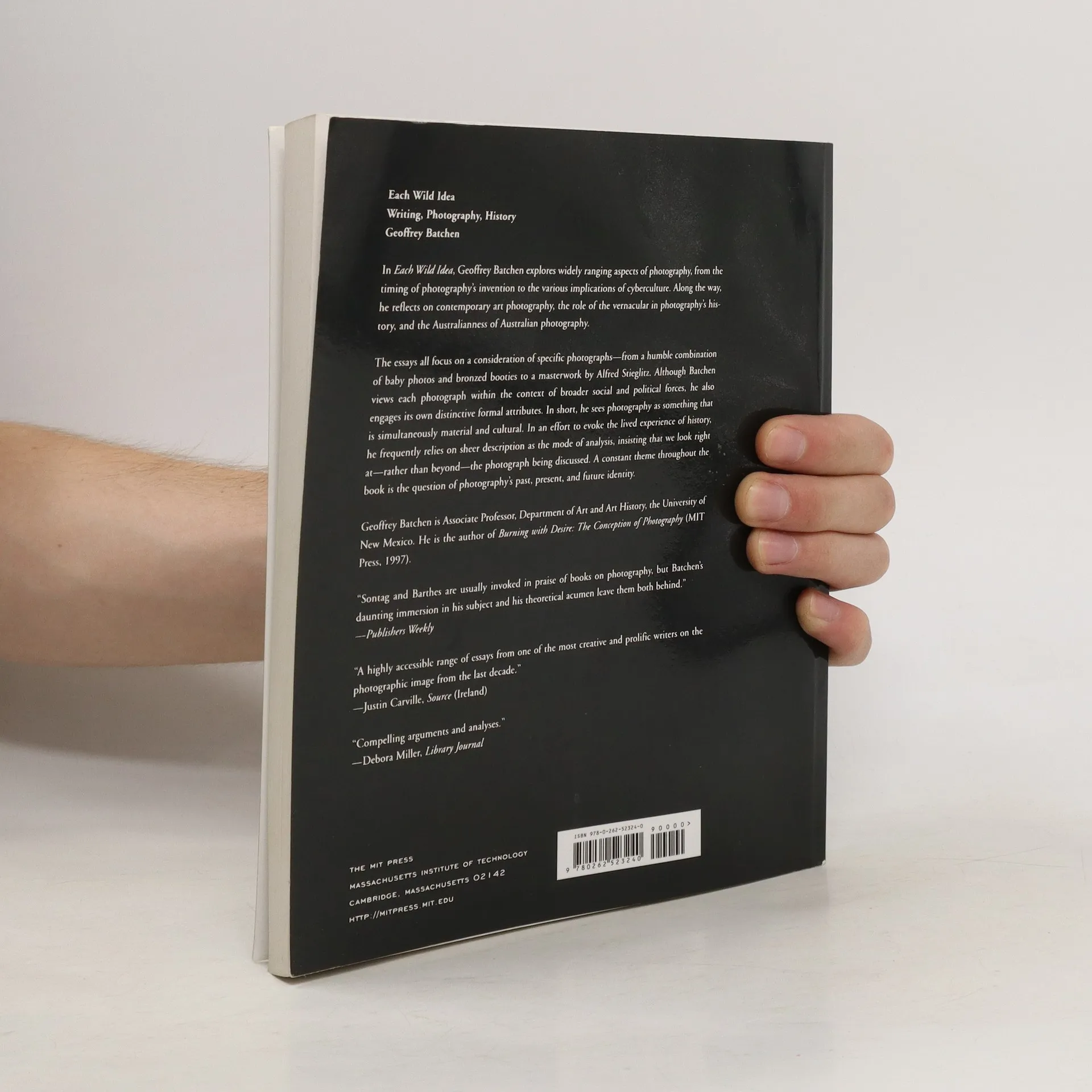
Essays on photography and the medium's history and evolving identity. In Each Wild Idea , Geoffrey Batchen explores a wide range of photographic subjects, from the timing of the medium's invention to the various implications of cyberculture. Along the way, he reflects on contemporary art photography, the role of the vernacular in photography's history, and the Australianness of Australian photography. The essays all focus on a consideration of specific photographs—from a humble combination of baby photos and bronzed booties to a masterwork by Alfred Stieglitz. Although Batchen views each photograph within the context of broader social and political forces, he also engages its own distinctive formal attributes. In short, he sees photography as something that is simultaneously material and cultural. In an effort to evoke the lived experience of history, he frequently relies on sheer description as the mode of analysis, insisting that we look right at—rather than beyond—the photograph being discussed. A constant theme throughout the book is the question of photography's past, present, and future identity.


Zakup książki
Each Wild Idea, Geoffrey Batchen
- Język

- Rok wydania
- 2002
- Oprawa
- (miękka)
Metody płatności
Brakuje nam tutaj Twojej recenzji.
- Tytuł
- Each Wild Idea
- Język
- angielski
- Autorzy
- Geoffrey Batchen
- Wydawca
- MIT Press
- Rok wydania
- 2002
- Oprawa
- miękka
- Liczba stron
- 258
- ISBN10
- 0262523248
- ISBN13
- 9780262523240
- Seria
- Kategorie
- Tagi
- Tematy historyczne, Sztuka
- Ocena
- 3,9 z 5
- Opis
- Essays on photography and the medium's history and evolving identity. In Each Wild Idea , Geoffrey Batchen explores a wide range of photographic subjects, from the timing of the medium's invention to the various implications of cyberculture. Along the way, he reflects on contemporary art photography, the role of the vernacular in photography's history, and the Australianness of Australian photography. The essays all focus on a consideration of specific photographs—from a humble combination of baby photos and bronzed booties to a masterwork by Alfred Stieglitz. Although Batchen views each photograph within the context of broader social and political forces, he also engages its own distinctive formal attributes. In short, he sees photography as something that is simultaneously material and cultural. In an effort to evoke the lived experience of history, he frequently relies on sheer description as the mode of analysis, insisting that we look right at—rather than beyond—the photograph being discussed. A constant theme throughout the book is the question of photography's past, present, and future identity.