


Więcej o książce
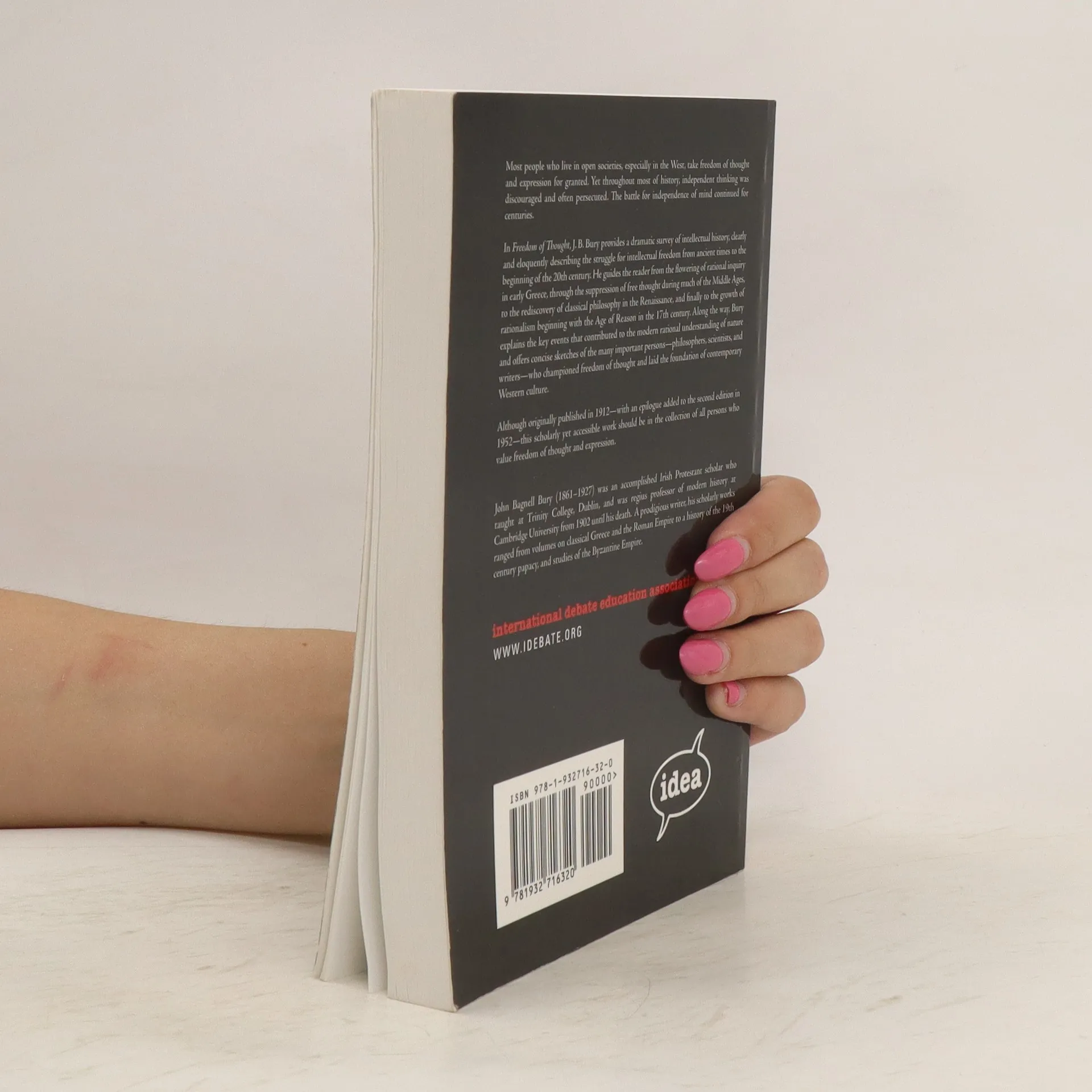
Most people who live in open societies, especially in the West, take freedom of thought and expression for granted. Yet throughout most of history, independent thinking was discouraged and often persecuted. The battle for independence of mind continued for centuries. In Freedom of Thought, J. B. Bury provides a dramatic survey of intellectual history, clearly and eloquently describing the struggle for intellectual freedom from ancient times to the beginning of the 20th century. He guides the reader from the flowering of rational inquiry in early Greece, through the suppression of free thought during much of the Middle Ages, to the rediscovery of classical philosophy in the Renaissance, and finally to the growth of rationalism beginning with the Age of Reason in the 17th century. Along the way, Bury explains the key events that contributed to the modern rational understanding of nature and offers concise sketches of the many important persons'philosophers, scientists, and writers'who c


Zakup książki
A history of freedom of thought, J B (John Bagnell) Bury
- Język

- Rok wydania
- 2007
- Oprawa
- (miękka)
Metody płatności
Brakuje nam tutaj Twojej recenzji.
- Tytuł
- A history of freedom of thought
- Język
- angielski
- Autorzy
- J B (John Bagnell) Bury
- Rok wydania
- 2007
- Oprawa
- miękka
- Liczba stron
- 246
- ISBN10
- 1932716327
- ISBN13
- 9781932716320
- Kategorie
- Ocena
- 3,65 z 5
- Opis
- Most people who live in open societies, especially in the West, take freedom of thought and expression for granted. Yet throughout most of history, independent thinking was discouraged and often persecuted. The battle for independence of mind continued for centuries. In Freedom of Thought, J. B. Bury provides a dramatic survey of intellectual history, clearly and eloquently describing the struggle for intellectual freedom from ancient times to the beginning of the 20th century. He guides the reader from the flowering of rational inquiry in early Greece, through the suppression of free thought during much of the Middle Ages, to the rediscovery of classical philosophy in the Renaissance, and finally to the growth of rationalism beginning with the Age of Reason in the 17th century. Along the way, Bury explains the key events that contributed to the modern rational understanding of nature and offers concise sketches of the many important persons'philosophers, scientists, and writers'who c