

Więcej o książce
An expert delves into the riddle of subjective time, examining why it seems to speed up as we age and its connection to consciousness. Our perceptions of time vary greatly; children often struggle with waiting, while boredom can distort our sense of time's passage. As we grow older, the years seem to slip away more quickly. In this exploration, Marc Wittmann investigates how we perceive time, whether in fleeting moments or throughout our lives. Utilizing insights from psychology and neuroscience, he offers a fresh perspective on our time experiences. Wittmann discusses the balance between savoring moments and deferring gratification, the impulsivity that leads to boredom, and whether individuals have a unique "personal speed" or brain rhythm. He suggests that our sense of duration acts as an "error signal," alerting us when we are waiting too long. The practice of mindfulness is considered in relation to slowing down life’s pace, potentially allowing us to feel as if we have more time. Wittmann also notes that as we age, routine can accelerate our perception of time, while a rich and varied life can extend our subjective experience. He highlights the role of bodily processes, particularly the heartbeat, as an internal clock, and discusses ongoing research linking time to consciousness, which may deepen our understanding of the self.



Zakup książki
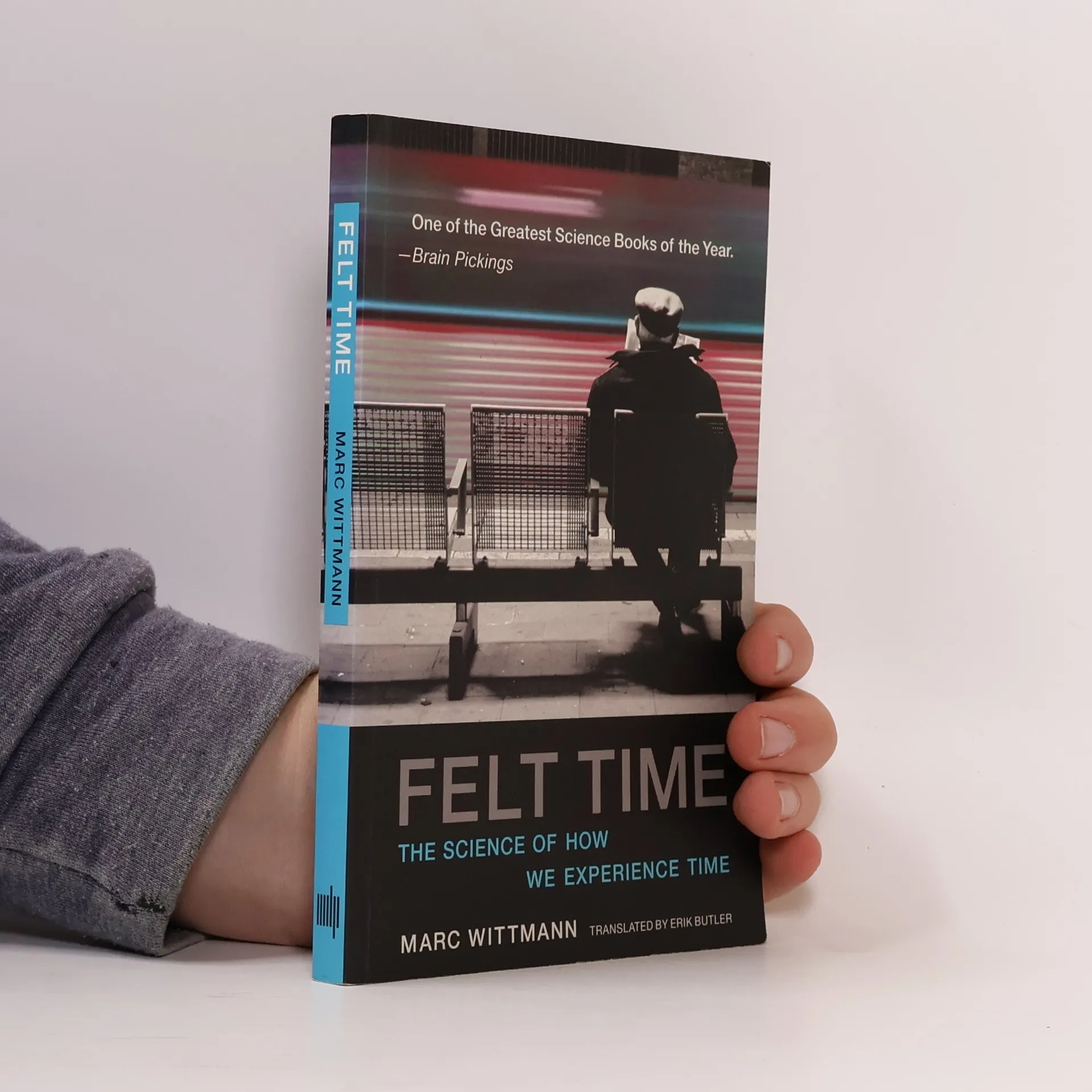
Felt Time, Marc Wittmann, Erik Butler
- Język

- Rok wydania
- 2016
- Oprawa
- (miękka)
Metody płatności
Brakuje nam tutaj Twojej recenzji.
- Tytuł
- Felt Time
- Podtytuł
- The Science of How We Experience Time
- Język
- angielski
- Autorzy
- Marc Wittmann, Erik Butler
- Wydawca
- MIT Press
- Rok wydania
- 2016
- Oprawa
- miękka
- Liczba stron
- 167
- ISBN10
- 0262533545
- ISBN13
- 9780262533546
- Seria
- Kategorie
- Ocena
- 3,35 z 5
- Opis
- An expert delves into the riddle of subjective time, examining why it seems to speed up as we age and its connection to consciousness. Our perceptions of time vary greatly; children often struggle with waiting, while boredom can distort our sense of time's passage. As we grow older, the years seem to slip away more quickly. In this exploration, Marc Wittmann investigates how we perceive time, whether in fleeting moments or throughout our lives. Utilizing insights from psychology and neuroscience, he offers a fresh perspective on our time experiences. Wittmann discusses the balance between savoring moments and deferring gratification, the impulsivity that leads to boredom, and whether individuals have a unique "personal speed" or brain rhythm. He suggests that our sense of duration acts as an "error signal," alerting us when we are waiting too long. The practice of mindfulness is considered in relation to slowing down life’s pace, potentially allowing us to feel as if we have more time. Wittmann also notes that as we age, routine can accelerate our perception of time, while a rich and varied life can extend our subjective experience. He highlights the role of bodily processes, particularly the heartbeat, as an internal clock, and discusses ongoing research linking time to consciousness, which may deepen our understanding of the self.