

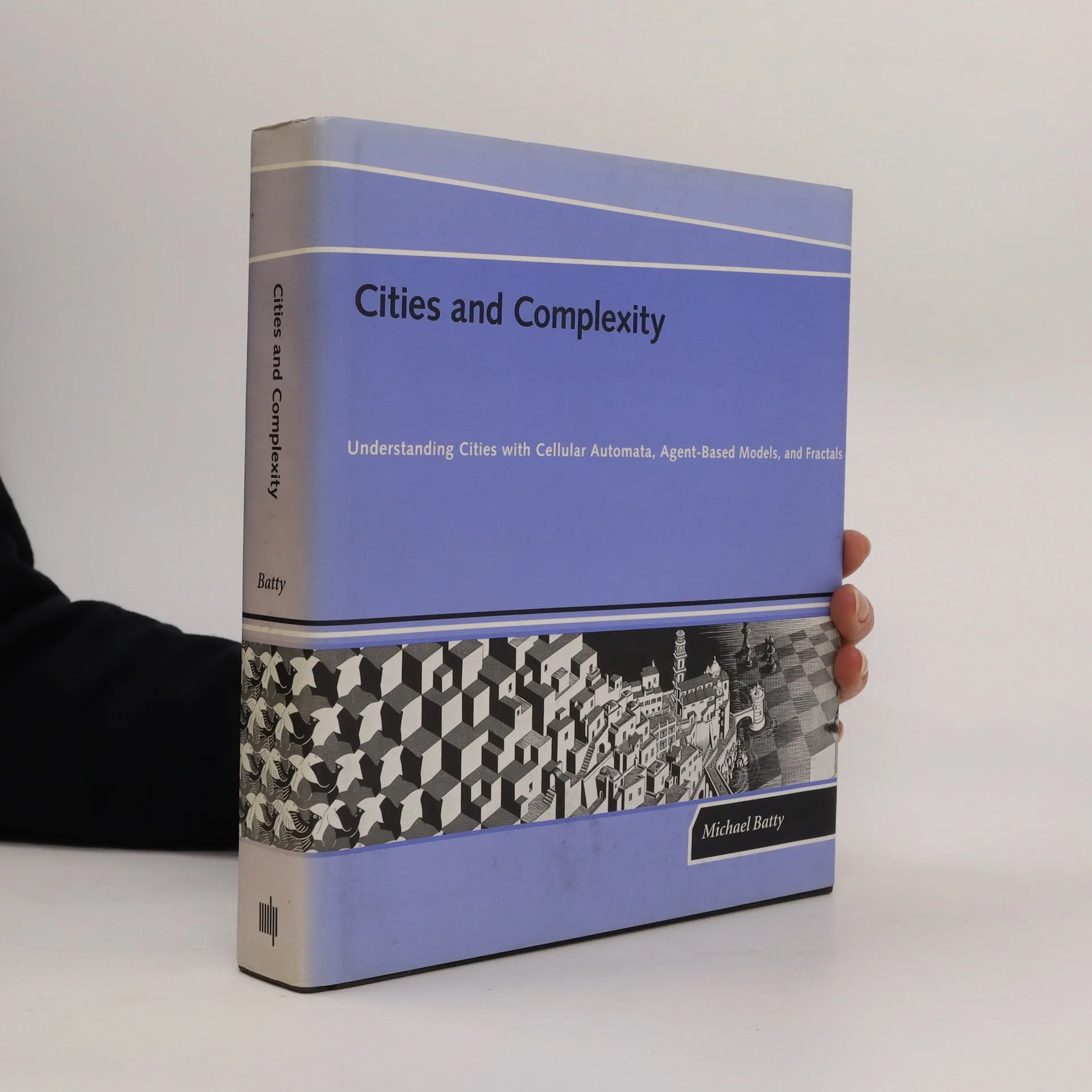
Cities and Complexity
Understanding cities with cellular automata, agent-based models, and fractals
Autorzy
Ocena książki
Więcej o książce
As urban planning shifts from a centralized to a decentralized approach, our understanding of urban systems evolves. This work offers a comprehensive view of urban dynamics through the lens of complexity theory, showcasing models that illustrate how various processes and elements merge into cohesive wholes. The author emphasizes the role of bottom-up processes, where outcomes are inherently uncertain, and how these interact with new geometric forms linked to fractal patterns and chaotic dynamics, making them relevant to complex systems like cities. Beginning with cellular automata (CA) models that simulate urban dynamics through local actions, the discussion progresses to agent-based models (ABS), where mobile agents navigate between locations. These models address multiple scales, from individual streets to broader urban regions. The author also applies these models to real urban situations, exploring concepts such as criticality, threshold, surprise, novelty, and phase transition in spatial development. Every theory and model is illustrated with examples ranging from simplified to real-world scenarios. The extensive visual, mathematical, and textual material makes this work valuable for both urban researchers and complexity theorists interested in innovative computational models.


Zakup książki
Cities and Complexity, Michael Batty
- Język

- Rok wydania
- 2005
- Oprawa
- (twarda)
Metody płatności
Brakuje nam tutaj Twojej recenzji.
- Tytuł
- Cities and Complexity
- Podtytuł
- Understanding cities with cellular automata, agent-based models, and fractals
- Język
- angielski
- Autorzy
- Michael Batty
- Wydawca
- MIT Press
- Rok wydania
- 2005
- Oprawa
- twarda
- Liczba stron
- 565
- ISBN10
- 0262025833
- ISBN13
- 9780262025836
- Seria
- Tagi
- Miasta
- Ocena
- 3,55 z 5
- Opis
- As urban planning shifts from a centralized to a decentralized approach, our understanding of urban systems evolves. This work offers a comprehensive view of urban dynamics through the lens of complexity theory, showcasing models that illustrate how various processes and elements merge into cohesive wholes. The author emphasizes the role of bottom-up processes, where outcomes are inherently uncertain, and how these interact with new geometric forms linked to fractal patterns and chaotic dynamics, making them relevant to complex systems like cities. Beginning with cellular automata (CA) models that simulate urban dynamics through local actions, the discussion progresses to agent-based models (ABS), where mobile agents navigate between locations. These models address multiple scales, from individual streets to broader urban regions. The author also applies these models to real urban situations, exploring concepts such as criticality, threshold, surprise, novelty, and phase transition in spatial development. Every theory and model is illustrated with examples ranging from simplified to real-world scenarios. The extensive visual, mathematical, and textual material makes this work valuable for both urban researchers and complexity theorists interested in innovative computational models.