


Więcej o książce
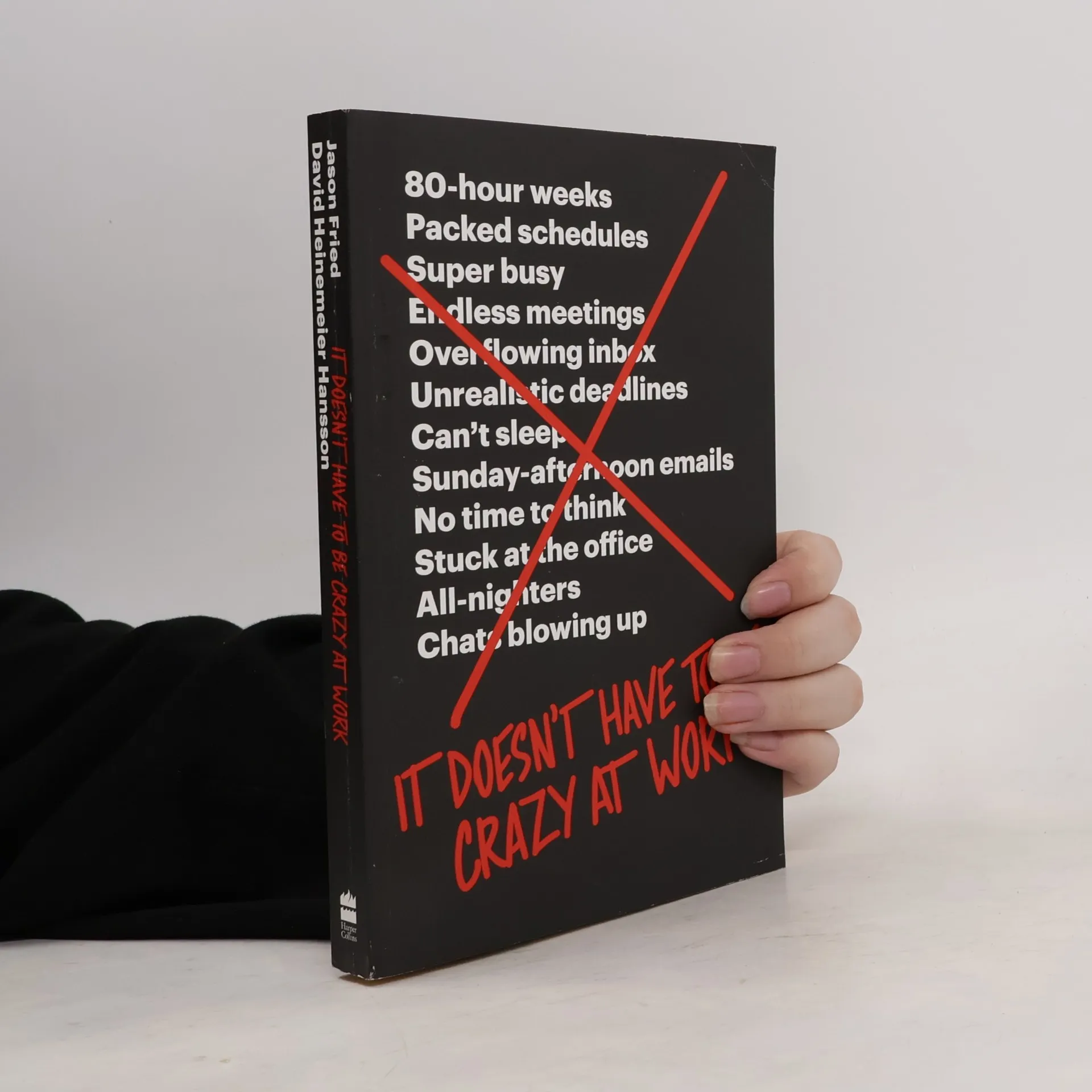
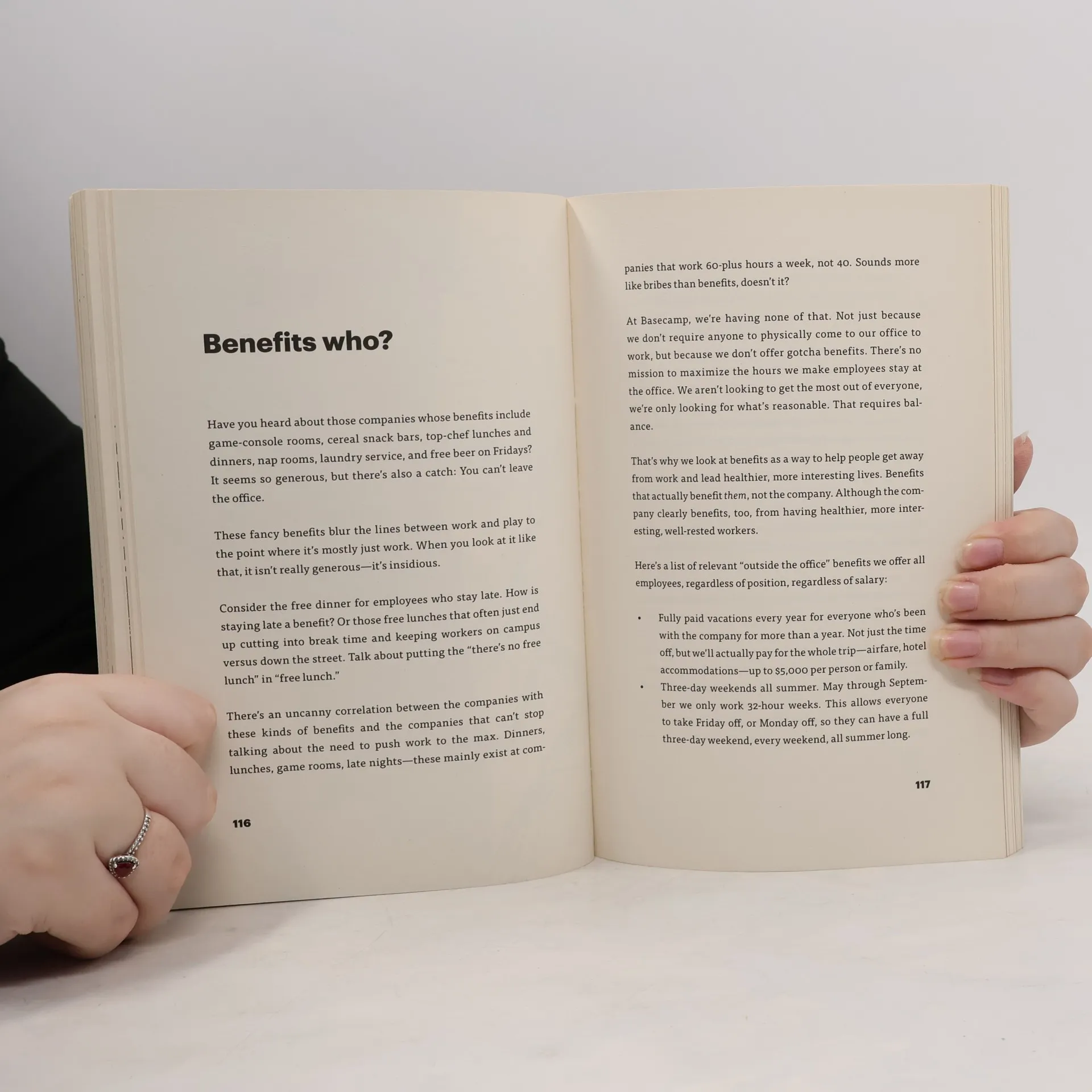
In this timely manifesto, the authors of the New York Times bestseller Rework broadly reject the prevailing notion that long hours, aggressive hustle, and "whatever it takes" are required to run a successful business today. In Rework, Jason Fried and David Heinemeier Hansson introduced a new path to working effectively. Now, they build on their message with a bold, iconoclastic strategy for creating the ideal company culture - what they call "the calm company." Their approach directly attack the chaos, anxiety, and stress that plagues millions of workplaces and hampers billions of workers every day. Long hours, an excessive workload, and a lack of sleep have become a badge of honor for modern professionals. But it should be a mark of stupidity, the authors argue




Zakup książki
It Doesn't Have to Be Crazy at Work, Jason Fried
- Język

- Rok wydania
- 2018
- Oprawa
- (miękka),
- Stan książki
- Dobry
- Cena
- 30,19 zł
Metody płatności
Brakuje nam tutaj Twojej recenzji.
- Tytuł
- It Doesn't Have to Be Crazy at Work
- Język
- angielski
- Autorzy
- Jason Fried
- Wydawca
- Harper Collins Publ. UK
- Rok wydania
- 2018
- Oprawa
- miękka
- ISBN10
- 0008323445
- ISBN13
- 9780008323448
- Seria
- Pierwsze wydanie
- 2018
- Oryginalna nazwa
- It Doesn't Have to Be Crazy at Work
- Ocena
- 3,95 z 5
- Opis
- In this timely manifesto, the authors of the New York Times bestseller Rework broadly reject the prevailing notion that long hours, aggressive hustle, and "whatever it takes" are required to run a successful business today. In Rework, Jason Fried and David Heinemeier Hansson introduced a new path to working effectively. Now, they build on their message with a bold, iconoclastic strategy for creating the ideal company culture - what they call "the calm company." Their approach directly attack the chaos, anxiety, and stress that plagues millions of workplaces and hampers billions of workers every day. Long hours, an excessive workload, and a lack of sleep have become a badge of honor for modern professionals. But it should be a mark of stupidity, the authors argue