

Więcej o książce
In this essay, the author analyzes the national characteristics of English art. He shows that in order to understand the cultural geography of a nation it is necessary to examine its polarities, since it is only by looking at the seeming contradictions that we can hope to discover what is specifically English in each distinctive style. The author considers the work of four painters, Hogarth, Reynolds, Blake and Constable; that most English of architectural styles, the Perpendicular; and, finally, the picturesque, exemplified by the landscape garden. The geography of art is not a science, and many of the qualities to be seen in English art are impermanent and ambivalent. Yet, the author concludes, as reason and tolerance have gained precedence in the English character, we have "lost that fanaticism or at least that intensity which alone can bring forth the very greatest in art".




Zakup książki
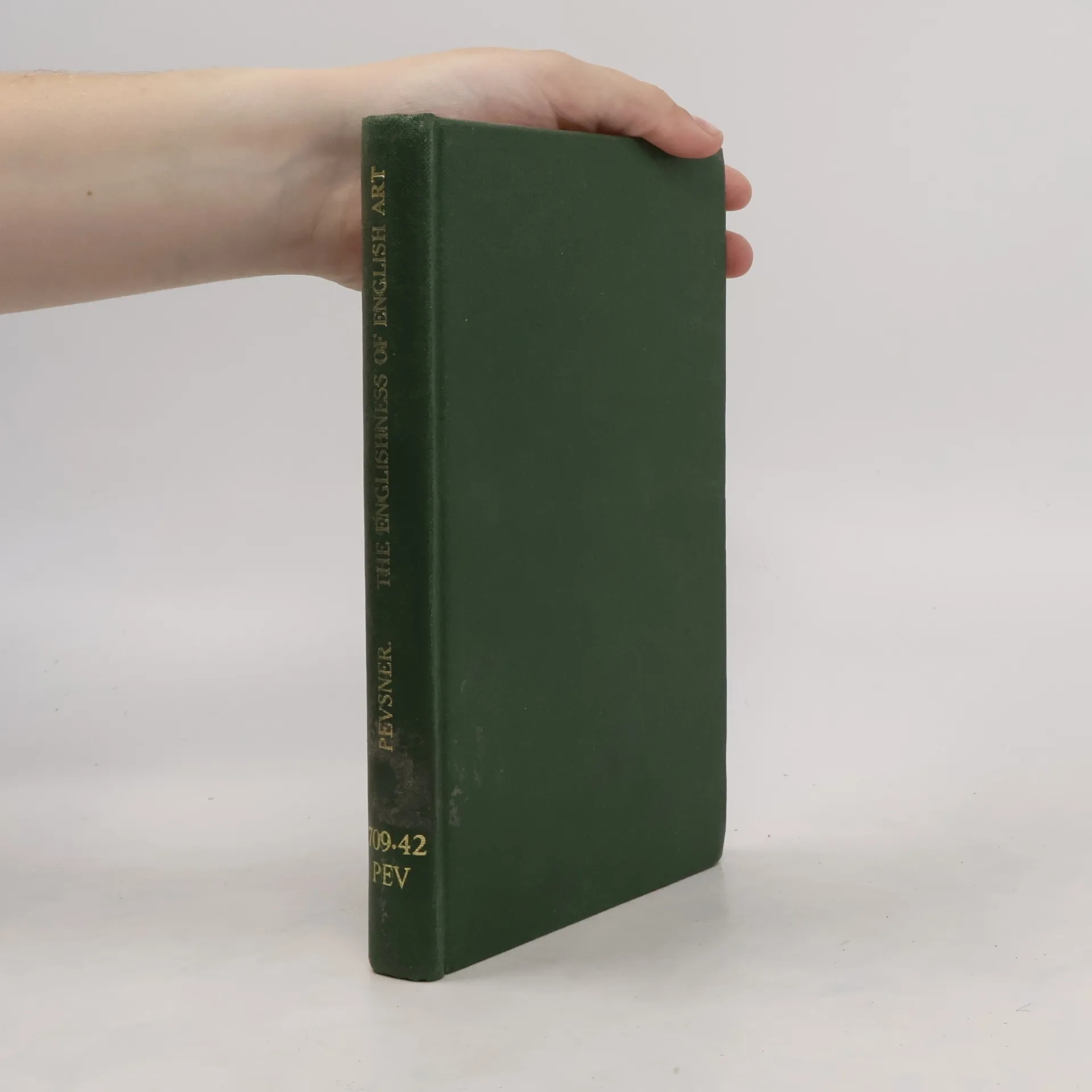
The Englishness of English Art, Nikolaus Pevsner
- Język

- Rok wydania
- 1955
Metody płatności
Brakuje nam tutaj Twojej recenzji.
- Tytuł
- The Englishness of English Art
- Język
- angielski
- Autorzy
- Nikolaus Pevsner
- Wydawca
- The architectural press
- Rok wydania
- 1955
- Seria
- Kategorie
- Ocena
- 3,9 z 5
- Opis
- In this essay, the author analyzes the national characteristics of English art. He shows that in order to understand the cultural geography of a nation it is necessary to examine its polarities, since it is only by looking at the seeming contradictions that we can hope to discover what is specifically English in each distinctive style. The author considers the work of four painters, Hogarth, Reynolds, Blake and Constable; that most English of architectural styles, the Perpendicular; and, finally, the picturesque, exemplified by the landscape garden. The geography of art is not a science, and many of the qualities to be seen in English art are impermanent and ambivalent. Yet, the author concludes, as reason and tolerance have gained precedence in the English character, we have "lost that fanaticism or at least that intensity which alone can bring forth the very greatest in art".