



Parametry
- 288 stron
- 11 godzin czytania
Więcej o książce
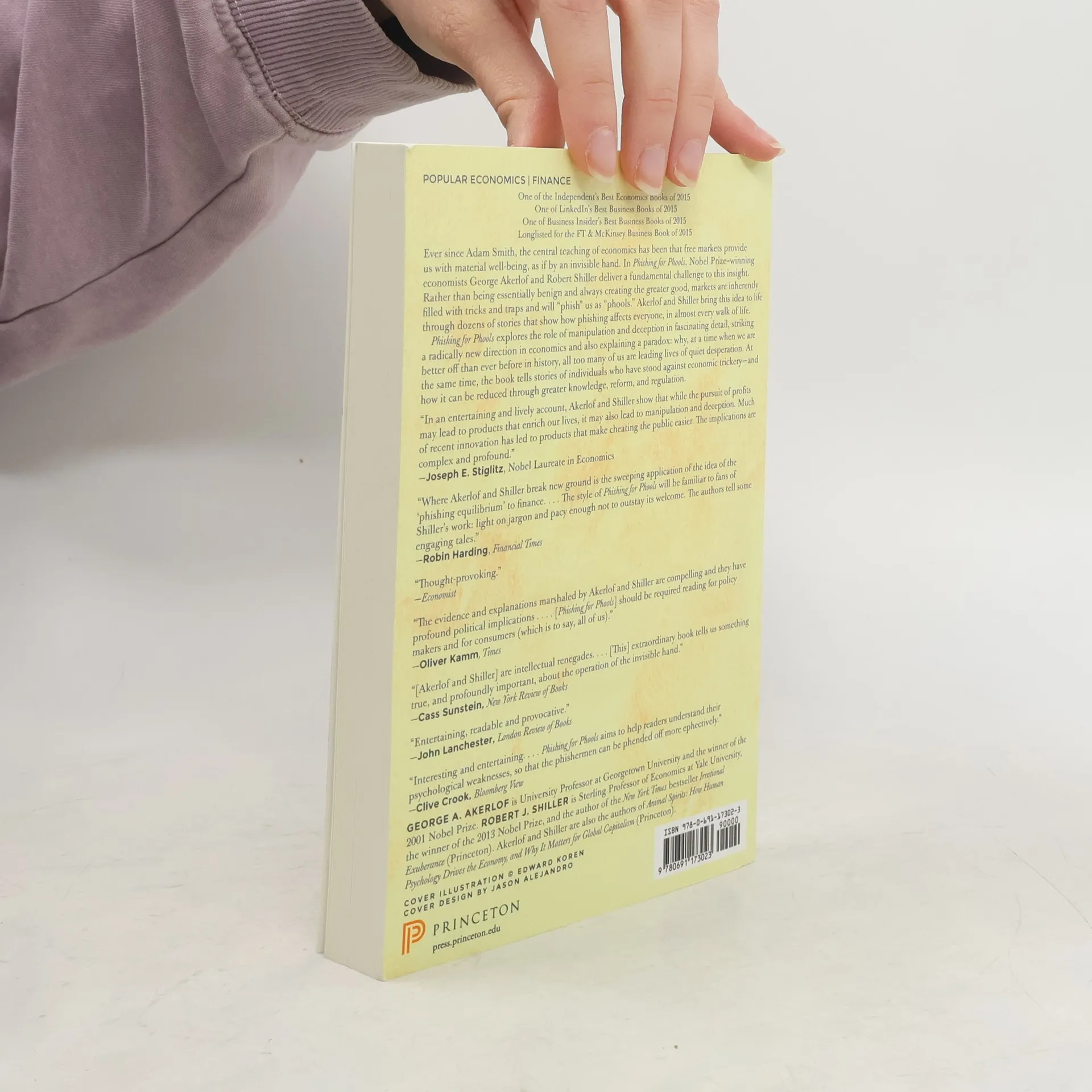
Since Adam Smith, the prevailing belief in economics has been that free markets enhance our material well-being through an "invisible hand." However, Nobel Prize-winning economists George Akerlof and Robert Shiller challenge this notion in a compelling way, arguing that markets can also be harmful. They assert that sellers will exploit our psychological weaknesses and ignorance for profit, manipulating and deceiving us. Instead of being purely beneficial, markets are filled with tricks and traps that "phish" us as "phools." This work introduces a new perspective in economics, emphasizing that markets both provide and take away. Through numerous stories, Akerlof and Shiller illustrate how phishing impacts nearly every aspect of life. We often overspend and then struggle to meet our financial obligations. The financial system experiences cycles of boom and bust, and we find ourselves swayed by advertising. Money distorts our political landscape, and we frequently overpay for gym memberships, cars, homes, and credit cards. Pharmaceutical companies market drugs that may offer little benefit or even pose risks. The authors delve into the pervasive nature of manipulation and deception across these domains, explaining a paradox: despite unprecedented levels of material comfort, many lead lives of quiet desperation. The book also highlights individuals who resist economic trickery and suggests that increased knowledge, reform, and re




Zakup książki
Phishing for Phools, George A. Akerlof
- Język

- Rok wydania
- 2016
- Oprawa
- (miękka)
Metody płatności
Brakuje nam tutaj Twojej recenzji.
- Tytuł
- Phishing for Phools
- Język
- angielski
- Autorzy
- George A. Akerlof
- Wydawca
- Princeton University Press
- Rok wydania
- 2016
- Oprawa
- miękka
- Liczba stron
- 288
- ISBN10
- 0691173028
- ISBN13
- 9780691173023
- Seria
- Kategorie
- Pierwsze wydanie
- 2015
- Oryginalna nazwa
- Phishing for Phools: The Economics of Manipulation and Deception
- Ocena
- 3,45 z 5
- Opis
- Since Adam Smith, the prevailing belief in economics has been that free markets enhance our material well-being through an "invisible hand." However, Nobel Prize-winning economists George Akerlof and Robert Shiller challenge this notion in a compelling way, arguing that markets can also be harmful. They assert that sellers will exploit our psychological weaknesses and ignorance for profit, manipulating and deceiving us. Instead of being purely beneficial, markets are filled with tricks and traps that "phish" us as "phools." This work introduces a new perspective in economics, emphasizing that markets both provide and take away. Through numerous stories, Akerlof and Shiller illustrate how phishing impacts nearly every aspect of life. We often overspend and then struggle to meet our financial obligations. The financial system experiences cycles of boom and bust, and we find ourselves swayed by advertising. Money distorts our political landscape, and we frequently overpay for gym memberships, cars, homes, and credit cards. Pharmaceutical companies market drugs that may offer little benefit or even pose risks. The authors delve into the pervasive nature of manipulation and deception across these domains, explaining a paradox: despite unprecedented levels of material comfort, many lead lives of quiet desperation. The book also highlights individuals who resist economic trickery and suggests that increased knowledge, reform, and re