



Parametry
- 370 stron
- 13 godzin czytania
Więcej o książce
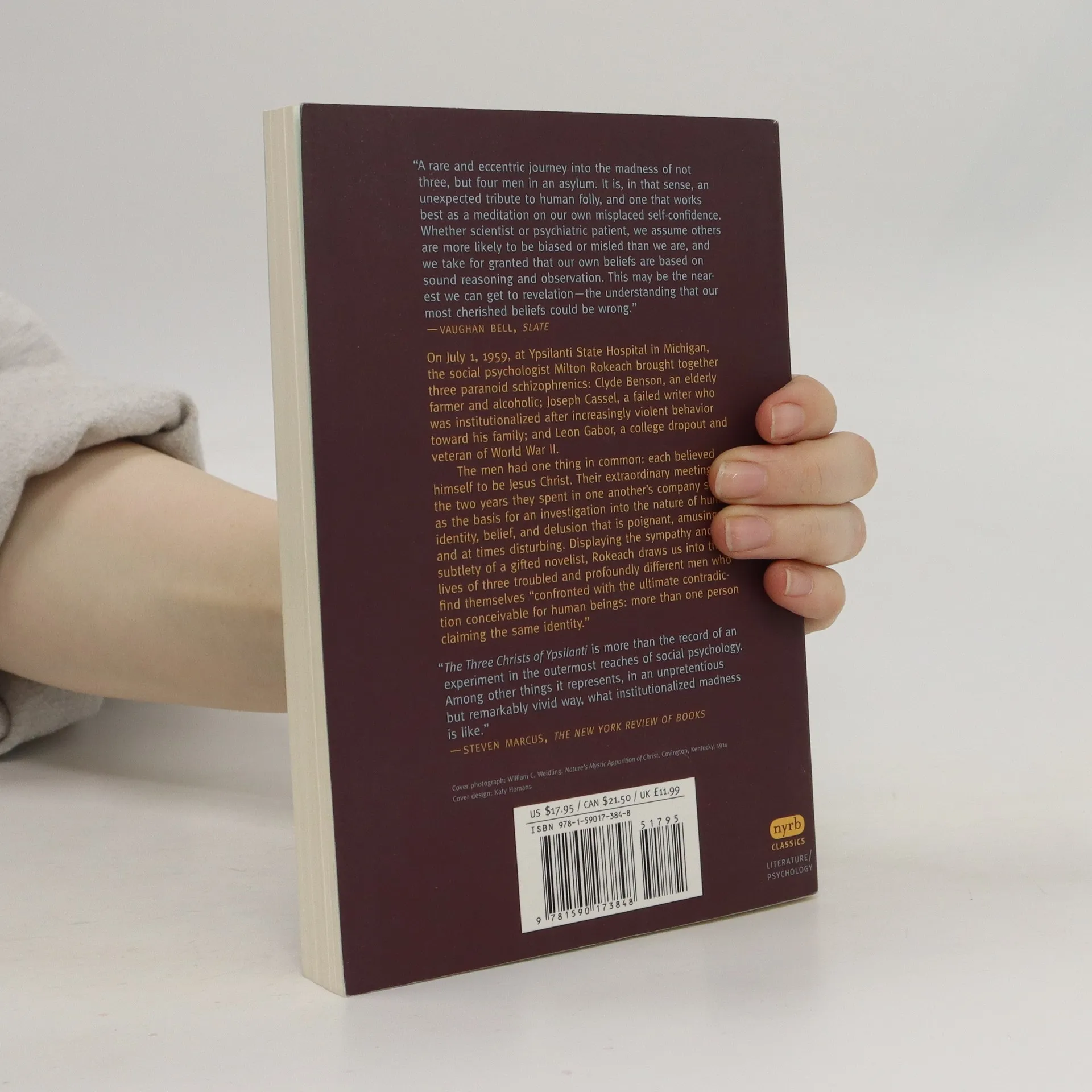
On July 1, 1959, at Ypsilanti State Hospital in Michigan, the social psychologist Milton Rokeach brought together three paranoid schizophrenics: Clyde Benson, an elderly farmer and alcoholic; Joseph Cassel, a failed writer who was institutionalized after increasingly violent behavior toward his family; and Leon Gabor, a college dropout and veteran of World War II. The men had one thing in common: each believed himself to be Jesus Christ. Their extraordinary meeting and the two years they spent in one another’s company serves as the basis for an investigation into the nature of human identity, belief, and delusion that is poignant, amusing, and at times disturbing. Displaying the sympathy and subtlety of a gifted novelist, Rokeach draws us into the lives of three troubled and profoundly different men who find themselves “confronted with the ultimate contradiction conceivable for human beings: more than one person claiming the same identity.”



Zakup książki
The Three Christs of Ypsilanti, Milton Rokeach
- Język

- Rok wydania
- 2011
- Oprawa
- (miękka)
Metody płatności
Brakuje nam tutaj Twojej recenzji.
- Tytuł
- The Three Christs of Ypsilanti
- Język
- angielski
- Autorzy
- Milton Rokeach
- Wydawca
- New York Review of Books
- Rok wydania
- 2011
- Oprawa
- miękka
- Liczba stron
- 370
- ISBN10
- 1590173848
- ISBN13
- 9781590173848
- Seria
- Kategorie
- Tagi
- Tematy historyczne, Tematyka psychologiczna, Tematyka filozoficzna, Nauka, XX wiek, Literatura amerykańska, Zdrowie psychiczne
- Ocena
- 3,75 z 5
- Opis
- On July 1, 1959, at Ypsilanti State Hospital in Michigan, the social psychologist Milton Rokeach brought together three paranoid schizophrenics: Clyde Benson, an elderly farmer and alcoholic; Joseph Cassel, a failed writer who was institutionalized after increasingly violent behavior toward his family; and Leon Gabor, a college dropout and veteran of World War II. The men had one thing in common: each believed himself to be Jesus Christ. Their extraordinary meeting and the two years they spent in one another’s company serves as the basis for an investigation into the nature of human identity, belief, and delusion that is poignant, amusing, and at times disturbing. Displaying the sympathy and subtlety of a gifted novelist, Rokeach draws us into the lives of three troubled and profoundly different men who find themselves “confronted with the ultimate contradiction conceivable for human beings: more than one person claiming the same identity.”