

Więcej o książce
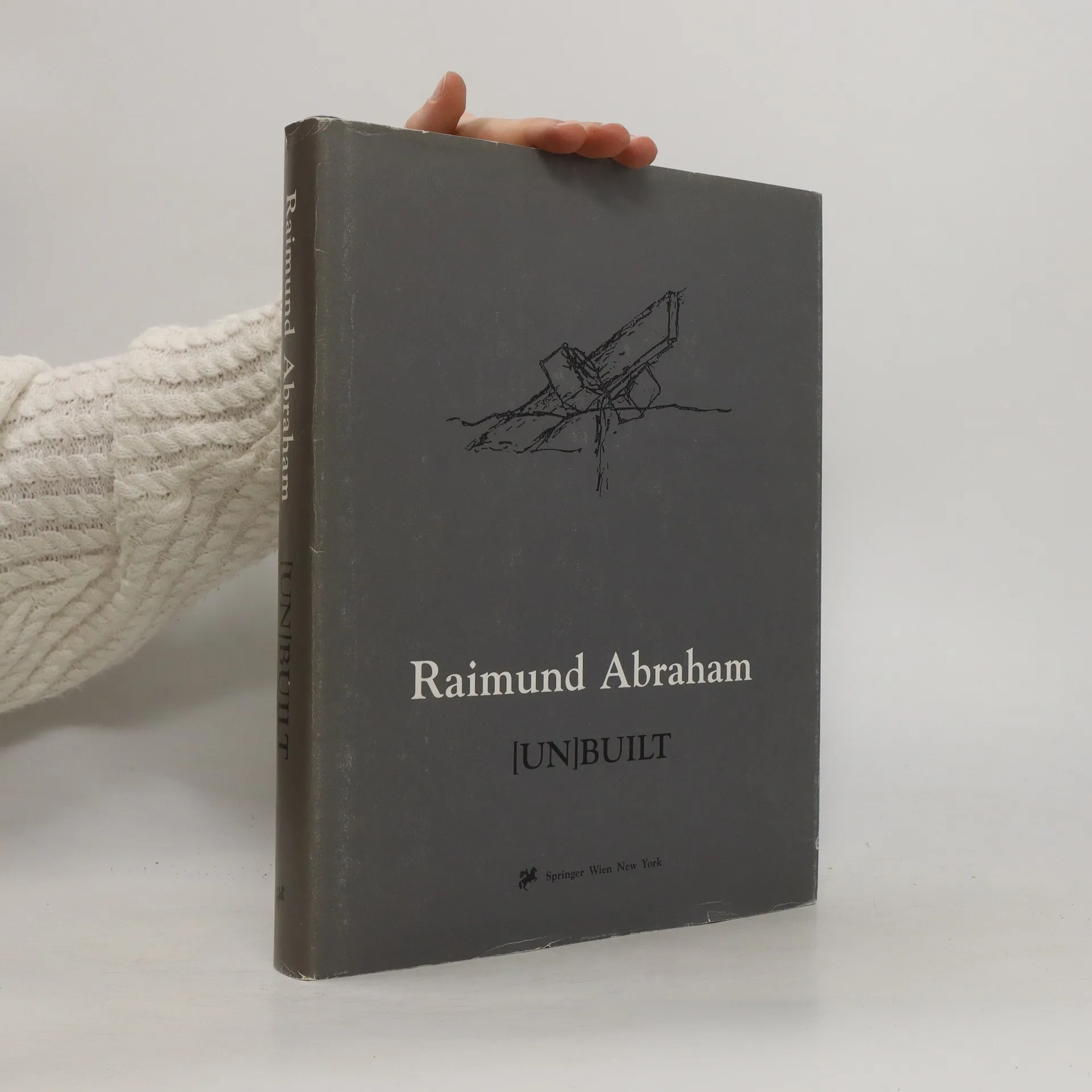
The Austrian architect Raimund Abraham, born 1933 in Tyrol, Austria, has been living, working and teaching in the USA since 1964. As an exponent of the Viennese avant-garde of the early sixties his work was exhibited together with the works of Hans Hollein and Walter Pichler at the Museum of Modern Art in New York in 1967. The book contains his complete work until 1995: a [ Imaginary architecture 1961a "1984 a [ Projects 1961a "1992 a [ Realizations 1959a "1995 The architectural drawing occupies a central position in the evolution of Abrahama (TM)s work in challenging the predominant notion of built architecture. Drawing demands an autonomous reality, a manifestation of his architectural concept. Abrahama (TM)s drawings and projects as well as the built realizations reflect the roots of a concise architectural theory. The essential notion of "collisiona becomes a dialectical theorem as well as the ontological foundation of architecture. With an introductory essay by Norbert Miller and contributions by John Hejduk, Kenneth Frampton, P. Adams Sitney, Lebbeus Woods, and Wieland Schmied.


Zakup książki
Raimund Abraham, Unbuilt, John Hejduk, Norbert Miller, Raimund Abraham, Brigitte Groihofer
- Język

- Rok wydania
- 1996
- Oprawa
- (twarda)
Metody płatności
Brakuje nam tutaj Twojej recenzji.
- Tytuł
- Raimund Abraham, Unbuilt
- Język
- angielski
- Wydawca
- Springer
- Rok wydania
- 1996
- Oprawa
- twarda
- Liczba stron
- 315
- ISBN10
- 3211826718
- ISBN13
- 9783211826713
- Seria
- Tagi
- Architektura
- Ocena
- 4,9 z 5
- Opis
- The Austrian architect Raimund Abraham, born 1933 in Tyrol, Austria, has been living, working and teaching in the USA since 1964. As an exponent of the Viennese avant-garde of the early sixties his work was exhibited together with the works of Hans Hollein and Walter Pichler at the Museum of Modern Art in New York in 1967. The book contains his complete work until 1995: a [ Imaginary architecture 1961a "1984 a [ Projects 1961a "1992 a [ Realizations 1959a "1995 The architectural drawing occupies a central position in the evolution of Abrahama (TM)s work in challenging the predominant notion of built architecture. Drawing demands an autonomous reality, a manifestation of his architectural concept. Abrahama (TM)s drawings and projects as well as the built realizations reflect the roots of a concise architectural theory. The essential notion of "collisiona becomes a dialectical theorem as well as the ontological foundation of architecture. With an introductory essay by Norbert Miller and contributions by John Hejduk, Kenneth Frampton, P. Adams Sitney, Lebbeus Woods, and Wieland Schmied.