



Parametry
- 223 strony
- 8 godzin czytania
Więcej o książce
A NATIONAL BESTSELLER A programmer, musician, and father of virtual reality technology, Jaron Lanier was a pioneer in digital media, and among the first to predict the revolutionary changes it would bring to our commerce and culture. Now, with the Web influencing virtually every aspect of our lives, he offers this provocative critique of how digital design is shaping society, for better and for worse. Informed by Lanier’s experience and expertise as a computer scientist, You Are Not a Gadget discusses the technical and cultural problems that have unwittingly risen from programming choices—such as the nature of user identity—that were “locked-in” at the birth of digital media and considers what a future based on current design philosophies will bring. With the proliferation of social networks, cloud-based data storage systems, and Web 2.0 designs that elevate the “wisdom” of mobs and computer algorithms over the intelligence and wisdom of individuals, his message has never been more urgent.



Zakup książki
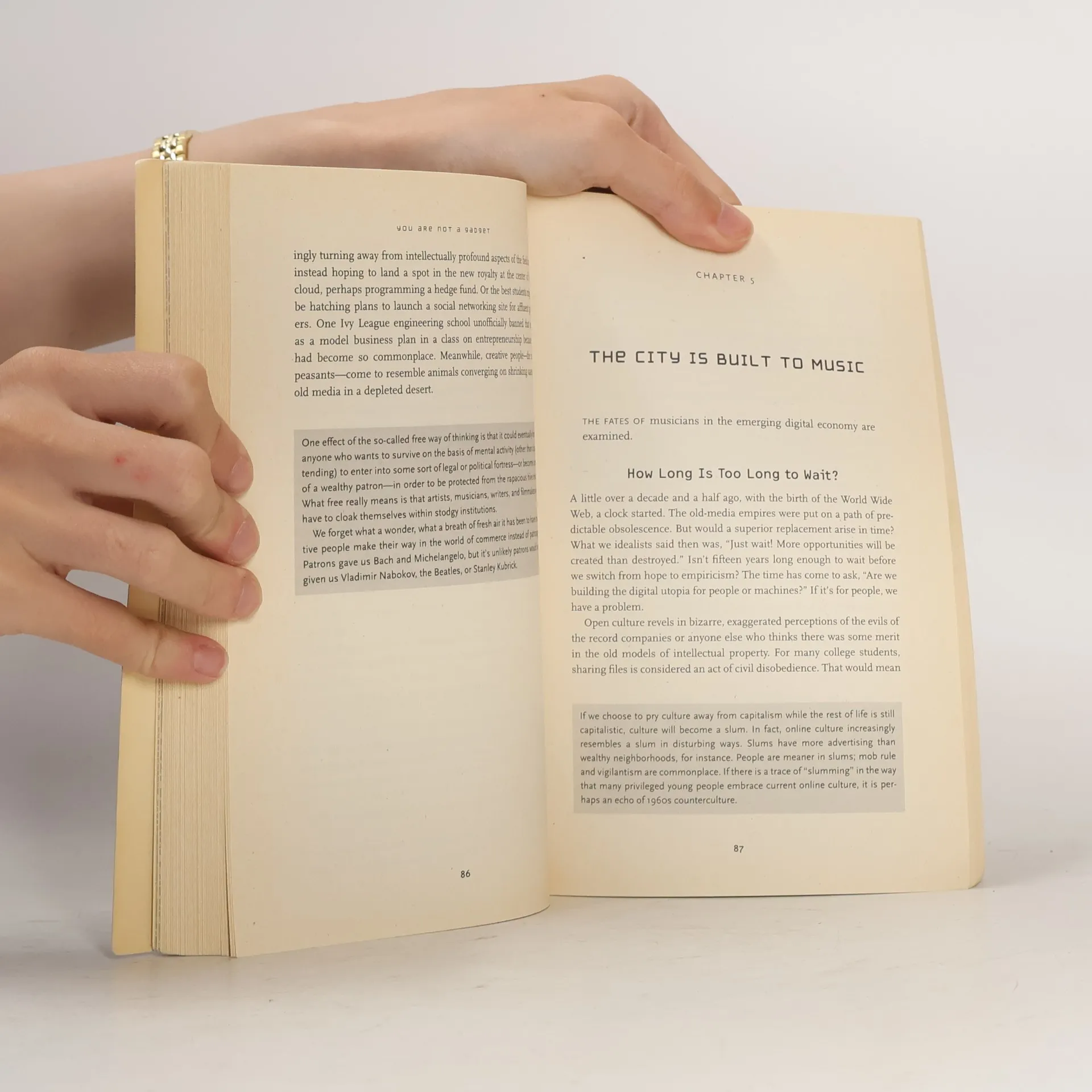
You Are Not A Gadget, Jaron Lanier
- Język

- Rok wydania
- 2011
- Oprawa
- (miękka),
- Stan książki
- Dobry
- Cena
- 12,49 zł
Metody płatności
Brakuje nam tutaj Twojej recenzji.
- Tytuł
- You Are Not A Gadget
- Język
- angielski
- Autorzy
- Jaron Lanier
- Wydawca
- Vintage
- Rok wydania
- 2011
- Oprawa
- miękka
- Liczba stron
- 223
- ISBN10
- 0307389979
- ISBN13
- 9780307389978
- Seria
- Kategorie
- Oryginalna nazwa
- You are not a gadget
- Ocena
- 3,55 z 5
- Opis
- A NATIONAL BESTSELLER A programmer, musician, and father of virtual reality technology, Jaron Lanier was a pioneer in digital media, and among the first to predict the revolutionary changes it would bring to our commerce and culture. Now, with the Web influencing virtually every aspect of our lives, he offers this provocative critique of how digital design is shaping society, for better and for worse. Informed by Lanier’s experience and expertise as a computer scientist, You Are Not a Gadget discusses the technical and cultural problems that have unwittingly risen from programming choices—such as the nature of user identity—that were “locked-in” at the birth of digital media and considers what a future based on current design philosophies will bring. With the proliferation of social networks, cloud-based data storage systems, and Web 2.0 designs that elevate the “wisdom” of mobs and computer algorithms over the intelligence and wisdom of individuals, his message has never been more urgent.