

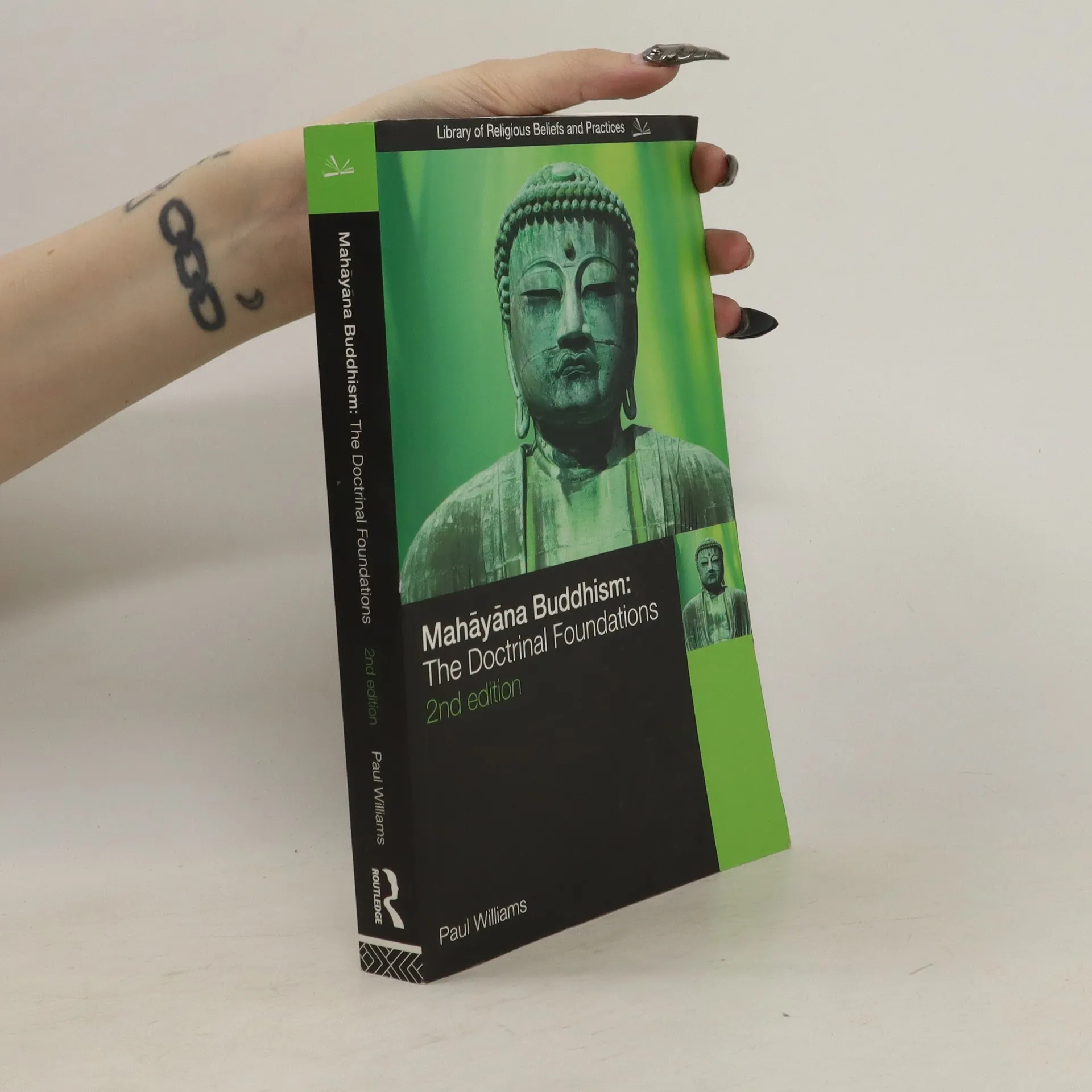


Więcej o książce
As a reference book, which guides readers through the labyrinth of the enormous Buddhist textual tradition, this work is unsurpassed. Williams (Univ. of Bristol, UK) integrates the latest textual discoveries into discussions of various doctrinal issues and carefully weighs the various positions of contemporary scholars. Nevertheless, at times the organizational scheme of the book seems opaque at best and can be misleading. For example, the author considers the bodhisattva early on in the chapter on the Perfection of Wisdom tradition. Curiously, a later chapter on the Lotus Sutra fails to notice the importance of the bodhisattva in that text. Later a separate chapter, titled "The Path of the Bodhisattva," is in fact a history of the introduction of Buddhism to Tibet and a description of certain doctrinal controversies that occurred there, namely the development of the bodhisattva stages. Moreover, the print is so small that some will find reading it to be a considerable chore (notes and main text are the same size). Still, with 39 percent of the book devoted to endnotes and bibliography, this work will be very valuable to more advanced students of Buddhism. Summing Up: Recommended. Upper-level undergraduates through faculty/researchers. Upper-division Undergraduates; Graduate Students; Researchers/Faculty. Reviewed by A.L. Miller.



Zakup książki
Mahāyāna Buddhism. The Doctrinal Foundations, Paul Williams
- Język

- Rok wydania
- 2009
- Oprawa
- (miękka)
Metody płatności
Brakuje nam tutaj Twojej recenzji.
- Tytuł
- Mahāyāna Buddhism. The Doctrinal Foundations
- Język
- angielski
- Autorzy
- Paul Williams
- Wydawca
- Routledge
- Rok wydania
- 2009
- Oprawa
- miękka
- Liczba stron
- 320
- ISBN10
- 0415356539
- ISBN13
- 9780415356534
- Seria
- Kategorie
- Ocena
- 4 z 5
- Opis
- As a reference book, which guides readers through the labyrinth of the enormous Buddhist textual tradition, this work is unsurpassed. Williams (Univ. of Bristol, UK) integrates the latest textual discoveries into discussions of various doctrinal issues and carefully weighs the various positions of contemporary scholars. Nevertheless, at times the organizational scheme of the book seems opaque at best and can be misleading. For example, the author considers the bodhisattva early on in the chapter on the Perfection of Wisdom tradition. Curiously, a later chapter on the Lotus Sutra fails to notice the importance of the bodhisattva in that text. Later a separate chapter, titled "The Path of the Bodhisattva," is in fact a history of the introduction of Buddhism to Tibet and a description of certain doctrinal controversies that occurred there, namely the development of the bodhisattva stages. Moreover, the print is so small that some will find reading it to be a considerable chore (notes and main text are the same size). Still, with 39 percent of the book devoted to endnotes and bibliography, this work will be very valuable to more advanced students of Buddhism. Summing Up: Recommended. Upper-level undergraduates through faculty/researchers. Upper-division Undergraduates; Graduate Students; Researchers/Faculty. Reviewed by A.L. Miller.